(1)ne Drop: Shifting the Lens on Race: A Review and Reflection

Yaba Blay’s (1)ne Drop: Shifting the Lens on Race (2014) is a beautiful, first-hand look at the true complexities surrounding the ways in which societies and peoples racialize one another and the ways in which these are institutionalized. Due to an ambiguous and vastly tangled web of psychological, historical, and countless other reasons, everyday life tends to be highly racialized.

1392083_594876410574755_600956574_n

The United States was built on a foundation of “White” being good and “Black” being bad. Of “White” meaning liberty and freedom and “Black” meaning enslavement. These assumptions and corresponding racism are so interwoven into every aspect of society (similar to a cake – the sugar, for example, is everywhere in the cake but not at all directly detectable) that they go largely unnoticed and unquestioned.

Additionally, humans, without deliberate and dedicated pause, see “all Asians” or “all old people” as looking alike. This is especially true when it comes to the hue of a person’s skin. People see someone and, even if unconsciously, begin trying to figure out “who they are,” “what ‘color’ they are,” and “where they come from.” One of my favorite musical artists, Amanda Marshall, wrote a song about how glad her grandmother was when saw she saw Amanda had light skin. Listen to it here, and read the lyrics here. Most importantly, Marshall reminds us that we are all “just shades of gray.”

We know from decades of research in the liberal arts and from biology and hopefully too from basic human compassion that ultimately everyone is absolutely, positively equal and human. We know from DNA research that the vast, vast majority of all living creatures are identical. (If you haven’t read it, the American Anthropological Association’s 1998 statement titled “Race” is an excellent read. Read it here.)

Blay’s (1)ne Drop tackles these points and so much more. Blay’s book focuses on one key question: “What does it mean to be Black”?

She answers this question using 60 first hand perspectives (including her own) with over 25 countries represented in a book that is almost 300 pages. Blay interviewed each individual and asked him/her the following questions:

  • How do you identify? Racially? Culturally?
  • Upon meeting you for the first time, what do people usually assume about your identity?
  • Do people question your Blackness?
  • What is it about you that causes people to question your identity?
  • Has your skin color or racial identity affected your ability to form/maintain social relationships?
  • Many people assume that with light skin comes benefits. What benefits do you realize or have you experienced? Similarly, what liabilities/disadvantages have you realized or experienced?

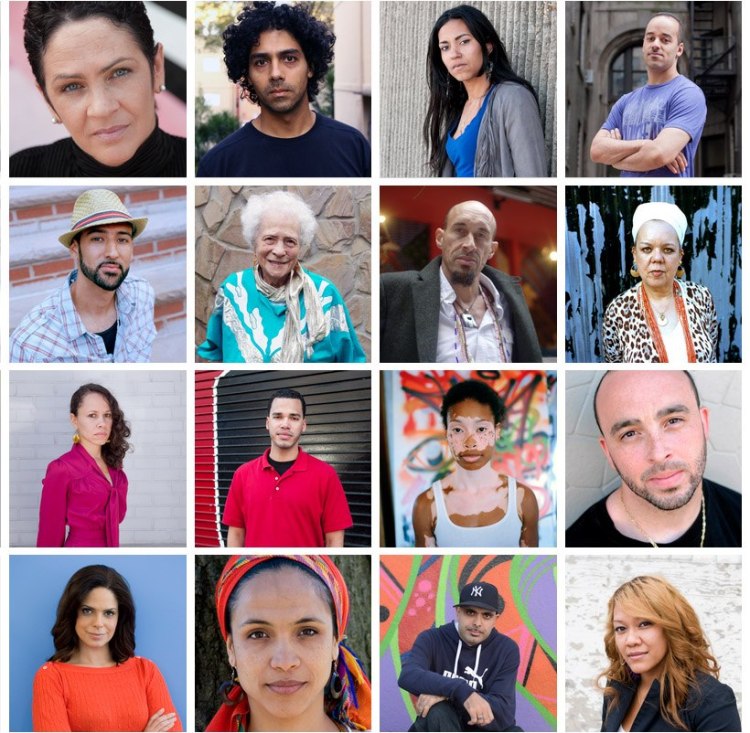
Blay then worked with each individual to turn his/her responses to these questions and general life story into a short memoir/autobiographical sketch. Each memoir is anywhere from one to three pages, and each one is accompanied with a full page, color photograph of the individual. These photographs are particularly important because viewers see the infinite variations in people considered Black. Humans, both Black and White, for example, quite literally have every possible skin color, as well as sizes and shapes of ears, eyes, noses, mouths, etc. Blay, Noelle Théard (the main photographer), and their contributors convey this important message better than any other work I have read to date.

These essays also show a rare sense of raw honesty, so to speak. Some of the writers, for example, discuss how they used society’s stereotypes or expectations of what White or Black meant to the exclusion of others. Essays strongly convey why and how people have a fear of Blackness, as some respond to someone saying “I’m Black” with “no, you’re not Black,” and essays also show how complicated manifestations of Whiteness and White Privilege really are. Some of the accounts explain how “race” changes according to how people fixes their hair, what country they are in, or by who they are specifically around at a given moment.

I first learned about this manifestation of racialized divisions in Laura Tabili’s article “Race is a Relationship, and Not a Thing.” When talking to students, I have explained that the same person can be racialized differently depending on what they are doing and what they are wearing. For example, a woman with an “ambiguous skin hue” cleaning tables and wearing the regular uniform will be more likely to be deemed “non-White.” Take the same person and have them wear clothing considered to be more formal and telling someone else to go clean the tables and they will more likely be deemed White. (1)ne Drop has numerous real-life examples of this occurrence.

Here are two collages of photographs from the book. The colleges are from the Facebook page for this book.
9066_429047337157664_801746841_n

534551_424306764298388_1107164924_n

The personal accounts answer much more than what it means to be Black. Indeed, the individuals in this book show how unsatisfactory the term Black really is. In the United States, all too often we consider in a highly subjective process anyone with skin of a certain hue to be an African American. This pattern of thinking is far too simple, and it is inaccurate.

Zun Lee’s vignette is a fascinating example of the complexities when it comes to anything and everything racialized. Lee was born in Germany to Korean parents. He explains how in Germany he was constantly treated as an outsider who wasn’t welcomed. As a child growing up and as a young adult he identified with and considered himself Black for social and cultural reasons, not at all because of his skin hue. He explains how that when he got to the United States people would tell him he was not allowed to check “Black” because “you’re not Black!” Lee goes on to explain how he found out in 2004 that he actually was Black. Lee’s biological father was not who he had always known but a man his mother met who was African American.

Sean Gethers, a Black albino man; Sosena Solomon, a Amhara Ethiopian woman; Angelina Griggs, a Colored woman; and Biany Pérez, a Afro-Dominican, in addition to all of the others individuals, discuss how they identify themselves and why. They show how truly complicated, numerous, and individual racialized categories are. They allow us to see how individual people identity themselves. No generalizations will be found in this book.

Collectively, these essays strongly emphasize that White and Black in no way refer to the hue of one’s skin. That being considered White and the associated Whiteness and White Privilege are constantly shifting and chaining. Above all, like much of history, the most “appropriate” and expected response to “What is your race?” or “Where are you from – no where are you really from” in some ways is don’t apply logic here.

Scholars are sometimes (inappropriately) criticized for being activist at the same time they are scholars. More and more often it is accepted and embraced they not only can we be both but that we should be both: that being passionate about what we write about makes for better scholarship. Blay’s work is also an excellent example of how one can be both a scholar and an activists at the same time and be successful at both.

In her review of Trouble in Mind, Nell Irvin Painter takes issue with how the book only focuses on individuals racialized as Black as being the victims of White individuals. Painter says this is writing about “race relations, not African-American history.” Indeed many studies looking at any social or political minority group focus exclusively on the ways in which they are marginalized by society. Blay’s approach and the results are also important, then, because she gives agency to her contributors without making them victims; she does not make them into “super humans” either.

Moreover, Blay explains that she capitalizes White and Black to serve as a constant reminder that these are socially constructed categories and identities. They essentially function as proper nouns. I also love Blay’s definition of “race” and White.” It goes:
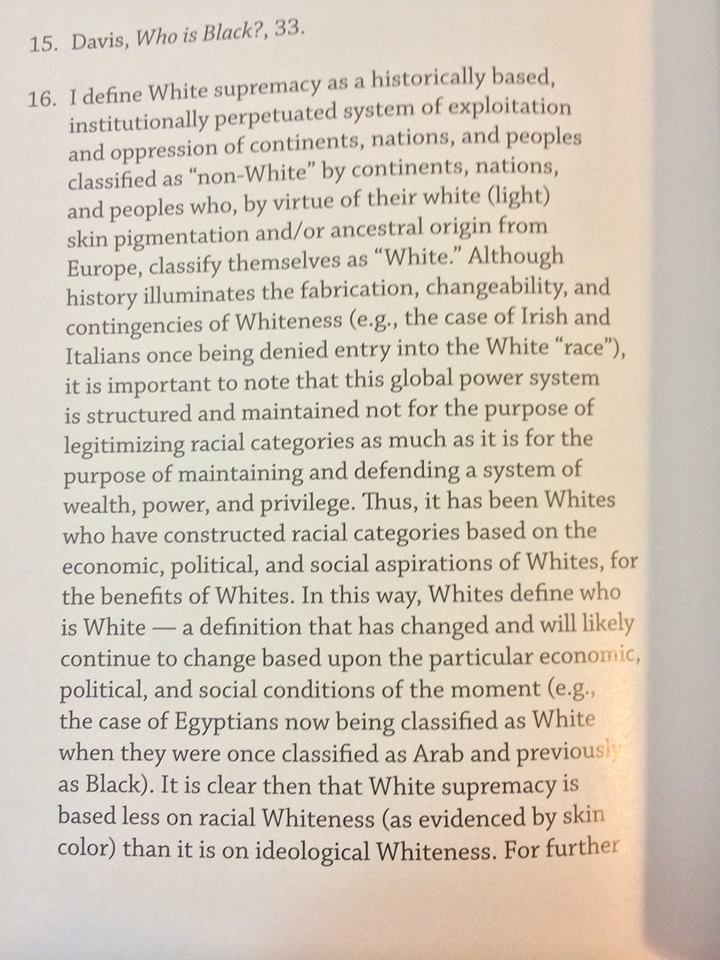
1426161_10152391701383032_405517135_n

(1)ne Drop made me think about my identity in new ways. Society would say that I am White. My immediate ancestry would say that I am White. When people hear my last name, Pegoda, I occasionally get the “where are you from, no, where are you really from” question. The name “Pegoda,” as best we know, was essentially made up when the man who first came to the United States from somewhere around present-day Eastern Europe or Russia in 1851 didn’t know how to spell his last name. Growing up as a child, I remember we would get magazines and letters in Spanish occasionally because some people deemed Pegoda to be Hispanic. I remember one day I asked my mom, “Are we Hispanic?” As an adult, I personally detest labels (yet, they are very necessary for much scholarly research), especially white/black, abled/disabled, and straight/gay – all immediately imply which one is “better” and which one is “abnormal.” My preferred identity is my name. I have a variety of names depending on the person and where I am. As a child, people called me “Andy,” starting in 8th grade people called me “Andrew,” and now, and I don’t know how or when it started exactly, at least half of the people I know call me by a new nickname, which I enjoy, “AJP.”

In summary, Yaba Blay’s (1)ne Drop: Shifting the Lens on Race promotes pride in being who you want to be. (1)ne Drop belongs on every bookshelf because in providing personal accounts it reminds us that there are countless, unique human faces that create the identities people choose to embrace and there are a whole variety of ways people embrace their identity, history, family, and associated memories. Existing mores that racialize people and the resulting assumptions are not only inadequate, they are inaccurate. Open-minded and caring readers will walk away with  a new understanding of how important it is to listen and to empower others.

See also:

13 Reasons to Watch and Share the Educational Series “Ask a Slave”

Ask a Slave, a new comedy series on YouTube, is highly recommended. In each episode, Lizzie Mae, a composite figure, plays the personal house slave to the Washingtons. Read more about the series here.

0905_askaslave-e1378473956899-624x359

Everyone needs to watch Ask a Slave because it:

  1. uses humor to make the subject of enslavement approachable;
  2. touches on the inhumane struggles enslaved families faced;
  3. acknowledges the role of rape and violence in the institution of slavery;
  4. acknowledges that at least some abolitionists while against slavery were far from free of racism;
  5. acknowledges that education was dangerous/illegal for enslaved peoples;
  6. shows enslaved people with agency by recognizing that they ran away and took opportunities to poison their enslavers;
  7. shows how religion and other aspects of life were used to justify or condone enslavement;
  8. shows how racism and sexism overlapped;
  9. reminds us that enslavement still exists today;
  10. subtly forces us to see how different the world is today in some ways and how it is very much the same in other ways;
  11. it shows how people have very little understanding of enslavement;
  12. it shows how people also have very little understanding of time and place; and
  13. subtly shows some manifestations of racism today.

In summary, these short videos—there are currently six and they total less than thirty minutes—provide an accurate overview of enslavement. Of course, some things are somewhat simplified and little detail about anything is provided; however, what is covered is accurate and represents larger realities. (Except, of course, the set up of the “show.”) These videos also counter numerous falsehoods people have about the nature of slave societies and the nature of enslavement. I would feel very comfortable using them in a freshmen class to introduce students to major themes.

Some have taken issue with the presentation style used in these videos such as this article and this article. I can see this as being a turnoff for some because Lizzie does put people down for their ignorance. But the exchange between Lizzie and the people asking questions still makes me laugh each time. As viewers, I think we know that they are all actors and actresses, so it’s not like she is directly making fun of their ignorance. Additionally, we do know that far too many hold these kinds of views and responding to such can get exhausting. I also would hypothesize that some of the questions and answers have been slightly exaggerated to make a point. With movies and historical sites, people want to be entertained, generally speaking. Indeed, I think one of the reasons so many historical sites ignore enslavement (see “You know, I really don’t know my history”: Historical Memory, Slavery, and Plantation Day [Preview] and Brazoria County’s Assault of Historical Truth and Enslavement [Preview]) is because a discussion of the institution of slavery tends to require a serious setup. I think some will find these videos more approachable than the recent movie 12 Years a Slave (see my review here) because they convey information without being as in-your-face about it. People like to be entertained, people learn by entertaining, and to me, this web series achieves legitimate educational ends by way of entertaining.

450457059_640

Please check out the series here and leave some comments! What do you think about the series? Season 2 will be out soon. 

Brazoria County’s Assault of Historical Truth and Enslavement [Preview]

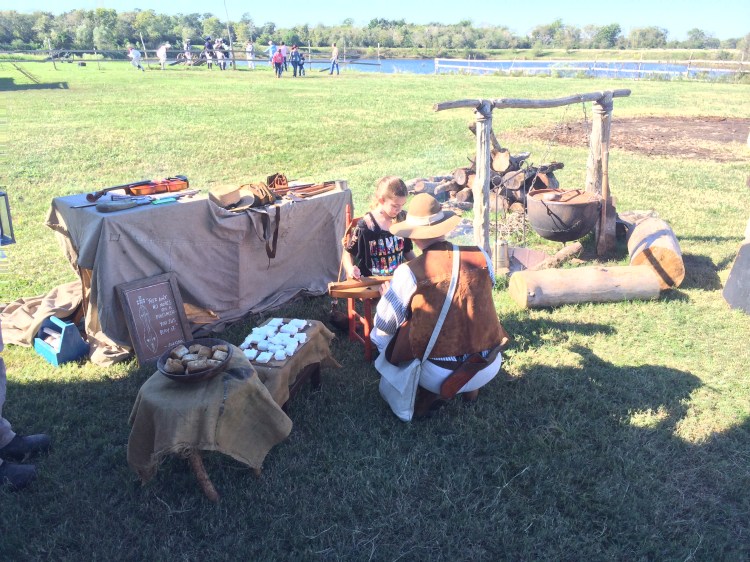
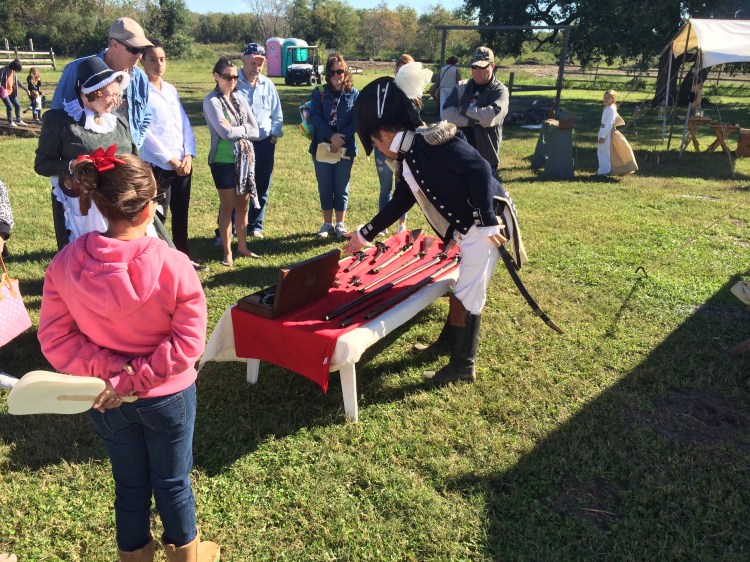
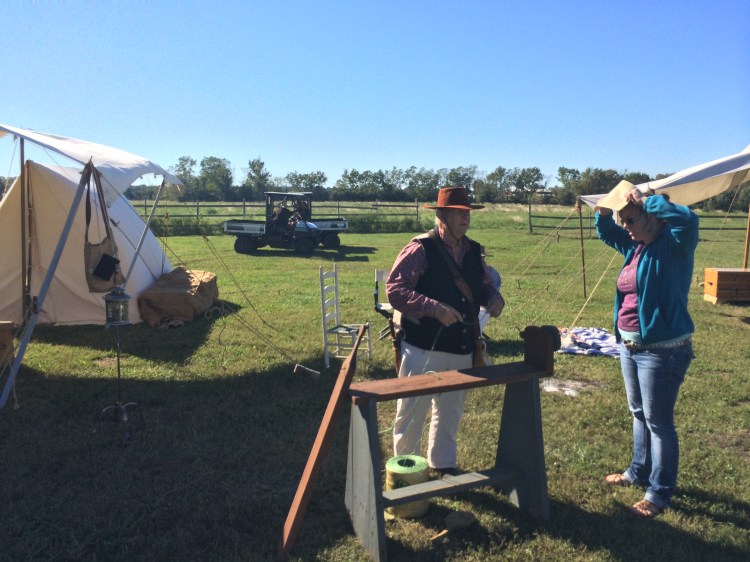
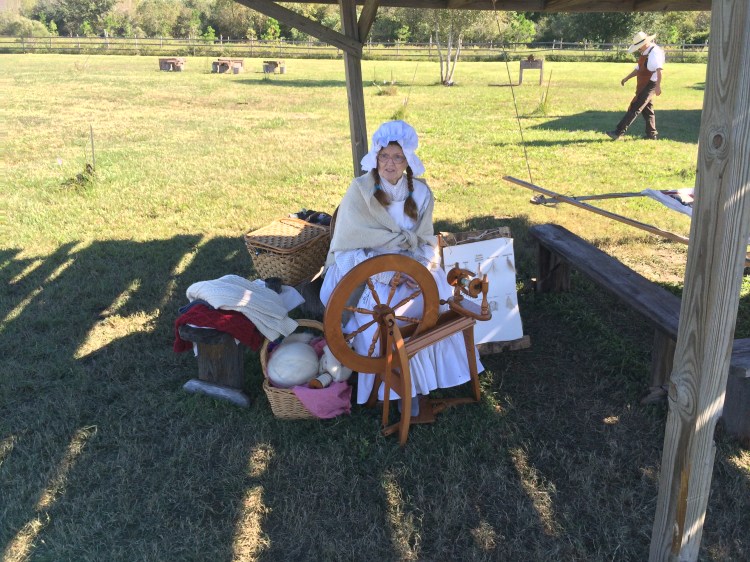
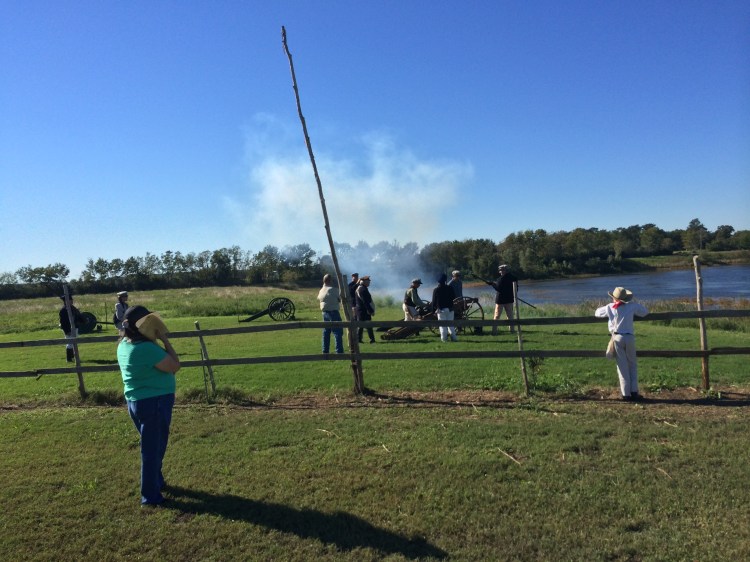
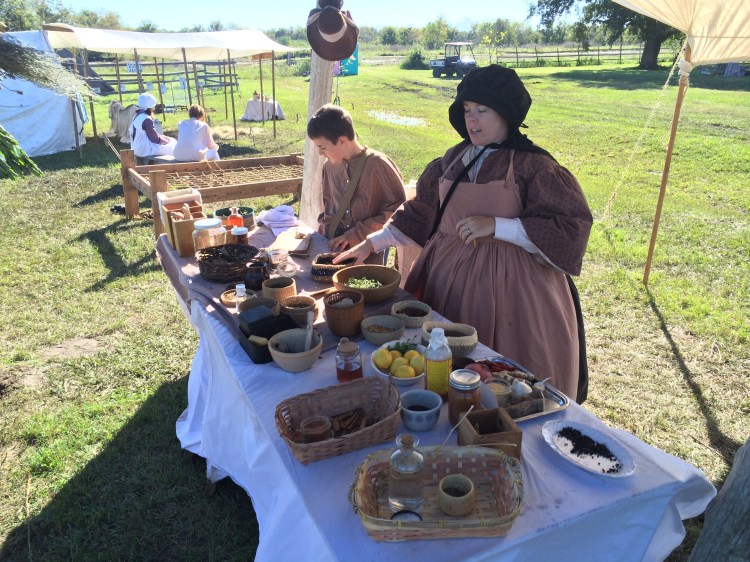
Each year in early November, Brazoria County celebrates “Austin Town.” The Brazoria County Historical Museum sponsors this event “with the goal of giving the public an educational and entertaining experience.” “The thing that the kids [1,000 local 4th and 5th graders] get on Field Trip Day is the real thing. They can see, smell, and taste, and touch life as it was lived in Colonial Texas.” The article advertising it in Image magazine goes on to explain that people will have the opportunity to encounter cannon drills, church services, dances, children attending school, people making tortillas, butter, or soap, and a variety of other aspects of everyday life. The advertisement does not mention anything about slavery.

I decided to attend the event to see what was going on for myself. As I fully expected, this is not a celebration of the past, but rather a celebration of a highly filtered and revised version of the past that people in Texas tend to have been thoroughly indoctrinated to believe. Indeed, this event reinforced every-single-inaccurate-image people have about life in Texas in the 1800s. One historical reenactor, a woman making clothes by hand, explained that life for [white] men was just morbid “back then” (referring to Ireland in the 1600s or 1700s) because they died all the time while working.

People don’t know and don’t want to know that Stephen F. Austin was an enslaver; the families he brought to Texas were also enslavers. Stephen F. Austin is not only “the Father of Texas,” he is also the individual responsible for bringing the institution of slavery to Texas. These Texans did everything they could to develop, maintain, and perpetuate enslavement, even in the face of laws from the Mexican government forbidding it. Some made their “slaves” into “ninety-nine year indentured servants” in order to circumvent the law, for example. Indeed, the Texas Revolution was NOT about securing liberty from a repressive Mexican government, unless by liberty we mean the right to own humans and create an all-white nation. (The Republic of Texas Constitution said the only time a non-white person could reside in the state is if they were enslaved.)

I am not suggesting we demonize Austin or early Texans for being a product of their time and culture. I am suggesting we need to teach and honor history as it happened. The narrative Texans have about the state’s early history, learned in public schools and reinforced by governmental institutions, not only omits enslavement, it completely omits people of African or Indian origin – it writes them out of existence.

I will be giving an extended review of this event, as well as Lake Jackson’s Plantation Day, at Rice University in early April 2014.

2013-11-02 10.46.45

Music in early Texas (above)

2013-11-02 10.39.45

Gotta have guns in Texas!

2013-11-02 10.43.53 2013-11-02 10.54.53

Making cloths by hands and feet (above)2013-11-02 10.37.42 2013-11-02 11.03.36

Perhaps a tremendous irony – the Oxen are named Liberty and Justice

2013-11-02 10.46.25 2013-11-02 10.50.03

Homemade Herbs (above)

2013-11-02 10.44.34

Old-fashioned cooking (above)

13 Tenets to Seeing and Understanding the World as a Scholar

In no particular order, these tenets are:

1. Race, class, and privilege deeply divide people.

Humans are still just babies on the evolutionary scale of this universe. Humans have an urge to assert their (self-awarded) superiority and to create and then protect their corresponding privileges. Indeed systems of white privilege, male privilege, cis-gender privilege, heterosexual privilege, able-bodied privilege, class privilege, and Christian privilege overshadow our everyday life in the United States. Of these, the ways in which the (white) power structures have racialized individuals have made the biggest differences.

“If you’re an Americanist historian, you better also consider yourself a historian of race. There’s nothing in this country’s history that doesn’t lead back to racism. To paraphrase a now-famous metaphor, racism is the sugar in the American cake. Sure, the cake has other ingredients, but once the thing is mixed and baked, you’re never going to be able to take a bite that is sugar-free. Nods to racism (or any sort of oppression) don’t count. We need a profession-wide, systemic understanding of what racism is, where it comes from, and how it morphs and changes to stay alive. That’s the only way we’re going to learn to win the fight against it.”

2. Everyone has agency, but.

For too long, history was very much his-story and his-story was almost exclusively limited to powerful men who left written records. No one else was thought to have a role in how the world changed. History and society are best studied, taught, and enjoyed when scholars recognize that everyone has agency. We must also recognize the ways in which we are derived from both our society and our biology.

chaos3. Everything is connected.

Chaos theory (the “butterfly effect”), at least as a metaphor, has relevance. Scientists would have to speak to whether or not one butterfly flapping its wings could really cause a storm elsewhere, but nonetheless, there are still practical applications for this theory. From a liberal arts perspective, chaos theory helps pointedly recognize that people do not live in a vacuum. For instance, we act on the environment; it acts on us, as well. Actions have consequences. On a broader scale, since everything is connected and everything has a history (and history is defined as everything before this very second), by extension, then, the historian’s possible domain is and should be everything.

4. History repeats itself.

See this blog article. 🙂

5. Laws are responses, and there is always a gap between laws and realities.

People in charge create laws and other written rules in response to some social pressure or fear. Consider laws the US has had regarding prohibition. When there is a law on a subject, we need to look for the reasons. In other cases, the creation of rules indicate change is in the air. For example, while the University of Houston only admitted non-blacks from 1927-1962, it only officially practiced segregation from 1960-1962. Prior to 1960, it was so assumed that blacks were not allowed that it did not need to be stated. Even the admission guidelines said everyone was welcome to attend. On the other hand, there is also always a gap between the law and reality. Simply consider all of the on-going lack of civil rights for minorities.

6. Events, peoples, and places cannot be compared.

Comparative history is important and does have its place. We need to consider why differences exist by time and place. Comparative history proper, while having the appearance of being scientific and universal, by its very design tends to require a) inadvertently adding legitimacy to geopolitical boundaries; b) prejudicially judging variables to be “better,” “worse,” “separate,” “bigger,” etc. (because they are loaded with political and cultural motivations and ramifications—even if unconsciously—and the two sides be they separated by time, place, or other subjective variables likely hold very different values); c) subjectively making baseless generalizations. Comparative history when rigidly done obscures relationships and builds artificial barriers between variables. The study of relationships per se (vs. comparative history) recognizes the constant movement of ideas, people, goods, etc. – everything in the world is connected. (Ideas for this point were inspired by Seigel’s “Beyond Compare: Comparative Method after the Transnational Turn” and conversations with a friend.)

7. Everything is relative.

Notions suggesting everything is relative, of course, require caution. This should not be taken to extremes, and it is not intended to suggest that “anything goes” or “nothing matters.” Everything is relative because each person sees or hears the same thing and interprets it very differently. A document about experiences on Ellis Island has very different meanings for different readers both as individuals and in categories, for example. We must seek as many voices and perspectives as possible, and we must truly work to understand, respect, and embrace these variations. And everything is relative because values, hopes, and fears vary very greatly across time and place and to each person. Take the following example (I saw it somewhere and can’t remember where): You are on a boat with your mom and significant other, the boat has a hole in it and begins to sink, in a matter of seconds you are all in the water without life jackets, and only you know how to swim: Who do you save first – both are equally distant from you? Cultural values indicate that Westerners would generally save their significant other, while Easterners would save their mother. Morality in this way is relative. In another example, “stealing” was acceptable for people enslaved in the South. “Stealing” is even okay today if you are a rich white politician or CEO.

European Perspective and Native American Perspective of Treaty Event
European Perspective (above, 1867) and Native American Perspective (below, 1875-1878) of the Treaty Signing at Medicine Creek Lodge.

702-1c-1 copy

8. Everything is a social construction.

We must not take anything as a given. The computer screen you are looking at is only a computer screen because someone defined it as such and it caught on. On a deeper level, our pattern of families, system of schools, anything, you name it, could easily be different. On another note, science is far too often exempted from being a social construction. People say science is not a social construction because it is based on experiments! If for no other reason than its discoveries are based on knowledge and resources available today, science is a social construction. (And of course there are many more reasons.) How often has hard-core, “we are absolutely right this time,” science been overturned within the past week alone?

9. Massive change is constant.       

We regularly hear broad, proud declarations that say, “There has been more change in the past ‘x’ number of years than ever before.” Some say 25 years, some 50, a few 100. Nonetheless, this position is not a historically accurate position for two reasons. First, it ignores the reality of on-going change across time and place. Change is always “massive,” if you are in the middle of it and if said change is forcing you to life in new ways. Just looking at United States history, there is plenty of documentation to suggest the profound change people experienced upon first arriving to the “New World,” when creating a new nation, or when adjusting to life after various stages of industrialism. Change is constant. Second, the declaration above places recent change in a superior position to other transformations in different times, and it does not provide past people a voice in judgments of said change. Indeed to suggest progress has been made is to exercise cultural imperialism to some extent.

10. There is a gap between reality and perception.

One need consider nothing more than today’s popularity of Fox News to see the discrepancy between reality and perception. Of course, there are many “realities.” Realities (or “facts”) and opinions should always be backed by evidence, including experience. Additionally, the study of historical memory is important because of how vastly different the public understands and “knows” history and how the scholar, according to the truth as currently best supported by evidence, “knows” history. In Texas, for example, most people swear that the Alamo and the Texas Revolution were about freedom and liberty. Because of the anti-intellectualism and careful efforts to omit and rewrite history, the vast majority of people in Texas have virtually no clue that the desire to prevent freedom and liberty for enslaved individuals was the key variable.

11. Studying society is to deal with the realms of illogic.

So much of what we study about history just doesn’t make sense. Ideas people have held are ridiculously crazy – by today’s standards. For instance, students in particular do not understand why women or Native Americans were classified as non-humans and how scholars and religious intellectuals were leaders in such positions and “truths.”

12. Critical analysis of everyday culture is key.

We must actively and aggressively examine what we see around us. We must always look for deeper and hidden meanings, and we must bring attention to problems. We can and should, for example, both enjoy movies and deconstruct and critique every aspect.

13. We have been desensitized.

When teaching, I regularly cover more “tragic” and “sensitive” topics because students’ previous schooling, the media, and many museums censor these. A few students are noticeably disturbed, and I always allow time before covering such topics to discuss why history tends to be a delicate. But, presumably, due to the violent nature of our society, I am more often surprised at how undisturbed classes tend to be. Moreover, while I do not play video games and do not watch violent movies or anything of that nature, I find that I have been unwillingly desensitized because I have studied so many tragic events. Occasionally when discovering something new, I am so accustomed to learning about additional wrong-doings that sometimes it doesn’t phase me at all.


See also:

History Repeats Itself, Why I Study History, and History as a Science

There I said it.

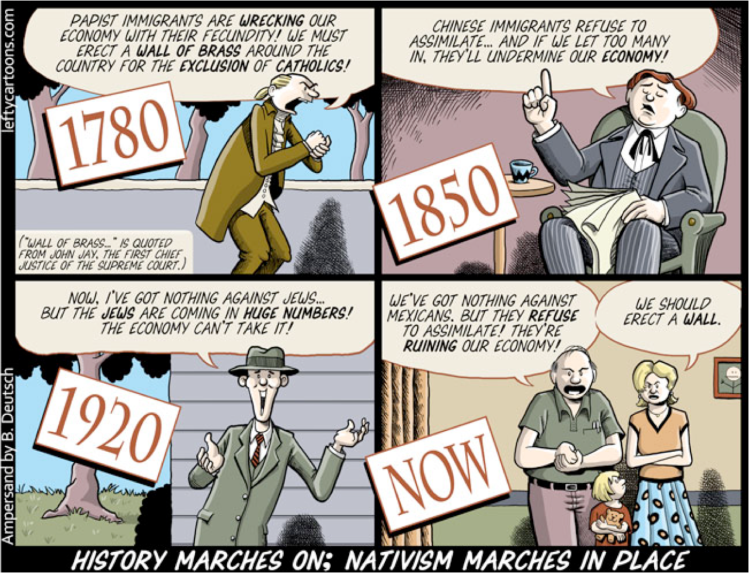
History. Repeats. Itself.

I’ll say it again.

History.

Repeats.

Most historians balk at this notion with a series of well-intended but nonetheless vehement objections. In my experience, we respond, “No. Absolutely not. History doesn’t repeat.”

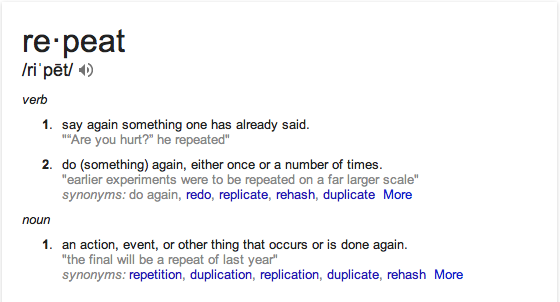
Before continuing, we have to interpret what “repeat” means.

According to the dictionary:

Screen Shot 2013-09-14 at 4.48.48 PM

According to the denotation of “repeat,” history can’t repeat itself. (And if you want to get technical and into chaos theory, neither can anything else.) Unlike lab-controlled experiments that can be exactly replicated (although not really), humans are life is always evolving and unpredictable and involves incalculable symbiotic relationships.

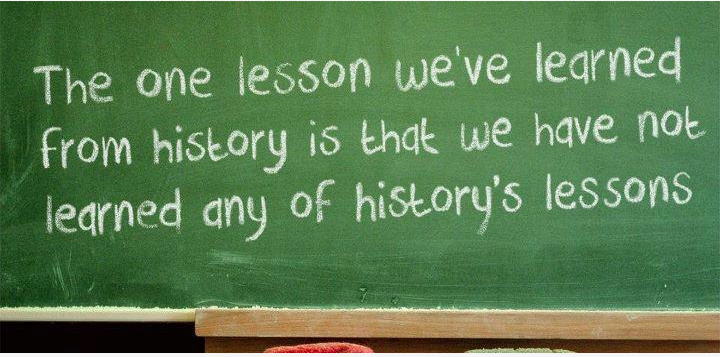
BUT, if we consider “repeat” as both a metaphor and in terms of its connotation, we can understand what people mean by “history repeats itself,” and it actually emerges as a useful conceptual tool. As Mark Twain put it, “History does not repeat itself, but it does rhyme.”

The vast, vast majority of people don’t in anyway think that history literally, exactly repeats itself. Such would violate celebrated philosophies of free will. When people say that history repeats itself, they are generally thinking of broad patterns. Another way to describe these patterns or relationships would be to describe them as cause and effect relationships. They are thinking about the existence of and continuation of

  • War,
  • Poverty,
  • Colonialism,
  • Racism,
  • Sexism,
  • Classism, or
  • Social movements, to list only a few of the repeated/unending phenomena of human history.

photo 4

Untitled

A more specific example could be that every step forward in the long African-American Civil Rights Movement has resulted in new forms of discrimination. Lynching, disenfranchisement, and neo-enslavement (collectively called “Jim Crow”) replaced codified plantation and urban enslavement after the Civil War and Reconstruction era. Today, the “New Jim Crow” (a system where by at least 1 out of every 3 black men are confined in the Criminal Justice System) replaced Jim Crow after the Modern Civil Rights Movement of the 1940s, 50s, and 60s.

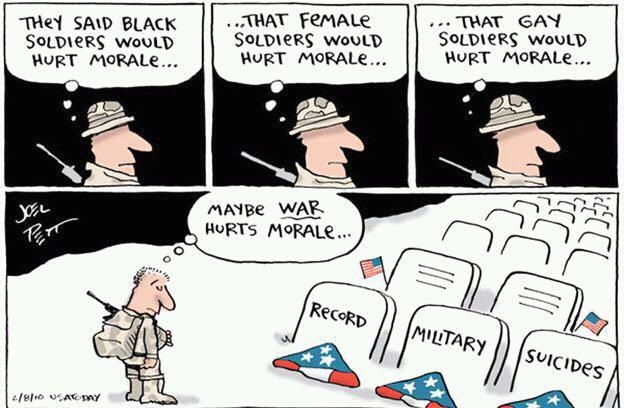
People remain “babies” on the evolutionary ladder – we are greedy, shortsighted, and quick to buy into fear of “the other.” Spending time trying to argue that history doesn’t repeat is ultimately not very productive for historians, a debate primarily involving semantic differences.

Screen Shot 2012-01-30 at 10.15.00 PM

Furthermore, if nothing “repeated,” it would quickly become impossible to study anything. Much of what we study is about relationships between times and places. On the other hand, if we “dig deep,” language repeats all the time per se. If we had to relearn language every day, we would never progress. By saying “history repeats,” we are recognizing the ways in which we are bound to this world and products of it. This is not to say that nothing ever improves or changes.

As historians, we can and should use the real meanings behind notions that history repeats to help students enjoy and embrace the study of our world. Indeed one of the many reasons I enjoy studying History, as I tell students in my “What is History?” lecture, is that history is comforting and allows us to see the world as a more steady place. According to the news and Joe public, crime, poverty, you name it, are worse now than it ever has been. If we look at historical evidence, we can find that such fears are unnecessary. Likewise, every generation says the previous generation had it better or older adults long for the time when they were adolescents when the world was a better, safer place (I call this the Myth of the Utopia Past). 

Finally, although human events can never come close to any kind of true replication, History belongs to both the liberal arts and the sciences. That History is a liberal art needs no explanation. That History is also a science, however, is where I tend to meet objections.

Scientists follow the scientific method. They follow a series of steps to ensure their work is the best it can be given current resources. Don’t historians do this? Historians come up with questions, look for evidence, analyze evidence, weave in secondary material, write and edit, edit some more, and then go through peer-reviewers both informally and formally. This is indeed the historian’s equivalent of the scientific method. Historical narratives or theories about the past are no more or less theories or narratives as human evolution or the big bang, for example. All scholarship involves theory and explanation based on evidence.

Likewise, for reasons I haven’t fully grasped or studied yet, science tends to have more credibility with the public. People tend to perceive history as always changing, unstable, and inherently biased by “crazy, liberal academics.” In reality, science changes just as much, is just as unstable, and has just as many biases. In other words, History and any of the specific branches of science are all social constructions- both the discipline themselves and scholarship produced. By promoting the study of the past as a science, perhaps historians would have more automatic credibility.

Be sure to check out: The Nature of History and the History of HistoryI am many things but a “history buff” is not one of them. – Hidden Power of Words Series, #14and my other postings about history, too!

33600828
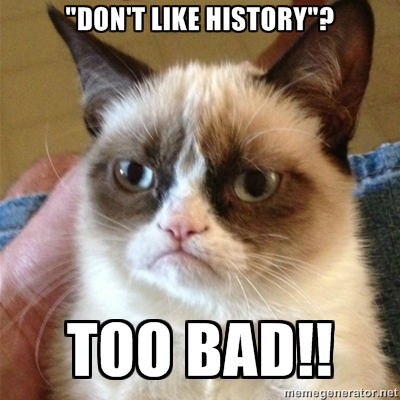
“Angry Cat” always makes the day better! 🙂

This posting in particular is intended to generate stimulating conversation. Thanks, as always, for reading. I also love all of the comments that you provide here on WordPress and on Facebook, Twitter, and Email. 

“Never forget” – Hidden Power of Words Series, #1

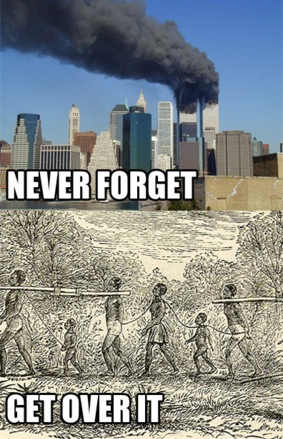
Yesterday was the 12th anniversary of the 9/11 attacks. Around the Internet there were postings calling for remembrance. I even made such a posting here. Almost all of these said “never forget” in one form or another. As used, never forget means to remember the tragedies that happened that day and the following weeks, remember the feelings of insecurity we felt, remember the way we came together, remember the way we came out stronger and better, and to not take things for granted. Never forget has also extended to the Holocaust, the battles at the Alamo, and other tragedies or major events.

tumblr_ls97p2UIdE1qzmjfpNever forget, however, is frequently a highly racialized and occasionally genderized term. It is also highly subjective. Never forget has not extended to the nation’s 250+ year commitment to the institution of enslavement, the deliberate annihilation of thousands of Native Americans, the illegal and wrongful confinement of Japanese Americans during World War II, or codified discrimination against women, for example. Particularly where racism is concerned, an all too often default response is simply, “get over it.” 

Never forget does not even fully extend to the 9/11 tragedies – the event currently most associated with a never forget mentality. According to many different reports, individuals racialized as Arab or Muslim have faced much, much more discrimination since 9/11. As we all know, security has generally greatly increased at schools, airports, and at governmental offices around the nation. 9/11 also furthered and escalated the nation’s Military Industrial Complex. Unfortunately, the “united we stand” rhetoric of 9/11 and never forget doesn’t actually include everyone in the “united” part, especially not minorities by how they are racialized or genderized, and it is important to very specifically recognize this. Never forget is virtually blind to these other aspects and instead favors a “utopian-ish,” patriotic, homogenized vision of the past.

Notions of never forget are also odd in that they arbitrarily, intentionally or unintentionally, determine some events to be “worse” than others. Of course, absolutely, 9/11 was a tragedy, but there have been many tragedies before and after. How can one fairly determine what is “worse”? We should not judge, as a general rule, one event to be “worse” than another. Instead, ideally, we should look at the relationship between different events and use this to work toward a truly better tomorrow. 

Ultimately, never forget is a feel-good term that lets some people feel better about themselves and the nation. One of the reasons I enjoy studying historical memory is the opportunity it provides to study the intersection of the past and present. And United Statesians aren’t very good at knowing about either one. United Statesians tend to think they are the best ever and that they have committed no wrongs.

So when we say never forget 9/11, it needs to encompass a broader range of the “truth,” as supported by evidence, about what happened and more inclusive, positive visions of the future. 

See the full Hidden Power of Words Series postings, too!

See also:

Brief Guide to Studying Primary Sources: A Methodology to Increase Critical Thinking

Since the Spring 2010, I’ve developed the following guidelines to help students in my classes read effectively. Every semester I tweak them in someway or another. While they were originally designed with primary source documents in mind, they should also work, at least conceptually, for secondary works. So far they have worked really well for my students. Feel free to use them in your classes (just let me know if you do please, if you can), or feel free to adapt it. Also, I’m always very interested in feedback to make it more effective for students. Thanks!

6a00e553a80e1088340120a5d05bce970c-250wi


Students will regularly read and analyze primary sources. Primary sources provide direct information about something, anything, including cultural artifacts. Primary sources can be and actually are anything and everything: letters, newspaper articles, official documents, songs, movies, clothes, books, etc. Secondary sources are about primary sources. Any source can be a primary source: Simple boundaries between the two types of sources do not exist. For example, American Negro Slavery (1918) is a secondary source to the extent that it is a scholarly account of enslavement based on written sources from enslavers. Additionally, this work is a secondary source because it provides much more information about the early 20th century than enslavement, given its focus on slavery as a basically-good, paternalistic institution. Likewise, the movie Gone with the Wind (1939) is clearly not a primary source (or an accurate secondary source) about enslavement or the Civil War, but it is a primary source about how people tended to perceive such in the 1930s. It could also serve as a primary source regarding filmic techniques at that time. 

The following guidelines help us realize how richly complicated sources are:

  • identify where, when, and by whom/for whom it was originally produced;
  • identity where the source is located and what medium the source is in and how this influences what the source can and can’t do;
  • articulate what hopes and fears are manifested;
  • describe at least three important points and evaluate the overall main argument;
  • evaluate the credibility;
  • consider what assumptions the author(s) has;
  • analyze its various meanings to different people or groups (e.g., women, men, leaders, everyday people, “the other”);
  • compare/contrast it with other assigned texts or documents;
  • explain why it is important (i.e., context and significance) and to whom;
  • consider how time and place have provided different perspectives;
  • consider how the core issue relates or does not relate to the same, different, similar, or parallel issues today;
  • state a reaction to the document;
  • consider what ethical issues are involved with said document being analyzed (this question is especially for sources that were not designed to be read by the public, such as private letters);
  • pull out one sentence (or so) that is especially effective from the document and explain why it was selected; and
  • develop a question about the document that would be good for further research and another question that would be a good quiz/test question. 

“You know, I really don’t know my history”: Historical Memory, Slavery, and Plantation Day [Preview]

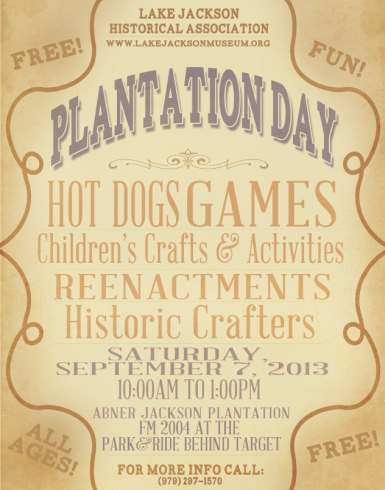
Probably about a month ago now as I was leaving a local restaurant I saw a sign advertising “Plantation Day.” It didn’t fully soak in until I was on the way home. After looking around on the Internet, I couldn’t find the flyer anywhere, so I emailed the Lake Jackson Historical Association. They sent me a copy of the flyer. Apparently, this celebration has occurred for at least several years.

plantation day

The very name concerned me, but the flyer horrified me.

This morning I went “undercover” to see what Plantation Day was really about. 

It wasn’t at all what I expected. In ways it was worse. First, I’m going to give a rough narrative overview. After that, I will provide some analysis and historical data. This posting is purposely less in-depth than what I usually aim for because my analysis of Plantation Day, along with other local plantation sites and museums, will be part of a conference paper in several months. 

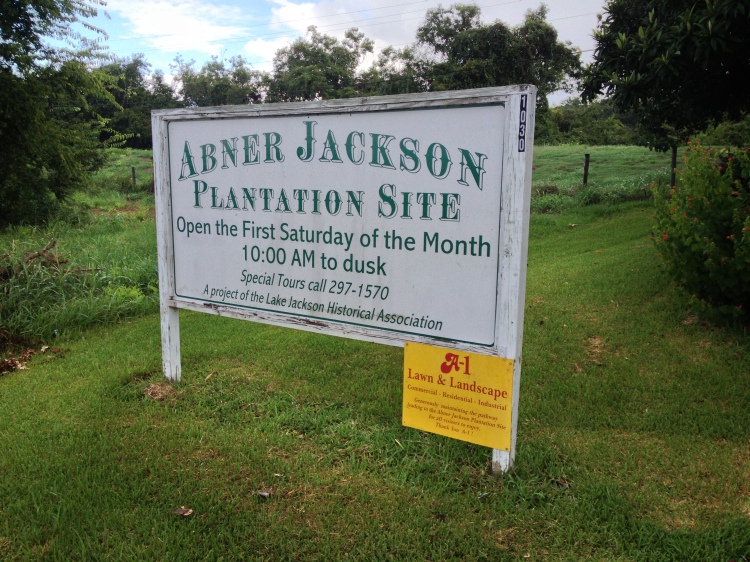
When I first entered the Abner Jackson Plantation there were two signs.

2013-09-07 10.16.382013-09-07 10.16.57

Two older men said, “Welcome. We’re not guards. We’re just standing here. [As I got closer, they had both stood up and did initially block the path.] Cannons and reenactments to the right, arts and crafts to the left.”

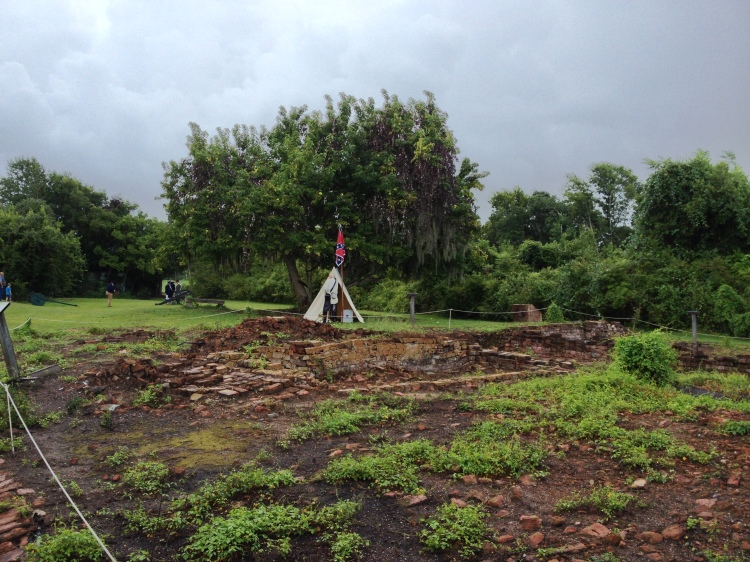
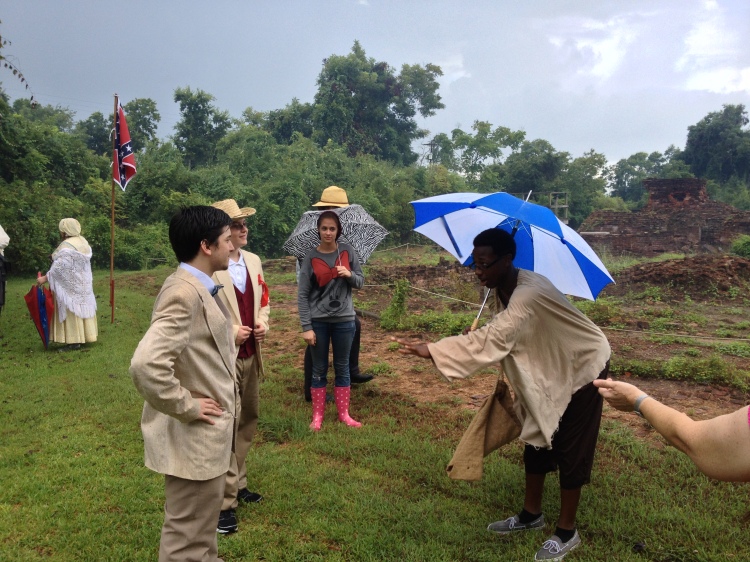
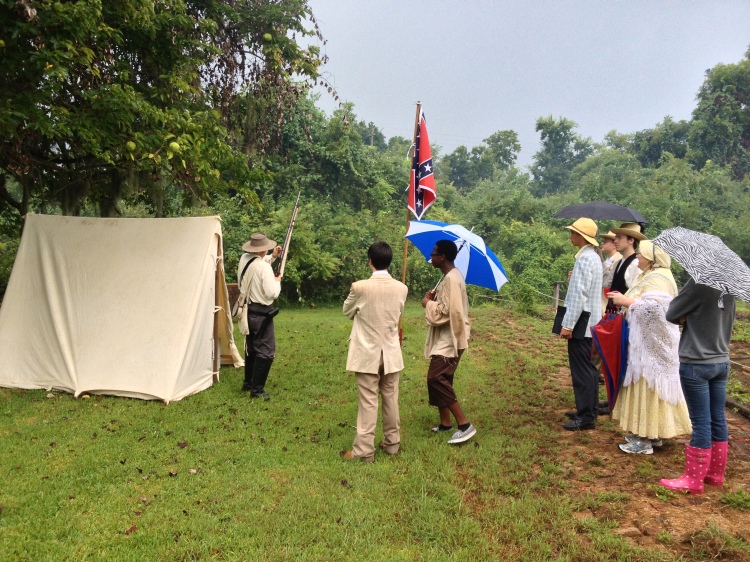
The first thing visible on the right was the Confederate battle flag. 2013-09-07 10.19.58

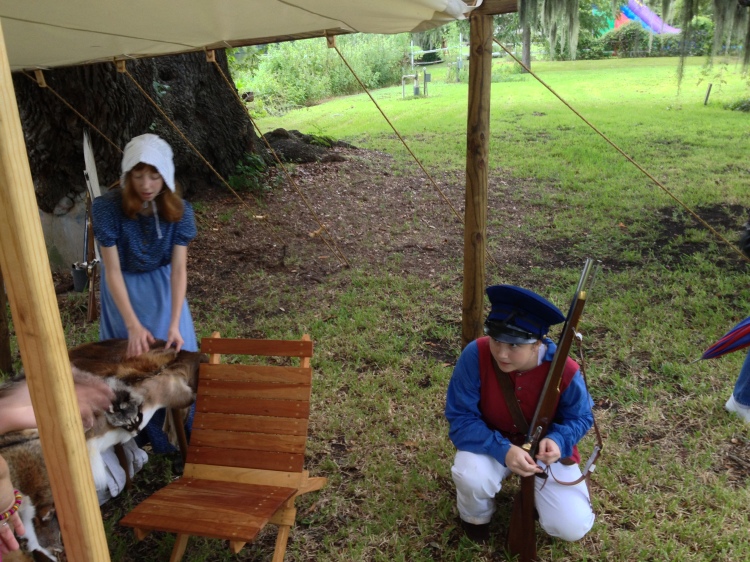
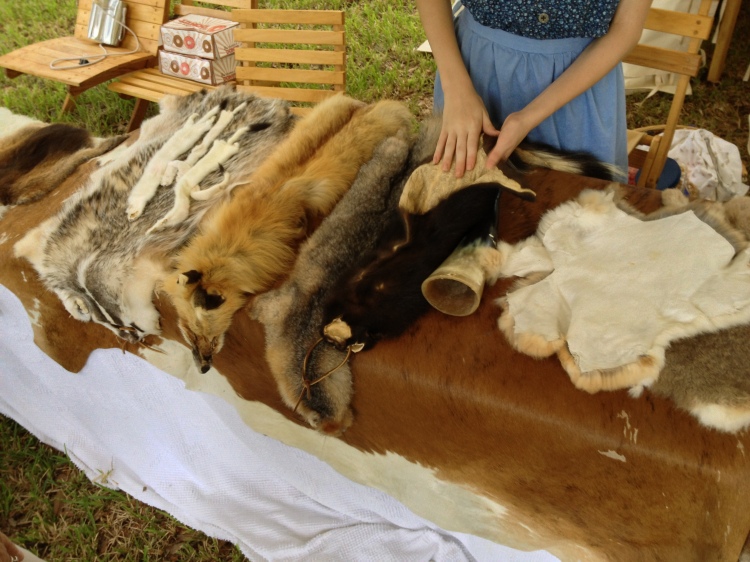
In the far corner, two children were demonstrating how to use guns “from back then” and were showing off some animal skins. They were clearly making stuff up by their responses to different questions, and equally, completely naive about what they were saying and doing. (I was worried they were going to shoot themselves or someone else!) I think most of the people at Plantation Day were naive about what was really going on and not going on. 2013-09-07 10.25.32 2013-09-07 10.27.10

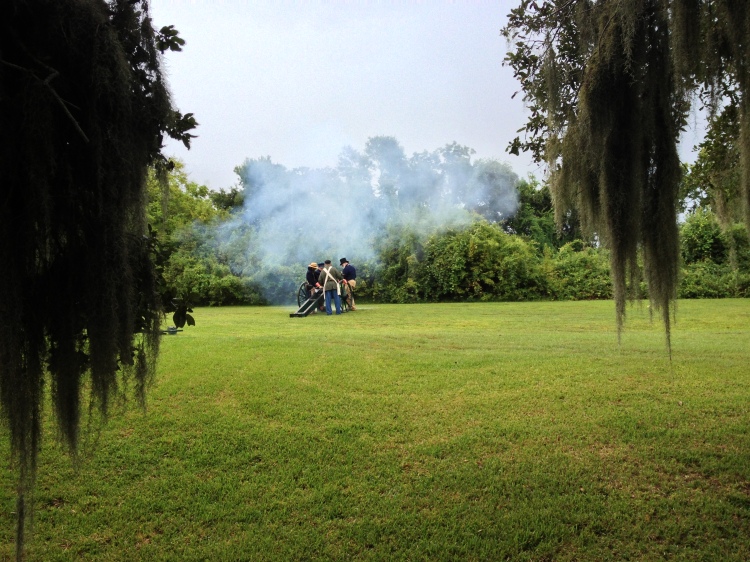
About this time the cannon when off. It was REALLY loud. From the email where the Lake Jackson Historical Association sent me the flyer, I know the group using the cannon received “special permission” to use it as they saw fit. 2013-09-07 10.24.57

As I was preparing to see what was going in in the arts and crafts section, this man enthusiastically walked up to me, stuck his hand out, shook my hand, and announced, “I’m Major Abner Jackson.” A “slave,” whom Jackson called boy, was right behind Jackson. A group of [white] women dressed as “plantation mistresses” followed Jackson, as well. (I imagine at this point I complete blew my cover, so to speak, as my face probably turned ghost white, as the “horror” of the event escalated exponentially.)2013-09-07 10.29.07

2013-09-07 10.30.15

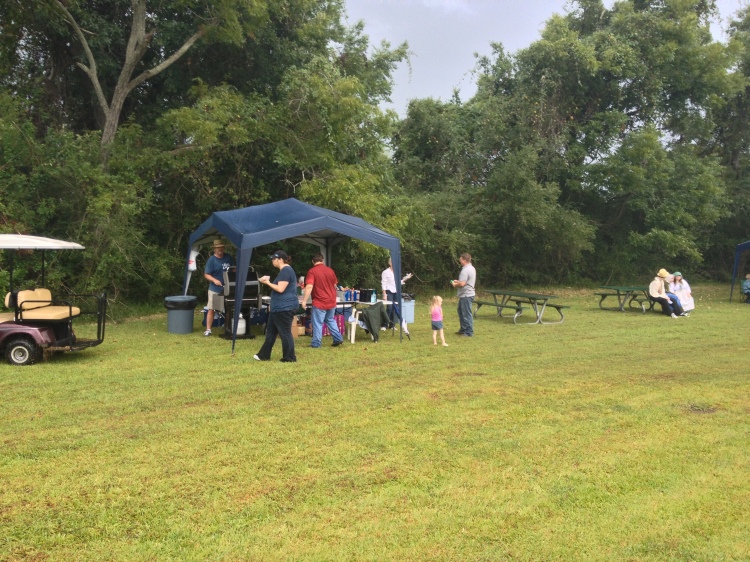
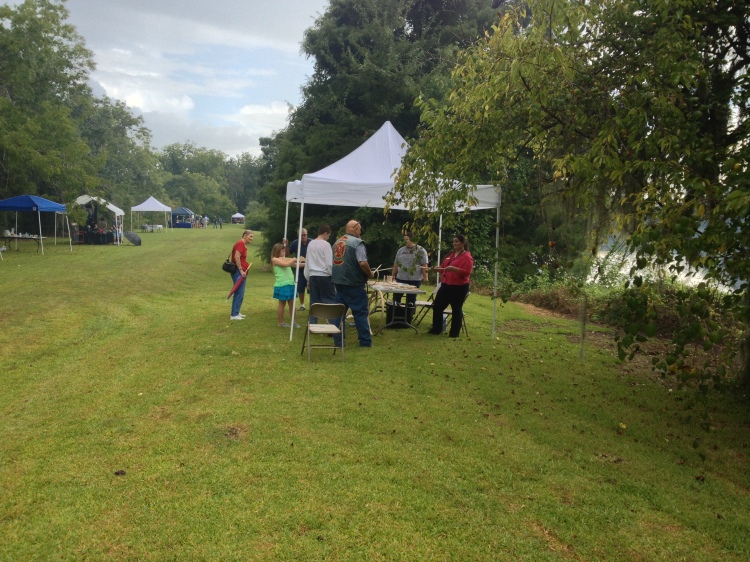
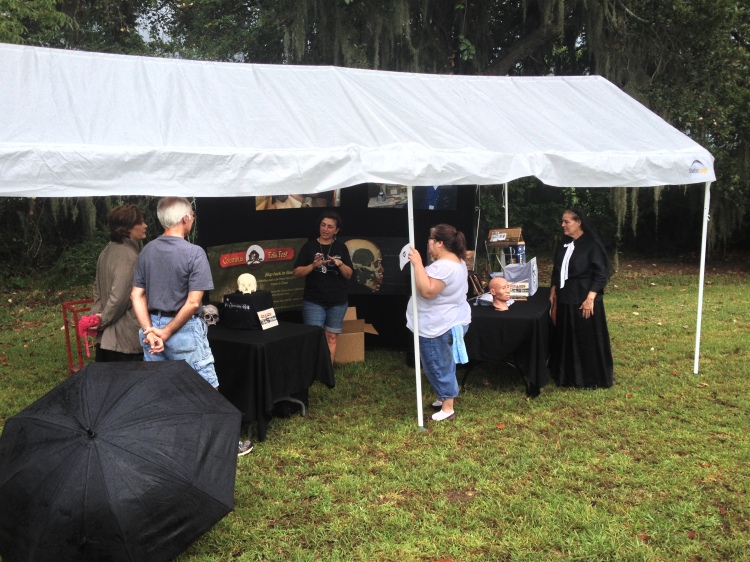
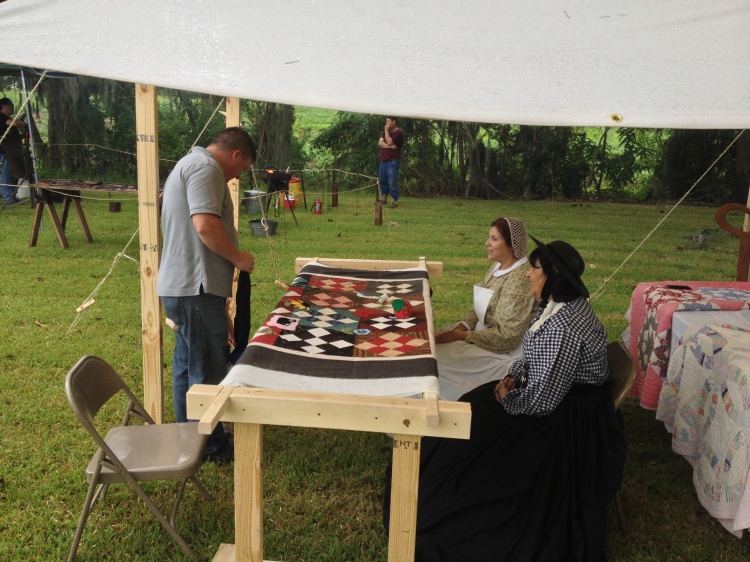
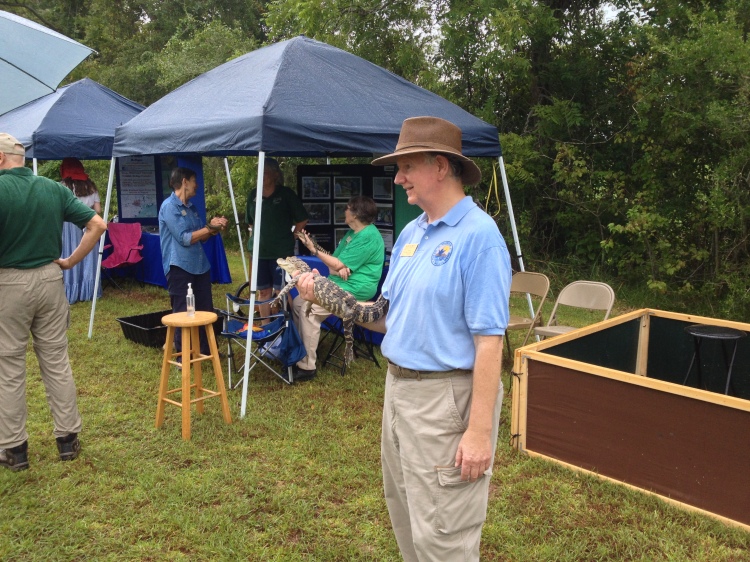
I next encountered some of the craft and food booths. I didn’t get a picture of each one but got many of them. One of them even had a small alligator. 2013-09-07 10.33.26 2013-09-07 10.33.36 2013-09-07 10.34.38 2013-09-07 10.42.59 2013-09-07 10.44.45

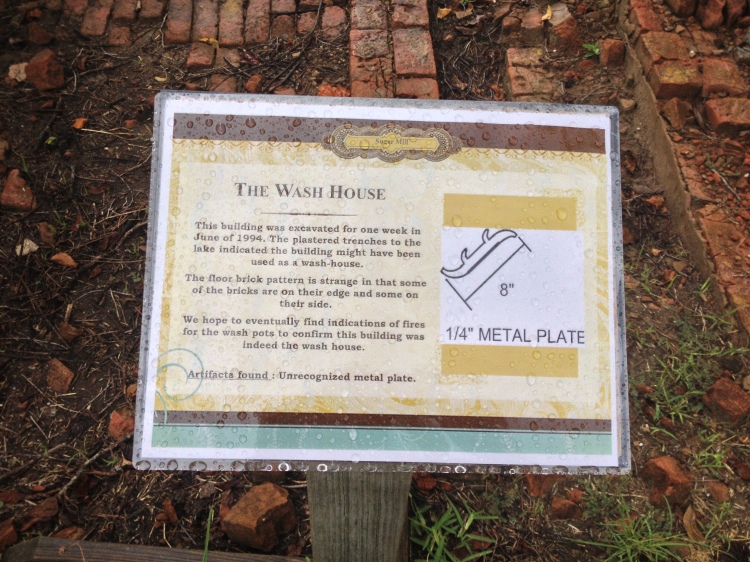
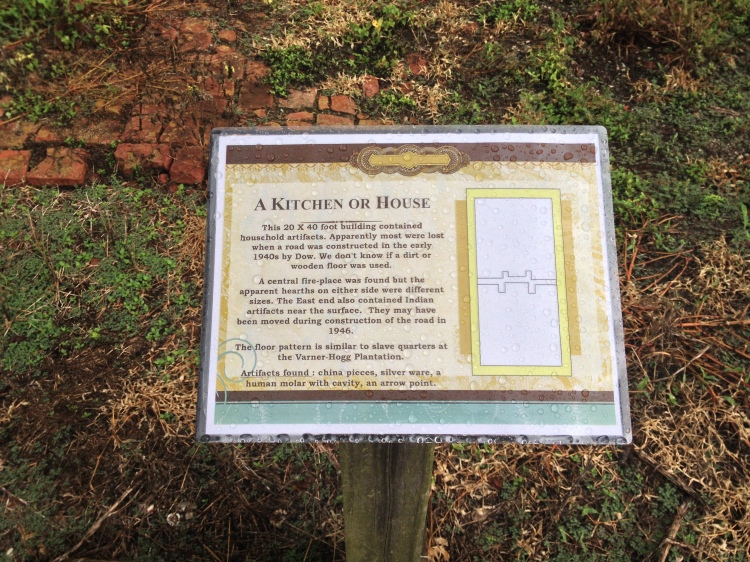
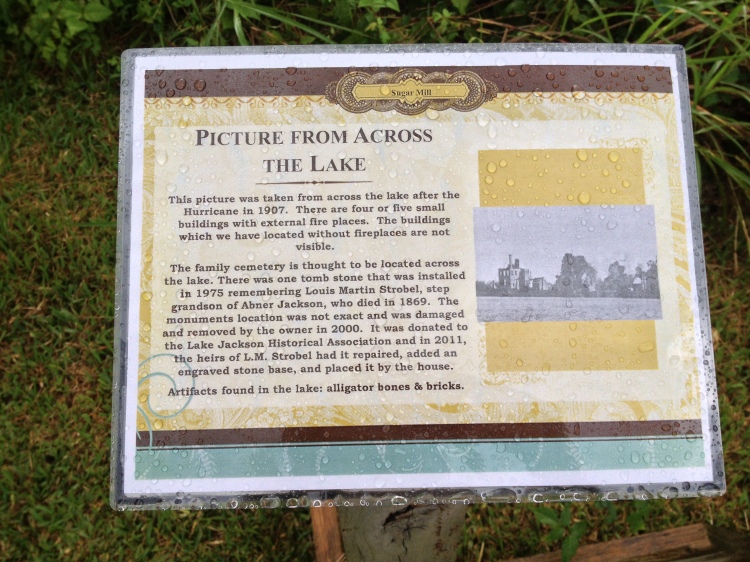
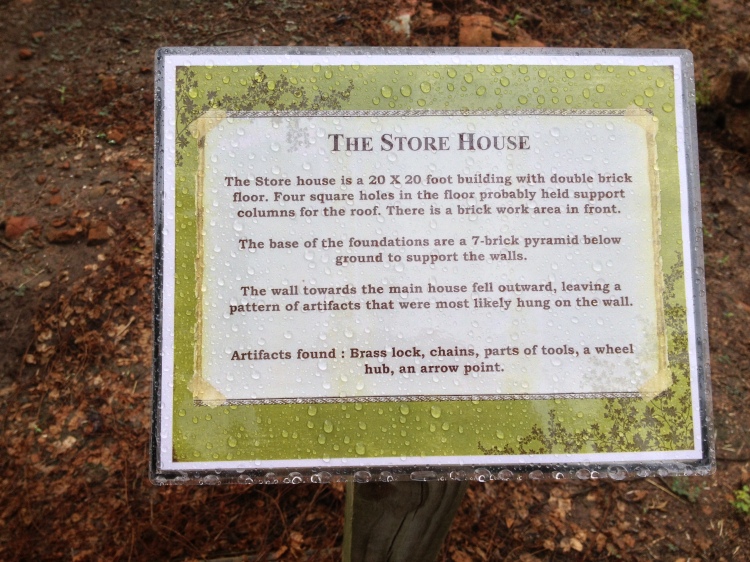
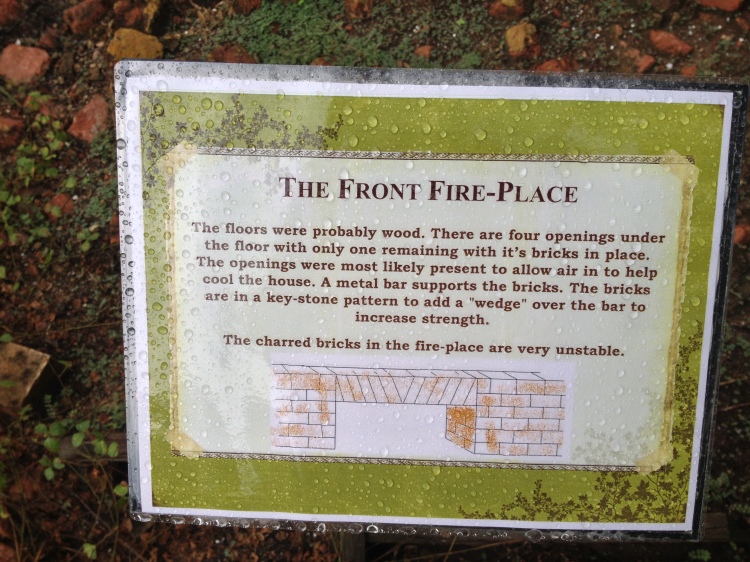
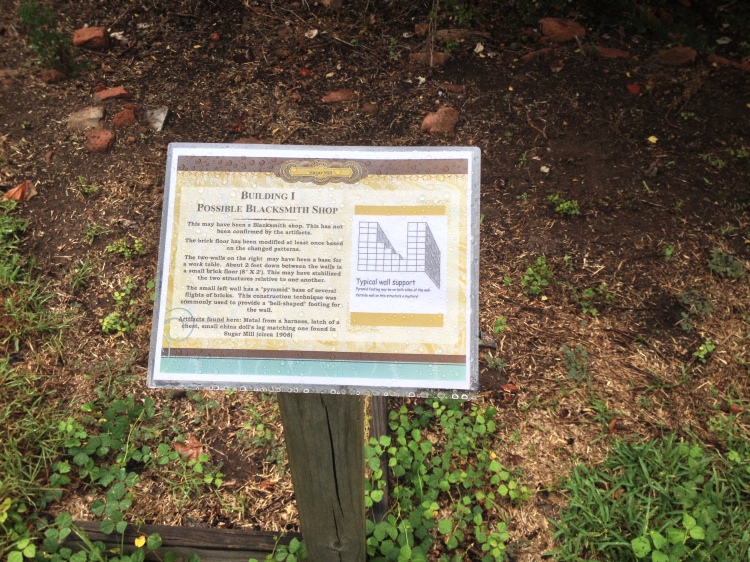
In addition, there were a half-dozen laminated signs and two more permanent signs with bits of information as part of the site’s permanent display.

2013-09-07 10.38.41 2013-09-07 10.39.17 2013-09-07 10.39.47 2013-09-07 10.40.25 2013-09-07 10.41.19 2013-09-07 10.33.00

2013-09-07 10.17.48

2013-09-07 10.42.16 2013-09-07 10.16.57 copy

With the exception of the one man serving as an enslaved historical reenactor, there was no mention or discussion–directly or indirectly–of enslavement. In fact, he was the only black person present. 

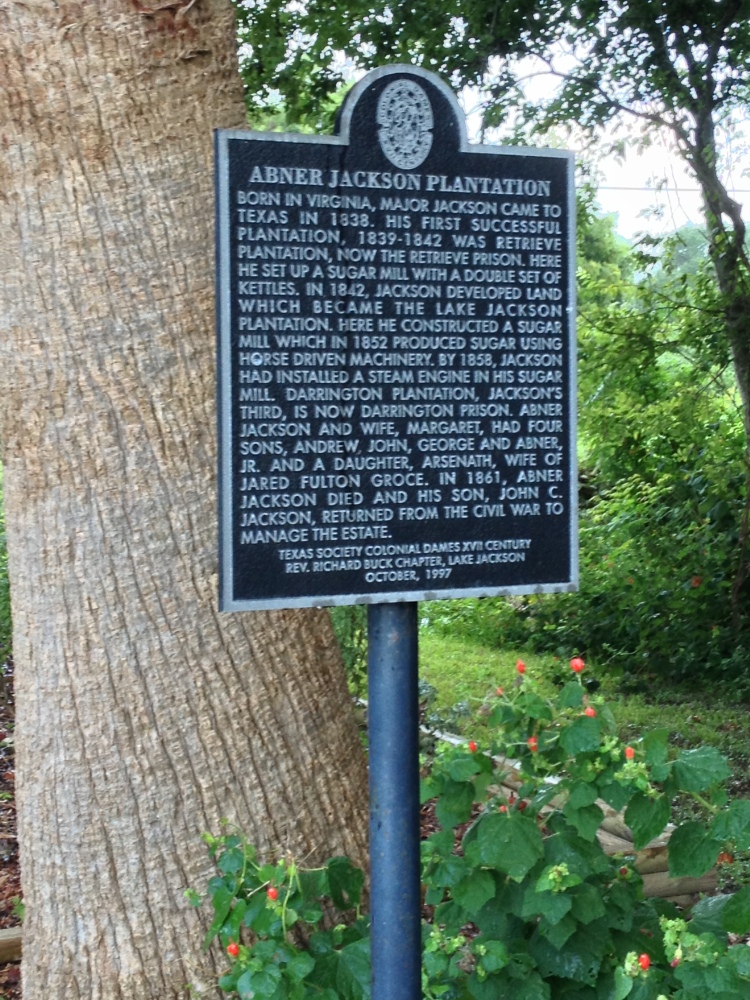
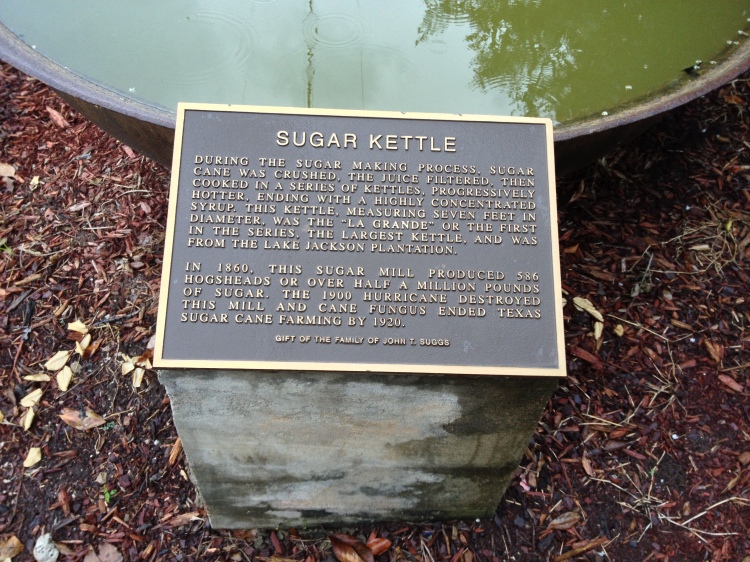
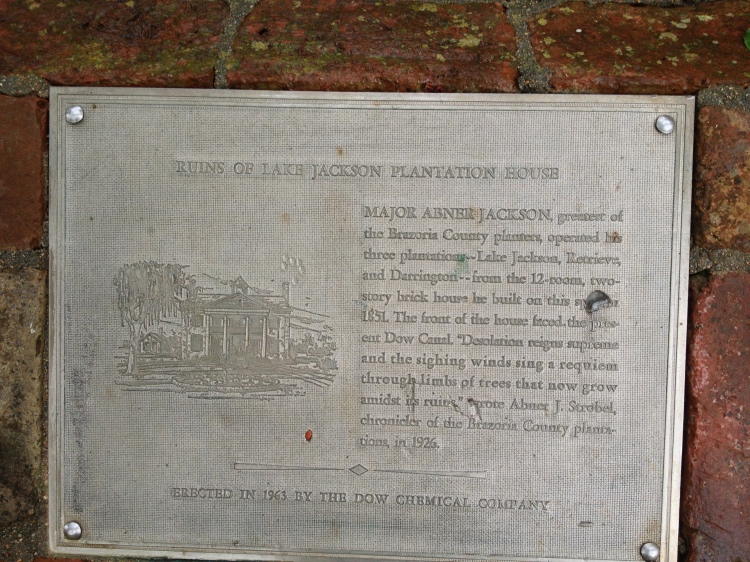
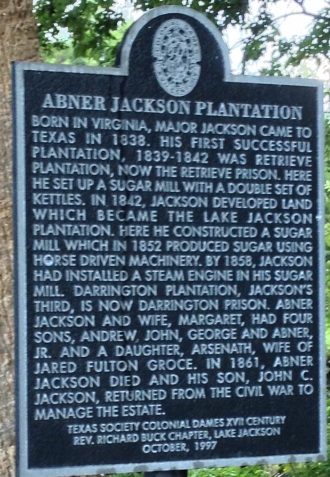
Take a quick look at the Texas Historical Commission’s plaque about the plantation again. There is no mention of enslaved African Americans. Credit for the plantation’s success is given to machines, horses, and Jackson himself. Likewise, none of the other signs recognized the constant, coerced labor African Americans faced. Additionally, we know black women were very likely to face all kinds of sexual abuse. 

In reality, Abner Jackson had at least 300 enslaved African Americans on 3 plantations and most certainly many more because numbers were always purposely underreported. He was Brazoria County’s largest plantation owner. (Lake Jackson is in Brazoria County.) And he was in Texas’s top three enslavers. Lake Jackson, perhaps ironically, perhaps not, is not named after a “Lake Jackson.” It’s named after Major Abner Jackson. 

Furthermore, in 1860, at least 72 percent of all people in Brazoria County were enslaved. More specifically, there were roughly 2,027 whites; 5,110 enslaved African Americans; and 6 free African Americans. In the decade leading to the Civil War, plantation life greatly increased in Brazoria County, making it the richest county in Texas. There were 46 plantations in this county that produced sugar and cotton. Some plantations also cultivated oranges and lemons and raised cattle. Enslaved African-Americans in Brazoria County produced 3/4s of the entire state’s output. 

In no way did anyone running Plantation Day try to recreate the cruel dynamics that existed under slave societies. As presented , the relationship between Abner Jackson, his business parter, and Jackson’s slave was humorous on one level, and totally offensive on another level. All three were in and out of character. They in no way attempted an honest, though appropriate, display of what slavery was like – not that I expected them to either. Plantation Day made the days of Plantations seem natural, fun, and no big deal. Check out this excellent article for information about things as they really happened.

When I left to attend this morning, I wasn’t sure if the event would even still happen because it was raining hard and thundering. At the actual site, it rained lightly the entire time and thundered off and on. The mosquitoes were horrible. I don’t really know how many people were there because it was not organized and was spread out over at least a half-mile. The parking lot was level full. On one level, that the event had at least a good handful of booths and visitors throughout shows how dedicated people were to seeing this event happen or attending it. Lightning was in the area. Heavy, heavy rain nearby. And (I’ll say it again), the mosquitoes were horrible. A public swimming pool or any outdoor garage sale or something would have closed. 

As I was about to leave, “Abner Jackson’s business partner” passed near me, turned to “Abner Jackson” and said, under his breath:

“You know, I really don’t know my history.”