The Civil War: Causes, Myths, and Sources with a focus on Brazoria County (Part 2 of 2)

Directly below are my speaking notes for talks I gave to the Northern Brazoria County Democrats and Southern Brazoria County Democrats back in May 2010 in response to a very problematic resolution issued by Brazoria County. 

Part one of this posting can be found here.


You should be able to enlarge, if desired, by clicking and then using your Web browser’s zoom function.

The Issue:

In April 2010, as you may know, the Brazoria county judge and four county commissioners signed a “Resolution” addressing issues pertinent to the Civil War. This “Resolution” is actually identical to one issued by the state of Texas in 1999. I brought copies of this for everyone. Please take a second to look at it.

This “Resolution,” for example, states:

1) that the Confederate States formed and the war started over a struggle for states’ rights and individual freedom,

2) that 98 percent of Texas soldiers “never owned a slave and never fought to defend slavery,” and

3) that the war was not started or fought because of slavery but was fought to protect homes and heritage.

I am against this “Resolution” on ethical and historical grounds, and I would like to address some of these today. Please understand that my position is not political. My position is moral and historical.

Brazoria County:

Let me start by asking you a question. So, we are in Lake Jackson. We all know this city is named after Abner Jackson. Someone take a guess as to how many enslaved peoples he had? He had at least 300 enslaved African-Americans on three plantations and most certainly many more because numbers were always purposely underreported. He was the county’s largest plantation owner. And he was in the state of Texas’s top three enslavers.

So now if you had to guess, what percentage of the population in Brazoria County was enslaved in 1860? In 1860, at least 72 percent of all people in Brazoria County were enslaved. More specifically, there were 2,027 Whites; 5,110 enslaved African-Americans; and 6 free African-Americans. In the decade leading to the Civil War, plantation life greatly increased in Brazoria County, making it the richest county in Texas. There were 46 plantations in this county that produced sugar and cotton. Some plantations also cultivated oranges and lemons and raised cattle. Enslaved African-Americans in Brazoria County produced 3/4s of the entire state of Texas’s output.

Brazoria County, more than any other county in Texas, should not have issued this “Resolution.”

Texas:

But, Brazoria County did not act in isolation. Slavery was an important cultural, economic, political, and social institution throughout the state of Texas.

First, to go back in time before 1860, we have all heard about the Texas Revolution. Many of us have heard that it was about fighting a repressive and uncaring Mexican government led by Antonio López de Santa Anna. While there were important conflicts between those living in Texas and Mexico, especially issues of immigration and control, the main issue was actually slavery. With its independence from Spain, the Mexican government had abolished slavery in 1829. Texans refused to comply. A few years later they declared war and won the Texas Revolution to maintain and spread slavery. It was also planned that Texas would join the United States as another slave state.

Once independent Texas wrote its own constitution. The Republic of Texas constitution: 1) guaranteed slavery, 2) made all Whites, and only Whites citizens, 3) and in addition to limiting citizenship to Whites, it said that free Blacks and Indians cannot reside anywhere in the state. Texans fought the Texas Revolution to maintain slavery and then guaranteed that right with its independence.

From 1845-1865, the practice of enslavement greatly expanded in Texas. In 1836, there were only 5K enslaved people in Texas – total population about 38K. In 1860, there were 128K, representing 30 percent on the population. Slavery was present in at least 2/5 of the state. In 1860, these 182K enslaved African-Americans were kept enslaved by 120K families, 30 percent of the free population. Moreover, this 30 percent of slave owners controlled 68 percent of all public offices in the state.

Causes of the War:

Now I want to briefly talk about causes of the war. Popular culture, news media, and others frequently give many different and contradictory reasons. Brazoria County’s “Resolution” regretfully reinforces this belief. So, how many at some point were told in school or read somewhere that the war was over “states’ rights”? However much parts of our society want to belief that, it is not true. The war was caused by the continued conflicts over slavery.

Of course, there were many issues that resulted in the Civil War, but all of the issues directly and specifically point to slavery. These side issues include land expansion AND the conflict between abolitionists and those who created and spread pro-slavery arguments. ALL evidence indicates that soldiers, politicians, and everyone else fought the war because of slavery. The notion that “states’ rights” had anything to do with the war was not created until well AFTER the Civil War.

The Civil War:

As tension built throughout the nation over the issue of slavery, South Carolina announced that it was leaving the Union in December 1860. Starting in December 1860, following the lead of South Carolina and other states in the Old South, Texans voted on whether or not to join the Confederate States of America in 1861. With the exception of a handful of counties, the majority of Texans voted to join the Confederacy. 122 counties were for it, 18 were against it. Someone take a guess as to what the vote was in Brazoria County? 99.6 percent of the vote in Brazoria County was for secession: 527 for, 2 against.

So to reiterate in 1860, 72 percent of Brazoria County’s population consisted of enslaved persons, while the state of Texas specifically AND the south in general as a whole had 30 percent of their population enslaved. Brazoria County had many rich plantation owners who were committed to keeping their enslaved peoples and who sought to maintain White supremacy. Enslaved Africans in Brazoria County created the wealth that made Brazoria County the richest county in the state. In other words, about 3 out of 4 people were not paid for their work.

Upon asserting its plan to leave the Union, each state wrote up why they were leaving. These secession papers provide a key insight into why southern states fought the war.

The Texas Ordinance of Secession (1861), includes the following:  

We hold as undeniable truths that the governments of the various States, and of the confederacy itself, were established exclusively by the white race, for themselves and their posterity; that the African race had no agency in their establishment; that they were rightfully held and regarded as an inferior and dependent race, and in that condition only could their existence in this country be rendered beneficial or tolerable…. The servitude of the African race, as existing in these States, is mutually beneficial to both bond and free…

Everything in the secession papers points to slavery.

On another note concerning the “Resolution,” it says that 98 percent of those who fought in the war never owned a slave. This claim does not make sense. 25 percent of Southerners owned enslaved peoples as a family, 30 percent in Texas. The best data estimates that the total Texas population in 1860 included 92K White men of fighting age and about 90K of these fought in the war. So this means/seems to indicate very clearly that at least 20 percent of those who fought in the war directly owned enslaved peoples OR someone in their immediate family owned them.

And it really does not matter if one specifically owned enslaved people or not. Slavery was a cultural, economic, and political system that benefited virtually everyone except those who were enslaved. Non enslaver Whites generally supported slavery because 1) they basically had to for their own safety, 2) they had status over the enslaved Blacks, and 3) society told them they too could be rich and own enslaved people with hard work, and 4) they depended on the products and wealth produced by enslaved persons.

Regardless, letters, regiment newspapers, and diaries indicate that soldiers were fighting about slavery far above and beyond anything else.

Memory:

Finally, I want to address the issue of memory and the war. Sometimes people say: The Civil War was almost 150 years ago, why does any of this matter? It matters for several reasons that we can address today.

First, we need to support the truth, as much as possible. Without a solid and accurate understanding of our past, we cannot have nearly as full an understanding of present-day issues and concerns. Those who neglect the supreme importance of slavery in the Civil War are guilty of denial and are rewriting history.

Second, it matters because 4M out of 12M were enslaved in 1860 throughout the South. 1 in 3 people in the South were enslaved. 1 in 7 in the nation as a whole. These enslaved African-Americans played an incalculable role in the development of our entire nation. It is disgraceful to undermine their place. Like we already said, the notion that so-called “states’ rights” caused the war or had any part in the war was not created until AFTER the Civil War and was done so by apologist of slavery. States’ rights had nothing to do with any of the real causes of the Civil War.

And finally, we are still dealing with the legacies of slavery, as evident by the “Resolution” itself. After the war, southerners created segregation to keep African-Americans from having equality. For example, the University of Texas was created in the 1880s as an institution closed to African-Americans, as dictated by an amendment to the Texas constitution.

Symbols of the Old South and of slavery are still with us. Have you ever thought about the name of the streets where Kroger and Dairy Bar are? Plantation and Dixie?

On another note, the “Resolution” calls for April to be Confederate History month. A professor at UH described this move by saying that the “declaration of Confederate History Month is an extraordinary attempt to justify a succession movement that rested solidly on a firm commitment to White supremacy.” It is absolutely essential to remember history and to discuss history, but it needs to include both the good and the bad; and it needs to be accurate.

Conclusion:

When the Civil War began in 1861 there were 4M enslaved African-Americans valued at $3B, which was 48x the federal budget. 72 percent of the population of Brazoria County was enslaved. The points discussed in this presentation today are only a few of those available.

The “Resolution” signed and issued by Brazoria County has virtually no historical grounding, especially for this county. It does not speak to the truth, and this is especially important considering other contemporary debates about history.

So next time you say or hear someone else say “Our Great State of Texas,” think about this: Texas was specifically created to maintain and perpetuate the enslavement of African-Americans and it continued to do so until shortly after the end of the Civil War on June 19, 1865. (And even this didn’t bring true freedom for those racialized as Black.) Historical evidence clearly supports the assertion that slavery was an important and expansionist institution throughout the South, and in Texas, especially in Brazoria County. People died to protect slavery, and people died to abolish slavery.

Finally, as the Thirteenth Wisconsin Infantry Regiment said in February 1862: The fact that slavery is the sole undeniable cause of this infamous rebellion, that it is a war of, by, and for Slavery, is as plain as the noon-day sun.

We can’t pick our history, but we can pick our future.


See also:

Taken by Andrew Joseph Pegoda 9-7-13 during Plantation Day. This is a picture of Abner Jackson's Tree know as The Enchantment Tree. Ironically fitting, perhaps?
Taken by Andrew Joseph Pegoda 9-7-13 during Plantation Day. This is a picture of Abner Jackson’s tree know as The Enchantment Tree. Ironically fitting, perhaps? Enchantment is also Lake Jackson’s motto. 

The Civil War: Causes, Myths, and Sources (Part 1 of 2)

To even try to say the Civil War not not about enslavement is to deny evidence and disrespect the Black Men, Women, and children who suffered and died to build this nation we love to celebrate as the best ever, the beacon of democracy. 

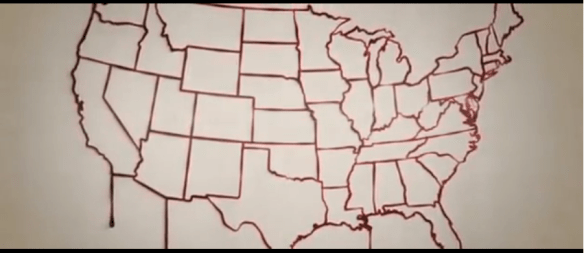
screen-shot-2013-06-15-at-8-16-46-pm


Among scholars of the Civil War, enslavement, or of African-American History, for example, there really is no debate to speak of: The Civil War was about an ever growing controversy related to the institution of slavery–no more, no less. In fact, in one of my graduate seminars, Slavery and American Society with Steven Deyle (his book is an excellent read, by the way), back in 2009, we had a discussion that involved three questions: When was the Civil War possible? When Was the Civil War probable? When was the Civil War inevitable? My response was: 

I would argue that the Civil War and divisions between the North and South were possible beginning in 1619 when Jamestown, Virginia, bought its first shipment of approximately twenty enslaved Africans from Dutch slave traders. Ira Berlin and others argue, from the beginning of chattel slavery in North America, the North was never more than a “society with slaves” whereas Southern colonies–for example, Virginia in the 1660s as evident by Anthony and Mary Johnson–quickly became “slave societies.” Likewise, I believe the Civil War was probable with Eli Whitney’s innovation of the cotton gin in the 1790s and the resulting Cotton Kingdom. The Civil War was inevitable in the 1830s with the rise of anti-slavery and abolitionist groups in the North and with proslavery arguments becoming firmly established in Southern mores. 

Political conflicts and compromises in the 1850s only further delayed the already inevitable. Be sure to read my article about the Bleeding Kansas riots in Disasters and Tragic Events. You should be able to read it through Google Books here and then by searching for “Bleeding Kansas” in the little search bar on the left below the image of the book. The article is on pages 61-65. 


Despite this much-deserved scholarly consensus that the Civil War was only about enslavement–one supported by all of the available evidence–the general public and various sectors of governmental organizations persist in saying it was about states’ rights and a host of other things. See this article of mine from August 2013 that looks at how the Texas STAAR test distorts history. In Texas, the state curriculum falsely states causes of the war as being: “states’ rights, slavery, sectionalism, and tariffs” OR “sectionalism, states’ rights, and slavery.” Regardless of the inaccuracy, ORDER here speaks volumes. 

Confederate History Months have become somewhat popular as well as offensive documents such as this one issued by Brazoria County, which I have protested against numerous times due to its countless factual accuracies and offensive nature. (More on this here, part two of this posting.)

We must remember that Birth of a Nation and Gone with the Wind and a host of other literature associated with the Plantation Myth and the Lost Cause rhetoric were deliberately created and promoted to rewrite history at the expense of those United Statesians racialized as Black. The Cuban-Spanish-American War (1898) also contributed to this nation-wide shift in historical memory- the (White) nation “needed” to be unified and happy. Additionally, the rise of the de jure Culture of Segregation in the South speaks to both the rewriting of history and the uniting of all Whites against all Blacks, and it speaks to the very important role issues of enslavement played in the Civil War–especially since via sharecropping, convict leasing (also known as neo-slavery), the lynching of Black Men and the rape of Black Women, and many, many other cruelties, African-Americans were in many ways put back in enslavement-like conditions but for sure were not given the freedoms promised by Emancipation.

If you remember nothing else, remember that no one said anything about the Civil War being about “states’ rights” until well after the war and only did so in a deliberate effort to rewrite History such that it might look more favorably on the South.

The only “states’ right” being fought for was the right to keep enslaved Blacks as property and unpaid laborers that could be and were bought, sold, and killed. This “right” and desire was vocally stated. Southern states desired a society where only White Men and Women could be citizens. 

Anytime we hear the phrase “states’ rights,” it is absolutely essential to also recognize how it is a code term for racism (and classism and resistance to Civil Rights and Human Rights). For example, 8 Sneaky Racial Code Words and Why Politicians Love Them says the following about “states’ rights”:

Totally innocent and nonracial, right? Not so much. López says we first heard this from Barry Goldwater, who was running on a very unpopular platform critical of the New Deal, during the 1964 presidential election. “He makes the critical decision to use coded racial appeals, trying to take advantage of rising racial anxiety in the face of the civil rights movement,” says López. In other words, while “states’ rights” is a pretty racially neutral issue, you just have to look at what was happening at the moment to realize that everyone knew it translated to the right of states to resist federal mandates to integrate schools and society.


There are an abundance of primary sources where people in the Civil War era tell us exactly what they were fighting for. Likewise, countless scholarly books on the Civil War examine why the Nation went to war. This list is designed to help direct people to good sources. If you know of other “must reads,” let me know, and I will add them. 

Select primary sources:

Select secondary sources:

This is not to say a homogenized North and South existed. This is also not to say that people in the North were committed abolitionists–they weren’t–and although part of their time, they were generally most racist toward Blacks.  

Slavery caused the war and started the war, but the war was not about ending slavery until 1863, until that point is was about preserving the Union. 


See also:

 slave-auction-virginia-P

21 Essential Concepts for Succeeding in Introductory U.S. History

Recently I was given the idea of developing a set of key terms that are applicable to any given course in its entirety. Below are twenty-one major ideas that intersect with just about every lesson in the two (three for those on the quarter system) freshmen history classes for college students. Please feel free to use and adapt. I’m very interested in seeing similar lists and/or any ideas that should be added to this list. 

1. history- [h]istory, with a little “h,” is anything and everything that has been said, thought, written, created by anyone anywhere from less that a micro-second ago, including actions and influence from weather, animals, plants, etc.

2. History- History, with a capital “H,” is an academic and human endeavor used to try and reconstruct the past and make sense of the world based on evidence, hopes, and/or fears. History, as continually examined and (re)told, is always changing, shifting, and is greatly selective in terms of who and what it remembers and what it tells, minimizes, or emphasizes. In sum, History is NOT what happened, but a story about what happened.

3. primary source- Primary sources (or cultural artifacts, evidence ) give us first-hand information about something — events, thoughts, values, perspectives, etc. Any source can be a primary source in some regard.

4. secondary source- Secondary sources are based on primary sources. Keep in mind, too, that every secondary source is also a primary source in some fashion or another. 

5. historical memory– Historical memory (or a society’s myths) is the way in which people and institutions remember, memorialize, and celebrate or not celebrate the past. Historical memory is similar to History in that it is and can only be a small part of all of history, but it diverges from History in that historical memory refers more specifically to non-academic, non-source-based History. For example, a scholar interested in the historical memory of the American Revolution might look at celebrations of Independence Day over time or various representations of the American Revolution in film and literature. Historical memory, in sum, refers to popular understandings of the past.

6. historiography- Historiography is both the History of History and the study of various approaches, theories, and sources used to understand the writing of, teaching of, and study of the past. When looking at historiography, a student of History might compare and contrast different monographs about the Vietnam War, asking how scholars are similar and different in terms of the sources used, arguments, biases, etc.

7. bottom-up History- Historiographically, historians analyze events from a variety of perspectives, one being bottom-up History. When historians analyze from a bottom-up perspective (or grassroots) they are looking for the ways in which everyday people influence larger societal events. If we wanted to analyze the Civil Rights Revolution from a grassroots perspective, we would look at the Montgomery Bus Boycott and individuals such as Fannie Lou Hamer, for example.

8. top-down History- For much of history, top-down History (or the “great [White] Men” approach) was the primary and frequently exclusive way in which people wrote about the past, at least in the so-called Western World. This approach focuses on change resulting from the action or inaction of politicians, generals, the super-rich, and wars, for example. This approach is still used and is certainly needed to fully understand events. For example, a top-down approach to the Civil Rights Revolution would look at the (important) role the NAACP, Supreme Court, presidents, etc. When any one approach is used, much is excluded and understandings are unnecessarily limited.

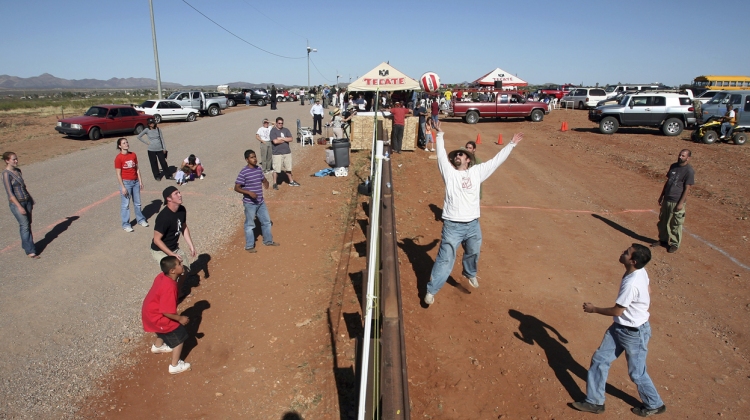
9. geopolitical- The term “geopolitical” helps us recognize that geographic boundaries between neighborhoods, cities, counties, states, and nations are sociopolitical and geopolitical constructions and regularly change. Two areas, such as the White and Black parts of town, might be geographically close but culturally very far away. Similarly, the border between various nations might have little or no meaning to the actual people who live and work there.


http://www.theatlantic.com/infocus/2013/05/on-the-border/100510/

10. government(s)- Since the Civil War and especially since World War II, the government has played an increasingly large role in the everyday life of United Statesians. But regardless of time and place, government(s) have played a significant part in life for everyone. Governments pass laws (laws are always a response to some hope or fear), collect taxes, perpetuate wars, and otherwise organize and divide people into large groups. We must always remember that “the government” is no single, monolithic organism. Frequently, parts of the government (including different political parties) are at odds with each other. When discussing actions of “the government,” we must be as specific as possible. Do we mean the police, a state court, the national legislature, etc?

11. citizenship(s)- Notions of citizenship have always been in great flux in the United States. Who is a citizen? What does it take to become a citizen? We could even look at levels of citizenship. Who can vote? Is citizenship a right or privilege? Being a citizen of a nation always involves being part of a social contract or a reciprocal relationship. What is the government going to do for its citizens? What do citizens do in return? Citizenship also applies to the ways in which we belong or do not belong to a school, church, family, or other social group. 

12. mores- Mores are the core values, expectations, biases, worldviews of a given culture, nation, sub-culture, etc.

13. social construction- By recognizing that everything is a social construction (also called relativism), we can better understand and appreciate the differences between time and place, nations and peoples. In order to most effectively understand the past, it is necessary to look at things from a variety of perspectives and to try and understand how they came to be. In an example focused on point-of-view, there is always a gap between why a government fights a war and why its soldiers do.

14. –ISMs- The suffix -ISMs (e.g., ethnocentrism, racism, sexism, industrialism, social darwinism, nationalism, imperialism, colonialism, liberalism, conservatism, progressivism, postmodernism, Victorianism, modernism capitalism, communism, socialism) includes many powerful, pervasive ideologies. ISMs have societal-wide consequences. Some of these such as liberalism or communism, provide a very specific worldview, set of promises, and “evils” to overcome. (See this post for more info.)

15. racialized- A person is not White or Black, but a person can be racialized as White or Black. The use of racialized or racialization allows us to recognize how and why people are classified in various racialized categories, while remembering the process is a social construction and that people are people first. Racialization is frequently subjective and can vary by time, place, situation, or even clothing, for instance.

16. genderized/sexualized- Very similar to racialized, by using the terminology “genderized” (instead of “gender”) and “sexualized” (instead of “sex”), we can more directly and specifically acknowledge that Male and Female, Man and Woman—are only socially constructions, even as so-called biological concepts. (See Why I changed my Facebook gender and so should you – Hidden Power of Words Series, #9)

17. intersectionality- Intersectionality recognizes the ways in which various form of discrimination and oppression and domination can and frequently do overlap. For instance, a Black Woman can face both sexism and racism. White, heterosexual, Protestant, cis-Men, although not always numerically in a given geopolitical locale, have been the majority group or the group in power in the United States. This group accounts for the status quo. Anyone who is different—by their own choice or the choice of others—in these so-deemed essential ways is likely to face discrimination. bell hook’s concept of the “White Supremacist Capitalist Patriarchy” is another great example of perspective of how discrimination and control overlaps.

18. “the other”- One way to analyze relationships in society is to use the binary of majority vs. “the Other.” The person who is “Othered” is seen as an outsider and a society’s mores frequently permit and encourage discrimination that would otherwise be illegal. Similar to intersectionality, the same person can be “Othered” in some relationships but not in others. For example, a White Woman would be “the Other” when looking at relationships between (White) Men and Women, but would not be “Othered” in looking at relationships between White and Black people.

19. institutionalized- When looking at discrimination it is important—especially because an increasingly number of people say racism no longer exists or use one “success” story (such as having a Black President) to say racism is dead—to recognize the ways in which it is not individual so much as systemic or institutionalized. By looking at racism, sexism, etc. from this perspective, we can see how the Constitution, laws, advertising, school curriculums, and every other aspect of society embodies and perpetuates—consciously and unconsciously—the status quo.

20. agency- More and more, historians recognize that every one has agency – even if that agency is just the will to live in the face of extreme violence, physically or psychologically. Agency is a term historians use to refer to the control one has or asserts over their own situation. It is a way for people to resist authority/majority in many cases. For example, enslaved Blacks asserted their agency by forming what sociologists call “fictive kin” networks (families of friends) or by deliberately breaking tools. This approach is similar to looking at bottom-up history in terms of specifically looking at everyday people, but a person looking at agency could look at the agency of all parties.

21. attributions- A slightly different way of looking at agency is by looking at attributions–a psychological concept. Attributions are the whos and whats to which people attribute their actions. These are internal (feelings, traits, abilities, something about the person’s core self) or external/situational (starts on the outside); controllable or not controllable; and either changeable or not changeable.

 See also:

And other articles about teaching here or examples from my history classes here


Rasco Middle School to Children: “Congratulations! You’ve been awarded ‘Most Gullible’”

As I learned from a friend today, Rasco Middle School decided to have students nominate students for various negative “awards” based on a list provided by teachers.

As reported by CBS-KHOU news, one of these students, a child on the autism spectrum, was nominated both “drama king” and “most gullible.”

My friend’s daughter was nominated “drama queen.”

What in the world were these teachers (not) thinking? At this point, the ceremony where these negative “awards” were to be distributed in front of the entire school has been canceled, but this is not enough. 

Rasco Middle School and Brazosport Independent School District need to issue a public apology and individual apologies, possibly reconsider assignments of some teachers and administrators (do we really want these individuals charged with being educators and role models for children at such a precious and important age?), and mandate all personal at Rasco Middle School receive multicultural diversity sensitivity training and lessons in human growth and development. Furthermore, the school needs to bring in professional psychologists—and it doesn’t matter that school is almost over—and have a talk with all of the students together and a talk with some of the students individually.

Such negative, demeaning “awards” have no place in a classroom.

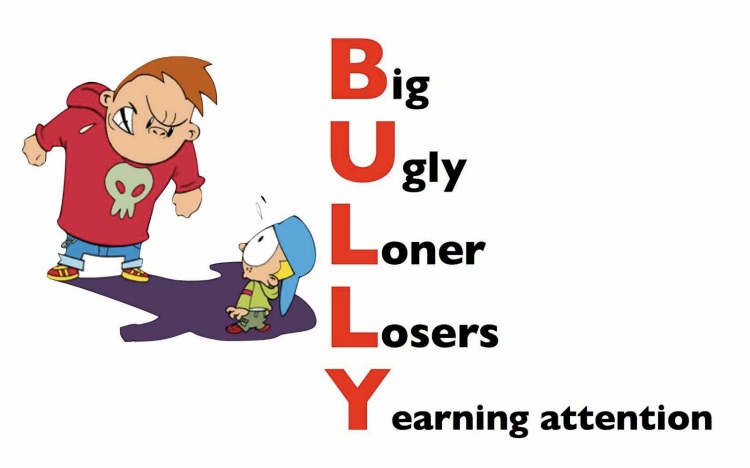
The teachers who came up with this idea are, sadly, bullies, pure and simple, and they are encouraging other students to be bullies, and they are hurting many of the most creative, gifted, and loving students.

I’d encourage you to contact the Principal at Rasco at RPelton@Brazosportisd.net and the Superintendent of BISD at KHolacka@brazosportisd.net. The voice of The People can be most powerful. 

This IS NOT ABOUT everyone needing an award…not at all…this is about stopping BULLYING. 

Words are unbelievably powerful – especially when sanctioned by those with authority. 

Added June 4, 2014, 4:07 pm:
I learned today another one of the “awards” was “Most Beautiful.” Such an award (like the others) is is no way appropriate for 5th and 6th graders when issues of self-esteem are particularly important. Additionally, such an award would unavoidably contribute to sexism (toward those genderized as male, female, etc), racism (toward those racialized as Black, White, etc), etc. “Beauty” is a social construction – people should focus on inner beauty anyway

bullyboy
Stated a bit strongly, but bullying is a huge problem in schools, especially among children

An Open Letter to Half Price Books – Please Stop Segregating History

Dear Half Price Books (and other book stores),

I have been visiting your stores occasionally for as long as I can remember. (I especially love the really big store in Austin that is in an old grocery store!) I frequently find interesting books and some good deals in the process. My students regularly comment they are able to find required books at your stores for much better prices than elsewhere. I also know that the Half Price Books provides the general public access to a wide variety of (academic) books they might not otherwise see. All of this is very good and commendable.

This said, one thing came to my attention today that disturbs me on both a moral and intellectual level.

I am a historian with specific interests in African-American history and cultural history. When I enter one of your stores, I always check the History section first. As I am writing my dissertation on the historical memory of the Civil Rights Revolution (called the “Civil Rights Movement” by most), I was particularly interested in the number of books the store I visited in Pearland had about this unprecedented social movement.

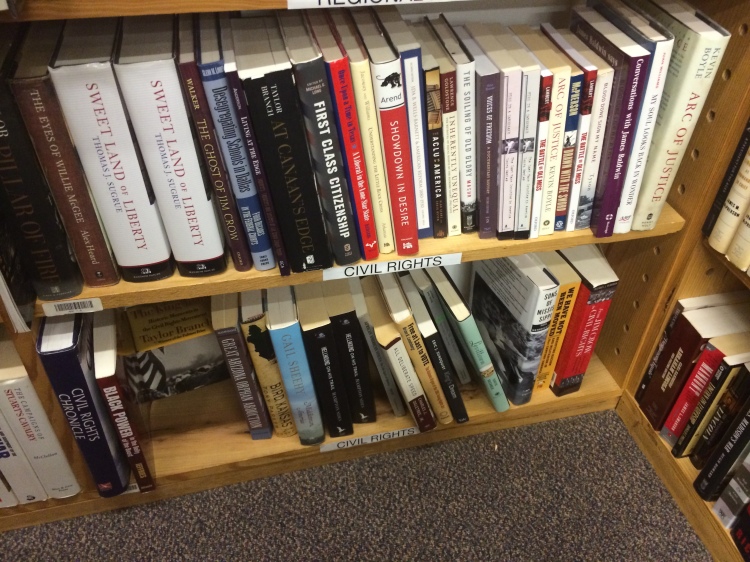
To my surprise, there was a label that said “Civil Rights.”

Civil Rights

To my disappointment, however, this section was confined to only two shelves and represented a very narrow scope compared to the books available. (Now, I know stores don’t have control per se over the books available.) This small section was in the middle of countless books about wars and United States Presidents. 

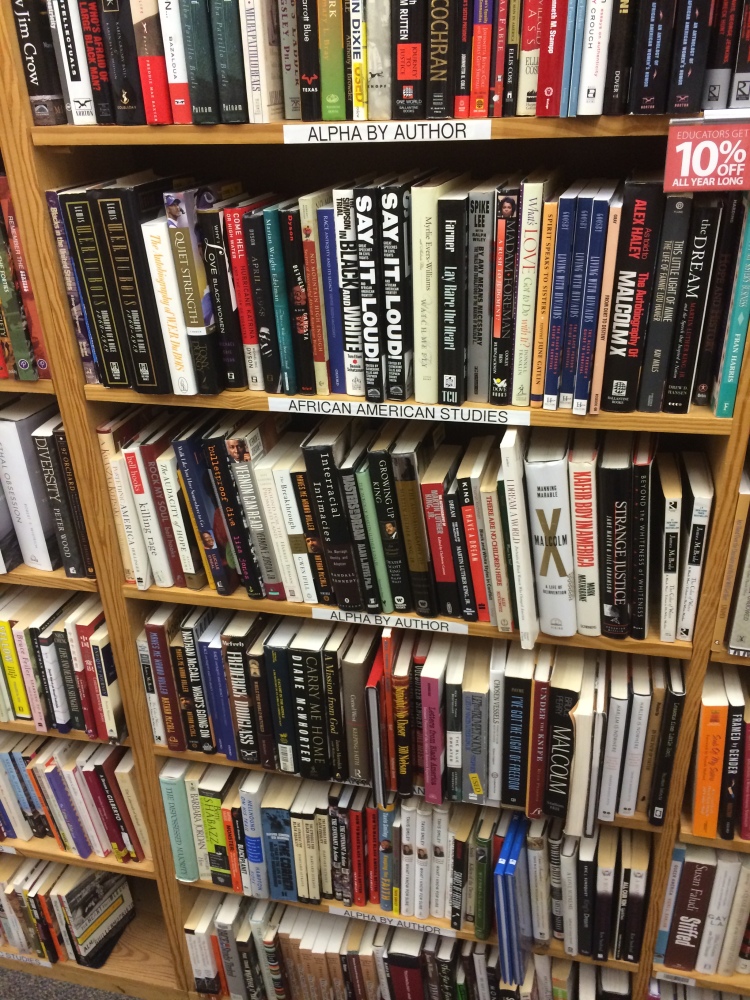
But, to my horror, in the very back of the store there was another section of books: “African American Studies,” “Women’s Studies,” “LGBT studies,” etc. While the “studies” departments at various universities have specific and important purposes, why are these segregated from the “regular” US History section (which is in the middle of the store on the opposite side)? The World History books and other History books are on the next aisle with the US History books.

Some of these books in the “Studies” section were indeed about the African-American Civil Rights Revolution, but all of these books actually belonged in the History section (and maybe a few in the Sociology section). After all, history (or the past) includes anything and everything that has ever happened. Our narratives of History or the rhetoric of where books are placed and how they are displayed speaks important volumes to larger mores and values. 

2014-05-30 14.50.00

As I wrote about in Is Black History Month Good or Bad,” there is an on-going problem outside of the Academy where far too many still believe that “History” to only made by presidents, generals, courts, etc.

So, why is African-American History and Women’s History and LGBT History segregated from the History section? Minorities have enough struggle being accepted and integrated into society. A bookstore seems like an excellent place to start to extended the incorporation. 

I would like to call on you to rearrange your book stores such that all books about those United Statesians racialized as black, genderized as female, or who do not fit the cis-heteronormative framework in some way or another are in the same section with other History books. This seemingly small step would help all of your customers who visit the History section see how diverse and complicated the past really is.

Thank you for your time. 

Sincerely, 

Andrew Joseph Pegoda

Please share, tweet, and comment, so hopefully Half Price Books actually sees this and change is made. Please consider sending HBP an email at customercare@halfpricebooks.com so they hear how many people are concerned about this. Thank you!

Creative Writing: Chaos and Confusion

All the chaos and confusion
The world turns round
The stars come and go
The wind blows
People walk
Cars honk
Screams
Phone rings
Car honks again
Sweat rolls down
Older man scowls
Wind eases thoughts
Tented windows filter and disguise
Industrialism is taking over
Mirror Mirror on the wall
Oversized trucks destroy the peace
The wind comes again
Music of the air
Music on the long-gone forest
Ghostly embraces
Music of the newness busting in
The fumes. They kill.
The history and myth dance around
Breathing. No, not that thought.
Sixteen wheels pounding the nature
To live really is to assert aggression
All is paused.
The wheels can’t move
Strangers bustling by
In such a hurry
Going nowhere, only consuming more soma
Capitalism destroys beauty
Powers of the Mind transformed to Meh
The world we used to know
Was never really
How to know?
Was that birds whistling?
It was.
Nature longs to return
To live is an aggression
No guarantees
Just a speck in time
Specks searching for meaning
Drive by cosmic forces
Lost in a sea
Longing for familiarity
Everything could be different
Time

Creative Writing: Awake in the middle of the night

Awake in the middle of the night

Awake in the middle of the night

This mysterious cloud glowing down

Wishing there was something to be done

So much sickness and no one cares

Bullies, monies, and selfies trap us all

(You communist.)

Such egotism

Such ignorance

Such sadness

It boils down to hopes and fears

We’re capable of little else

(Why are humans so egotistical?)

Power traps power and confines like magnets

(Ironically..legal…after all)

This great, everyday struggle with the Devil!

(Nothing else matters when eternal life is at State. Right!)

Rhetoric so perfect

Rhetoric so concise

(Not to mention semantical politics)

Rhetoric that tricks them all

Human expressions? reflections?

(Not like there’s time anyway!)

Who needs them?

So easy to trick

The game is perfect

Extreme leisure, depression to the core

Manipulation matters most

Illusions guide our way

Warped generation-old ‘universal’ myths

(What’s the purpose of a single apostrophe anyway??)

Re-re-re-rewritten histories to fool anew

Critical thinking is forbidden, you, you devil worshiper

“Run, Forrest, Run”

They say.

But for what.

“What does it mean to live if you have no choices?”

Oh the questions.

(Please stop.)

You know they won’t handle it.


Poetry of the mind.

That’s it.

Night_Sky_by_EPICHTEKILL

The Myth of the “Small Town”

Individuals and societies tend to construct narratives where small towns are superior to cities. This rhetoric is not new. While definitions in the United States confine “[small] towns” to population centers with less than ten thousand people, the functional, everyday definition is not so clear-cut. Images associated with small towns often conger up notions of communities with people who live free of the problems found in larger areas – free of crime, drugs, “strangers.”

Growing up, I had the idea that cities were dangerous, scary places, where you could never know anybody. This idea was (and is) reinforced by the news and perpetuated by the culture of fear. Despite the “ever present danger,” I have never seen, nor experienced any of these big-city horrors. I have been going to doctor’s appointments in Houston my entire life, and for the past seven plus years, I have been driving to Houston several times a week for school and work.

During this time, I have learned that a “small town” is possible in large cities. For example, I have lunch and supper at Panera several times every week up in Houston. I see familiar faces each time, the same as when I eat at a restaurant in a small town. Additionally, the degree to which I know my colleagues, students, and other friends in Houston is the same as it would be anywhere, really. In addition, cities offer so many more opportunities for cultural and political engagement than small towns.

There is an important element of Whiteness in the “small town” construct held so dear (this is by no means to say this also does not exist in the city – because it does). Historically, small towns (or suburbia) were legally and financially limited to individuals racialized as White due to deeply ingrained feelings of superiority and prejudice directed toward non-White individuals. De facto practices keep things much the same. We know from research that White people as an institutionalized group associate and use their Whiteness to experience feelings of familiarity and comfort. Familiarity and comfort that takes money. Money that has historically only been available to White people. Simply put, when we celebrate the “small town,” we are celebrating communities built on perpetuating discrimination.

With the “McDonaldization” (a term first fully articulated in George Ritzer’s 1993 book of the same name – one of those powerful prophesying books that is ultimately ahead of its time – on the same level of Brave New World) and “Walmartization” of society, every town becomes an “Anytown, USA.” Towns of every shape and size lose many of the unique business and architecture. Towns and cities are now wall-to-wall with restaurants, hotels, clothing stores, and car dealerships that could be anywhere, in any city, on virtually any street corner. No longer can a picture easily reveal information about the geopolitical location represented.

Despite popular opinion, statistics show again and again that gang activity is worse in small towns, that children in small towns are more likely to experiment with drugs, become pregnant sooner than hoped, or get into legal trouble. Statistics also show that just by virtue of living in a large city a person is automatically more accepting and willing to embrace and celebrate diversity. Additionally, large cities are much more likely to have diverse and successful small businesses because there is a population base to support them.

So, in sum, historical memory and contemporary memory conceives the “small town” to be a safe, comfortable place free of the crime and anonymity and chain stores of the city, but it is actually the city that holds truer to this ideal. Small towns, in ways, become the place with the highest degree of anonymity because with the implicitly-required conformity no one really knows anyone and freedoms of expression are frowned upon. The “small town” narrative remains true, however, for those who believe in it and for many of those who live or long to live in a small town because it provides reassurance and stability to deeply-held world views. 


The “small town” is perpetuated in any number of cultural artifacts. See this video for one example. 


Today's "Small Town"
Today’s “Small Town”