I prepared this as a summary ofa much more detailed article located here. If you find this piece interesting or if you have time, please read the longer version. The longer version is about 20 pages and goes through each and every question on the STAAR test. Thank you for reading and visiting.
Word Cloud of Social Studies STAAR Test
◊◊◊
A few days ago, I came across the Social Studies/US History test (called State of Texas Assessment of Academic Readiness or STAAR test) all 8th graders in Texas take. Neither educators, nor subject-matter experts design this test or the curriculum it is based on, and their input is not allowed. Politicians, specifically GOP/Tea Party politicians, control virtually all aspects of education in Texas. Texas consistently ranks at the very bottom, and the problem is in no way a lack of money: Our leaders don’t want an educated, productive, happy society.
I decided to read through a few of the questions, and it quickly became apparent, I was going to have to do a question-by-question, answer choice-by-answer choice critique. The findings are more disturbing than I thought possible.
The test is full of (mis)leading information and propaganda. Pure. And. Simple. There is very little actual history in the test. Children in Texas are purposely being under-educated and mis-educated. Altogether, this STAAR test reminds me more of a literacy test, such as one the individuals racialized as black had to take, or of a citizenship test.
The majority of questions focus on rights people supposedly have in the United States. Over and over again, the test requires students to select free speech, freedom of religion, speedy trials, etc. This test pretends that we actually have these rights! This test pretends that the GOP and the government actually care about the people, the 98 percent.
Furthermore, the test also focuses on “great [white] men.” In the STAAR version of history, George Washington and his peers are worthy of nothing but praise. In reality, the “founding fathers” and other “great [white] men” of our nation’s past have generally been completely against supporting freedom and equality.
Worse, Native Americans, Black Americans, women, and every day workers/people are completely omitted, presented as if they were actually the problem, or presented as if they actually had significant opportunities and rights over a hundred years before said example could have been a remote possibility. These parts of the test literally make me feel physically sick because the questions and answer choices are so disgusting and misleading.
All of the wrong answer choices, like all of the right ones, and like all of the questions promote a United States that has never done anything wrong and that is the “greatest nation in the world”—a version of the United States that is so fake it might as well be utopian fiction. The test pretends that the Supreme Court might have actually ended slavery. In a half dozen instances, unions are discussed as if they have always been welcomed and celebrated in the United States. In Texas specifically, unions are for all practical purposes illegal or powerless.
Throughout the STAAR test, questions and answers don’t come anywhere close to representing the variety of history studied and available. We must recognize (as I do in my other research) that every part of this test–what it says and what it does not say–tells us MORE about TODAY’S world, TODAY’S hopes and fears, TODAY’S agendas than any possible notion of anything related to legitimate social studies. We must also hypothesize possible deeper, long-term unconscious consequences of the test.
Students who can successfully pass the STAAR test will in no way be prepared for success in college or in life. The blame belongs to politicians first and foremost. Don’t blame classroom teachers.
We desperately need a society that appreciates and understands history, politics, and our culture if we are ever going to work toward curing the disease of anti-intellectualism that plagues the United States. We desperately need a society that celebrates, embraces, and honors diversity and the civil and human rights of all people.
Word Cloud of the entire 8th grade Social Studies test administered in April 2013.
◊◊◊
Children in the United States generally and (for this article) in Texas specifically are purposely being under-educated and mis-educated. Texas consistently ranks at the very bottom in the nation when it comes to education. The problem is not a lack of resources, it is not a lack of talent, and it is not because children here aren’t as good or something. The problem relates to those in power. Currently a racist, sexist, money hungry, uneducated group controls Texas. The use of standardized tests adds to the tight control politicians have over education, especially since we have a school board composed of members who are not educators and who are not subject matter experts. The state and governor continue to give businesses huge tax cuts, while raising taxes on everyone else and making draconian cuts to education. The problem is not a lack of money. Texas is the second richest state (largely from oil) in the nation. The 4th richest state has half the wealth of Texas. If Texas were its own nation, it would be the 15th wealthiest nation in the world. So there is plenty of money, if only education was actually valued. Here is an excellent video lecture/animation of a talk by Sir Ken Robinson where he describes what’s wrong with education today (please watch it after reading this article).
More than ever, we need to speak up and speak up often. We need to take back control of our state and nation. We need to make education a priority – a number one priority.
I have spent several days preparing this detailed—question-by-question and answer choice-by-answer choice—critique of the Social Studies State of Texas Assessment of Academic Readiness (STAAR) Test administered to 8th grade students in April 2013.Click here to view all the STAAR test administered this year.
Findings are very disturbing.The test is full of misleading information and propaganda. Pure. And. Simple. There is very little actual history. Questions and possible answers (including the “wrong” ones) are full of (mis)leading messages. In at least several cases, there is actually more than one possible “best answer” for a question. Altogether, this STAAR test reminds me more of a literacy test such as one the individuals racialized as black had to take or of a citizenship test.
According to the state’s definition and criteria, the 2013 8th grade Social Studies STAAR test had
20 History questions
12 Geography and Culture questions
12 Government and Citizenship questions
8 Economics, Science, Technology, and Society questions
An actual count of the 52 questions reveals something very different
32 relate to politics, specifically something about the Constitution, war, or presidents and others “great men” in virtually every case
8 relate to culture or religion
7 relate to economics, such as the strengths of capitalism and labor
5 relate to land, usually something about territories or Manifest Destiny
For the 208 possible answer choices
128 relate to politics
32 relate to economics
28 relate to land
20 relate to culture or religion
Questions and answers don’t come anywhere close to representing the variety of history studied and available (such as, there are no questions about individuals, or civil rights struggles). Political questions are great and needed, but the type of political questions possible is much larger, too. The “wrong answers” are just as important as the “right answer.” None of the questions and answers offer any criticism whatsoever of the United States, Texas, or any of their actions or practices. Worse, the questions and answer choices make it seem like we have had actually had a government that supports freedom and opportunity. Some parts of the test literally make me feel physically sick because they are so disgusting and misleading. Native Americans, Black Americans, women, and every day workers are completely omitted, presented as if they were actually the problem (in the case of Indians, for example), or presented as if they actually had significant opportunities and rights.
The test presents the United States as being a wonderful, unique nation that has committed no wrongs against anyone, either domestically or internationally. Additionally, while some of the questions ask for more than simple recall, the STAAR test doesn’t require any deep, high-level thinking (see Bloom’s Taxonomy). The STAAR test is in no reasonable way a measure of academic “readiness.” Students who can successful pass this will in no way automatically be prepared for success in college or in life. I hold the belief that questions requiring a written response are always better. And that it would take too long to grade is no excuse; there are plenty of qualified individuals who are unemployed and underemployed who would help.
Of course, the test does not necessarily directly mirror what happens in the classroom. I know about the STAAR test from reading about it and hearing about it. I know some of what goes on in classrooms from what students tell me. They say they spend all day, every day preparing for the test and going over the same material over and over. I know this doesn’t necessarily apply to every classroom, but I do know the state and administrators across the board put severe restrictions on what can and can’t be said in the classroom. I also specifically know that teachers simply aren’t able to do what they know is best, as this article discusses.
These problems are not limited to the 8th grade Social Studies test. The STAAR science exams utterly ignore evolution, teaches that individuals either learn or directly inherit everything from their parents, and in general presents a static view of the world. There is virtually no discussion of natural resources and human impact on the land, and there is absolutely no mention of oil.
What follows, as promised, is a detailed critique of the Social Studies test. I have each question as an image, and then my critique following. Please do read the full critique. It is usually long by necessity. Have an open mind, too.
We must recognize (as I do with my other studies of cultural artifacts) that each question–what it says and what it does not say–in the STAAR test tells us MORE about TODAY’S world, TODAY’S hopes and fears, TODAY’S agendas than any possible notion of anything related to legitimate social studies. We must also hypothesize possible deeper, long-term unconscious consequences of the test.
We desperately need a society that appreciates and understands history, politics, and our culture if we are ever going to work toward curing the disease of anti-intellectualism that plagues the United States.
◊◊◊
1. The question is looking for students to select “A” as the correct answer. Choices “C” and “D” are not really worthy of much consideration here. “C” could perhaps be viewed as insulting to Mormons since they have faced much discrimination and for either Texas or California to have been settled by Mormons would have been impossible.
Give the choices and the information in the diagram, I would select “B” as the correct answer. The Texas Revolution was only about people living in Texas fighting to maintain the right to enslave individuals racialized as black. Enslaved peoples made cotton. And the United States planned to adopt Texas as a slave state for some time. California was also dependent on enslavement though not as directly per se as Texas. California was made a state, in part, to help balance free states vs slave states. Other actions and events in either California or Texas were much more related to enslavement than having been part of Mexico at some point.
The state says “A” is the correct answer. This is problematic for several reasons in addition to my comments above. For one thing, the wording is “Mexican territory.” “Territory” implies something less temporary or different than a nation. Likewise, it privileges modern States. The areas of Texas and California also belonged to Spain and before that indigenous nations.
As far as the diagram specifically, the first two items of the California list really do not fit in with everything else that well.
Finally, this question, like public school history and museums in general for example, downplays the realities of enslavement. If we look at just the answer choices and consider what is most important for students to know, knowing about and recognizing slavery is far more significant than the other three choices.
2. My only problem with this question is the use of “Intolerable Acts,” instead of “so-called Intolerable Acts,” or the name of one of the actual acts. As is, it is too leading and assumes one side was completely right and the other wrong. The answer is “H.”
3. This question is okay. The first three choices are all heavily connoted with themes of “the US and its oh-so great democracy.” Direct democracy (“A”) and checks and balances (“C”) for all practical purposes do not exist in our nation, yet they remain important elements of propaganda. Questions also suggest that the Constitution was good and that (presumably) the Articles of Confederation were bad. The correct answer is “B”
4. Where to begin? They do get credit for having an “anti-South” question. The text in the box is presented as if it is from a primary source. On another note, the passage never says who these laws specifically attacked. “Freedmen” is kind of close, but there were women, too, and as we know from history, African Americans throughout the nation were hardly “free” after the Civil War. Perhaps you could say “Black Codes” is being specific, but that is the name of a set of laws, not a group of people. Also the summary of the Black Codes provided isn’t nearly as harsh as things really were.
Again, on this one the answer choices are problematic and riddled with subtle messages. “F” is the correct answer. There is also something to choice “G” – especially given the North’s ultimate abandonment of African Americans after the Civil War. I also wonder what additional meaning there might be with choice “J” given the state of GOP’s and Tea Party’s extreme hatred of the Democratic Party.
5. To start, the caption in the box should read, “Except from…” or have “…” at the beginning and end (as the test has on another question) especially since the section included is only 66 or 938 words in the original document. As in the previous question, it is worthy of note that the question and answers puts the Democratic Party in a negative light. Most people, especially 8th graders, do not know the difference between the parties over time. Also, Manifest Destiny (the correct answer) was an official and unofficial US policy that began with religious agenda. It’s much more complex than one political party’s goal. Blame also goes well beyond any one group. Likewise, in yet another question (as in #1) the choice with slavery is not the correct answer, and slavery is made to sound better that it really was.
6. Again another question with numerous problems. The framing of the question supports “great [white] men” history. It could have said something more along the lines of “What problem did the United States face in the 1780s?” or something like that. For the answer choices: “G” is the correct answer. “F” while really always true is not the answer they are looking for, and it plants the seed so to speak for an early right of states to leave the Union and thus eventually support the current political correct GOP version of the Civil War in Texas. Choice “J” is propaganda. The Articles of Confederation, according to many historians (especially so-called progressive, neo-progressive, and some Atlantic World historians) were primarily replaced with the Constitution so that the élite could regain power and control. The answer choice implies the Constitution was good and needed. Also choice “H” fits in with several other questions and answer choices that are distinctly anti-British.
7. I don’t have as many problem with this question. As with other questions, however, the “correct answer” could easily be connected directly with enslavement. “C” is the correct answer. One could probably make a good argument for “D” if proto-development were included and if it were recognized the economy remained productive because of enslaved individuals.
8. The question should read, “…many young WHITE and UNMARRIED women…” Also the possible answer choices embed unconscious messages that women had it much better much sooner. Choices “F,” “H,” and “J” are so unrealistic as to be insulting. “G” is the correct answer.
9. This question implies people actually had/have these rights. It totally ignores the gap between law and reality. It totally ignores court decisions made both in Texas and in the nation as a whole. No one gets a speedy trial – over 90% don’t even get a trial but get a plea bargain . People are searched all the time illegally. Need I continue listing the problems for this one? “C” is the state’s correct answer.
10. This question ignores that Indians lived in the lands west of the Appalachians. It also could have been phrased “states became greedy” or something to criticize the abuse these Indians faced en masse. “H” is the correct answer.
11. Answer choice “A” is insulting since labor unions are for all practical purposes illegal and powerless, especially in Texas. Additionally, the courts and big money have almost always fought labor unions or labor organizations as “communism.” Choice “B” and “C” both imply that our elected officials and government might have actually done something to help enslaved individuals. Congress and the SCOTUS continue to do everything they can to reinforce that we are “inherently unequal” (a good book has this as its title). “D” is the answer.
12. Choice “F” puts all the blame on Indians, as choice “H” (which is the correct answer) ignores Indians even existed.
13. Here the test is looking for students to select “D.” Again, this ignores the gap between the law and reality. It further ignores that formerly enslaved individuals generally had no money and no resources because they had been enslaved! It is good that the “correct answer,” was not something along the line of “abolished slavery” because Southerners used loopholes for almost another century to keep a significant number of African Americans enslaved. “D” also implies that all blacks in the south were enslaved. Finally, “D” suggest that if African Americans “are unhappy,” they can/should move somewhere else. Again choice “B” especially and somewhat “A,” imply the government cares for its citizens more than it does.
14. Choice “G,” “H,” and “J” all imply that Indians could have/did have it better than anything like what actually happened. Also the question makes it seem as if the Cherokee were responsible for perpetuating violence. “F” is correct.
15. Choice “C” is correct. Again, implies that jury duty actually really matters. Ignores the layers of bureaucracy separating courts, judges, defendants, and jurors. Also, another instance with an emphasis on the Constitution. Finally, as an educator, I would much rather student know larger ideas and histories behind the amendments, instead of basic memorization.
16. They are looking for “J” to be the correct answer. This point of view is egocentric and doesn’t recognize larger trajectories (namely the Reformation). Likewise, this is one of the few questions that discusses true persecution in the United States’s history – and the persecution in question involves “white” individuals.
17. The speaker scenario makes government and politics seem far too simple, ideal, and utopian. Of course, the question needs to be at an appropriate-level – but come on. Answer is “B.”
18. Again as in 16, the question focuses on white people who faced persecution. Answer is “J.”
19. This is a question that touches of issues of civil rights and enslavement without really talking about them or talking about what really happened. “B” is the answer.
20. One major problems with this one other than it is kind of redundant of the first question in the test. Instead of “border disputes,” it could say something that recognizes the US was on a mission to kill and steal to get what it wanted. “H” is the correct answer.
21. Question (and answers) imply that the Irish found comfort and safety in the United States, and it ignores they had to fight to achieve “whiteness” and rights. Answer choices make the United States seem utopian and a safe places for refugees, while the world beyond is dangerous. Choice “C” has anti-British connotations. Correct answer is “B.”
22. I have no problems with this question. “H” is the answer.
23. “B” is the correct answer. “A” again implies a better past with slavery than reality. This question, like the others, doesn’t get at any kind of larger historical backdrop/trajectory. In this case, anti-alcohol campaigns were part of a larger reform movement aiming to make conditions better across the board. Choice “D” is funny and ironic since this test generally ask questions about a utopian society that never has existed.
24. “F” is the correct answer. This question is surprisingly “on target.” It does, however, still focus on a political leader–variety would be nice. In reality, it was the public en masse that opposed the Constitution.
25. “D” is the answer here. Again, this focus on “great [white] men” history only.
26. “G” is correct. Implies that these processes, both in the caption and in the answer choices, are important and real operations in our government.
27. Relates to problems in #8 and #11 and others. When has the government EVER seriously supported women and their rights in any kind of meaningful, longterm way? Choices are so unrealistic as to be insulting. “C” is the answer they are looking for.
28. “F” is correct. No major problems with this one, except it is about slavery without specifically talking about slavery–again.
29. They are looking for students to pick “C.” No critique for this one that I haven’t said over and over.
30. I have a few problems with this one. First the way the question is worded: instead of saying “General Robert E. Lee,” it should say “After the South’s surrender…” The phrasing United States is problematic, too. It implies a diction between “us” and the United States. It should say, “the main priority of the nation’s political leaders was to.” This would be more parallel with the other questions. The way the original question is worded, it is almost as if the US is a different country than what the rest of the test covers. Also, there were many, many Southerners who had no wish to rejoin the US at all.
With the answer choices: “F” is insensitive since Abraham Lincoln was assassinated. “G” implies that the South made more advances and had more success than they did. “H” fits in with the theme in the South of blaming the North for everything. “J,” the correct answer of the test. Also “J” would be better worded as “implement a plan to fully rejoin the Southern states” or something, as technically the states never left the United States.
31. No major problems with this one. “A” is the answer. It is nice to see a nice question about a woman. The other three answer choices, however, remain topics of “great [white] men” history.
32. This question, like many of the others, speaks very directly to current issues and the very LACK of religious freedom in the United States. “F” is the answer students must selected. But, in reality, Muslims continue to face discrimination across the board in the United States. Additionally, anyone who doesn’t agree with the GOP’s version of Christianity faces near constant attacks on their civil and human rights. On the note of the other answer choices, “G,” “H,” and “J” all focus on rights and protections people have in the ideal only.
33. No problem with this one, except like virtually the entire test, it is about “great [white] men” and “high [white] culture.” I am glad there is a cultural question in the test. “D” is correct.
34. “J” is the correct answer for the test. Again, this question implies the Constitution was needed to save the United States. It ignores that the Constitution hurt the rights and opportunities of everyone except the elite.
35. “C” is what the test wants. To me, this question does not make much sense. Choice “B” is one of about a half-dozen answer choices that pretends unions are celebrated and welcomed in the United States. Labor unions are only discussed in this positive light throughout the test. In reality, Texas fights unions to the death, including unions for government employees.
36. Question and answer choices promote the ideal government and rights we are supposed to have according to what we are told. The correct answer is “H.” The other choices, “F,” “G,” and “J,” all promote notions that citizens should be submissive to their country.
37. “D” is the correct answer. Another “great men” question.
38. “H” is correct, but undermines the very real political, social, and moral issue enslavement played in the nation at that time. Choice “F” is an especially strong example of indoctrination and propaganda, especially considering all the people in Texas who want to leave the Union.
39. “A” is the answer. This question ignores the ultimate lack of “free-enterprise” in the West. Businesses, especially railroads, received huge tax cuts, free land, and then turned around and sold this land for outrageously high prices. It also ignores (like the entire test) problems within the United States that prompted individuals to seek opportunity in the West.
40. The answer choices here are very problematic. Unions are not supported or allowed by employers, and when they are allowed, their powers are greatly limited. 8 hour work day? I don’t know anyone with an 8 hour work day. Everyone I know either works way more than that to survive. Otherwise, they can’t get more work because their employer doesn’t want their workers to have more than 30 hours a week and a few hours each day because the employer doen’t want to provide health insurance. Regardless, people struggle to simply survive. The test is looking for students to select “H.”
41. I have no problems with this question other than it too focuses on war and similar political conflicts, as do the overwhelming majority of questions. “B is the answer.
42. The main problem here is that choice “H” – the correct answer – ignores that nations and peoples exist beyond the US. Individuals with the Mayflower were not the first to have ideas about self-government and social contracts, as the question implies.
43. “A” is the correct answer. Same criticism as on #24.
44. I’m basically okay with this one. The question, however, does overly homogenize people and pretends political differences did not exist before the 1790s. The Revolution clearly had “political parties” involved in practice, if not in name, for example. “J” is the correct answer.
45. All of the possible answer choices are propaganda in order to make children think these actually happened/happen. It doesn’t dig deeper to investigate meanings or realities. “B” is correct.
46. “G” is correct. I have no major problems with this one.
47. The test is looking for “C” to be correct. The other answer choices present a more repressive colonial environment (and thus anti-British message) than is generally argued to have existed.
48. “G” is correct. This question does a nice job of showing the Articles of Confederation in a favorable light.
49. “D” is correct. I have no problems with this question.
50. This question is one of the more problematic questions on the exam. First, instead of “plantation system,” it should say “slavery” or (as I prefer) “enslavement.” Second, the entire question along with the correct answer (“G”) makes it sound as if slavery was a good thing. It offers no critique of the abuse of humans en masse for 250+ years. It ignores that “not paying people” is in no way capitalism or fair or humane. This “economic growth” is certainly not worthy of celebration as “development” implies. “F” and “H” imply that enslavement hurt white individuals or hurt the economy in some way. This question makes enslavement sound like the “good ole days.” In reality, enslaved individuals provided/created virtually all of the South’s and the nation’s wealth.
51. “B” is the correct answer. Yet again, this question promotes so-called Constitutional processes as if they were true and relevant.
52. “J” is the answer; however, there are countless more important consequences that could have been included – including further murder of Indians, the strong alignment between big business and the government against everyday people, etc.
◊◊◊
And that, my friends, is the 8th grade history test administered by the state of Texas. I hope this critique generates productive conversations and similar critiques. I briefly looked at some Florida tests and the New York History Test– both of these test have similar problems, but they both require a significant amount of additional reading and writing.
One example from the 5th grade science test deserves mention, too:
The first problem relates to that the new plant in question is an “Asian vine” that takes over and decreases the “native plants.” The picture is also grossly exaggerated. Such picture and question serve as anti-immigrant representations. Also, the answer is phrased with “native plants.” This neglects to recognize that animals and people transfer plants all the time, and as the environment changes, so too do what grows and lives where and when. This question, like the others, presents a static view of nature.
◊◊◊
Even if you don’t agree with every aspect of my analysis (and I hope we don’t fully agree per se – disagreement is great), I do hope that readers will think very deeply and critically about these issues. Consider all of the consequences and broader implications of standardized tests on this scale in general. I would love to get a productive conversation going in the comments.
I would love for others with the appropriate background/training to go through the math, reading, writing, and science tests and produce a similar critique. We need more critiques of the social studies test, too.
Thank you for taking time to read this. Please visit often.
Below is a list of 15 tips that, if truly followed, will guarantee any student’s success in college. While this is specifically aimed at undergraduates, with a few small exceptions, these apply to graduate students, too. I would love to hear feedback and additional items in the comments.
College really is harder than high school and is a completely different world. Junior and Senior courses will also be completely different than freshmen and sophomore courses.
Ideally, absolutely no more than 10-15 hours working for full time students, if you even work. On-campus jobs are ideal, if you need income.
Never take a semester “off” – not even summers. Be prepared to dedicate 10-12 hours per week, per class (counting study time and class time). In summer semesters, this will usually be doubled, if not tripled or quadrupled per class.
Be prepared to buy lots of expensive books (we’re talking $100+ per book). Have a good supply of paper, pens, staples, etc. You need a good MacBookPro and a DropBox account with 50-100 GB capacity, too.
Read the official Catalog, Student Handbook, your degree plan/degree requirements, and the syllabus for each class, and read them often.
Attend every class, always, no matter what.
Complete every assignment, always, and read and follow the directions carefully.
Never take a class without finding out about the course and the professor.
Talk to professors (and graduate students, if you’re at a university) and talk to them often.
Get help and advice often, even when “you don’t need it.”
Find one or two individuals, anyone who works at the college, who you feel comfortable talking to about anything.
Limit participation in extra curricular activities. One group is enough, if not too much. No more than 2-3 hours a week. Never attend Parties (the capital “P” is on purpose), ever.
Take chances; look for learning opportunities.
Always start early and have several backup plans for everything.
Remember that college is a learning experience (an open mind is required!) with the reward way down the road.
The Devil Wears Prada operates on binaries. On the one hand, it passes the Bechdel test and gets women out of the home under the man, but in a recasting of the Cinderella story, it reinforces all of the other stereotypes that control and confine women. Keep reading for full details!
The Devil Wears Prada (hereafter TDWP) centers around three women, mainly Andy Sachs, who help Miranda Priestly select the best fashion for women and prepare for the big show in Paris:
Anne Hathaway as Andy, Miranda’s Second Assistant and the main character
Emily Blunt as Emily (who does not have a last name), Miranda’s First Assistant
Meryl Streep as Miranda (“the devil”), a successful businesswoman and unreasonable boss who is a queen of the industry
This slideshow requires JavaScript.
TDWP also has three male characters who have meaningful roles.
Adrian Grenier asNate, Andy’s boyfriend
Simon Baker asChristian Thompson, the man Andy briefly has an affair with
Stanley Tucci as Nigel, Andy’s flamboyant, stereotypically gay mentor and colleague
Additionally, there are several other scenes with additional male and female characters, an unusual number of these men and women have names and verbalized speaking lines.
As I have written about before, the majority of films in Hollywood cinema fail the Bechdel Test. Originating in 1985, this test looks for movies that have:
at least two female characters (with names)
who talk to each other
about something other than a man.
TDWP passes this test with flying colors. In fact, Miranda, Emily, and Andy almost never talk about men with each other at all, at least not directly. Even in conversations between male and female characters, the conversation is almost exclusively about women and initiated by women. (In most films, if there is any male in the scene, he begins and continues the conversation and women respond.) When TDWP is not exclusively about women, it is almost always equally about the male and female character, such as in scenes with Andy and Nate.
The Bechdel Test was designed to be the most minimal measure of filmic representations of women. That this movie passes when most do not is huge. That the movie passes to such a large degree and truly does center on women is also very significant, especially when considering the number of films that only pass by a hair strand.
This test does not, however, measure whether or not a movie is entertaining or fair to women. I argue that TDWP is not fair to women (or even men for that matter):TDWP is about women wearing makeup, high heels, and starving in order to be “pretty.” The male director’s overall message in TDWP is simple: in order to be successful, women must give into unrealistic and unhealthy notions of beauty, and they need a man.
These characteristics are best described through a focus on Andy.
TDWP opens with camera shots of Andy getting ready for the day. Suddenly I See is playing, which essentially describes what a “beautiful girl” is supposed to look like. See the lyrics here.(When have we ever seen a movie play a song where standards for male beauty are described?) We also see Miranda for the first time, and in an example of excessive male gaze, the camera focuses first and only on her legs for several seconds.
Andy before her makeover
At the beginning, when Andy is interviewing for a position as Miranda’s assistant, she is immediately criticized for being unacceptable and horrible because of her total neglect of fashion, as Miranda, Emily, Nigel, and others put it. They directly criticize her for not being skinny and not being glamorous. Andy is dressed perfectly fine according to any reasonable everyday notion for appropriate business attire. Given the media’s general message that women need to be so skinny they develop eating disorders, it deserves mentioning that Andy is far from overweight (and even if she is, such comments are totally unacceptable and serve as an all too common form of sexual harassment). Her colleagues and boss, however, are not happy until she transforms her hair, makeup, shoes, and clothing.
Andy after the makeover
Only after this transformation, do they respect Andy. Before this makeover, Andy constantly struggles answering the phone and keeping up with her boss’s endless and unreasonable requests. After the makeover, however, Andy does everything perfectly and quickly replaces Emily as first assistant as Emily is falling behind. Granted, due to social pressures and personal feelings, outward appearance can have legitimate impacts on self-image, self-esteem, and self-efficacy, but the transformation here is not reasonable. Andy also has conversations with her dad (who gives her money to help pay bills), boyfriend, and friends where she indicates the torture is worth it, that it’s only for a year, and that it is the only way to eventually get a good job. After the big show in Paris, Andy decides to quit her job working with Miranda as she realizes the fashion world is not for her. At the end, we see her interviewing for a newspaper job – a job that she (presumably) receives because Miranda told her new boss he would be an idiot not to hire her.
The film’s three primary male characters speak to the societal message that women need a man. There is never a time when Andy doesn’t actively need a man or have a boyfriend/lover. The film begins with Andy kissing Nate, her boyfriend/domestic partner, as she leaves for her interview to work for Miranda. We see them eating together and eating with friends a few more times. They take a break from seeing each other during the brief period Andy is in Paris. The scene immediately before the film ends shows them eating and visiting together as a couple again. While being perfectly fine as an actor, Nate’s role does nothing to advance the plot beyond reinforcing the message that women need a man. Although, Nate is the most well rounded, multidimensional character: We see him happy, angry, and sad.
During the breakup, Andy immediately has a brief affair with Christian, which begins with he “kiss rapes” her until she finally consents. Christian is older than Andy, and he is an icon in the fashion industry. She originally met him at a party while running errands for Miranda and ran into him a few times after that. Once Christian saved Andy’s job as he knew the appropriate contacts to secure the transcripts of the not-yet-released Harry Potter book Miranda’s kids demanded.
The other male character, Nigel, while eventually a friend of Andy’s, is always fully absorbed in the fashion industry. He believes women need him in order to look “beautiful.” He is impressed when Andy is finally interested in “looking nice” and further impressed with she drops to a size 4 from a size 6.
Nigel coordinating Andy’s makeover
On two occasions, TDWP directly yet very briefly speaks to two important topics related to how women are subjected to double standards. In one instance, Andy defends Miranda by saying she has to be much tougher and much meaner than a man would have to be to even have an opportunity of being heard and respected. (This particular element—the “devil” boss—in TDWP could be cathartic for many individuals since so many people have to deal with unreasonable bosses.)
In the other instance, Emily says to get anywhere you always have to be panicky, nauseous, and suicidal; although, she doesn’t seem to be saying this in protest as much as in frustration with how things really are. Other than this scene, Emily, who hasn’t eaten in weeks, has completely sold herself to Miranda and to looking the part, even when she has the flu and a broken leg from being hit by a car while running Miranda’s personal errands.
There never is a true critique of these realities in TDWP. It’s presented as this is the way it is. There is also never a critique of women having to be “beautiful” in order to advance. This holds true even though Andy leaves the job with Miranda at the end because she gets the job at the newspaper only because she worked for Miranda and only because she changed her outward appearance while working for Miranda, as the movie makes very clear to viewers.
When I analyze film and other cultural artifacts, I generally subscribe to the theory known as “the death of the author.” This theory says that the author’s original intent (and by extension, actor’s and actress’s intent or interest) does not matter for purposes of intellectual inquiries. This approach is relevant for my purposes since I look at the connection between films and deeper social messages, culture, and history. Meryl Streep, one of the leading actresses in TDWP, is clearly the best or among the best performers in the United States today. Her career and the opportunities provided to many other social and political minorities by way of being actors and actresses is most important. But we still must critique the films, especially when they reinforce the same stereotypes that promote and celebrate racist or sexist mores.
(Note: I fully acknowledge that some consider “actress” to be sexist and offensive. In light of classes I have had on feminism and my knowledge of history in general, however, I find “actress” the most appropriate term because it specifically recognizes the accomplishments and roles of females. Nonetheless, I do not intend anything offensive by not using so-called gender-neutral diction. Given the overwhelming extent to which “masculinenormality” dominates our culture, I would argue that there is no such thing as “gender-neutral” words.)
Even though TDWP provides these very important public roles to women, it is no different than all of the other movies, magazines, and fashion shows, for example, that pressure women into thinking they need to “look” at certain way. Where as in TDWP these pressures are glamorous and stressful, in real life these pressures cause many real women to develop real and serious eating disorders, drug problems, and/or depression.
Click through the following four images for a few examples of how media manipulates all of us:
I’m sometimes criticized for analyzing films. These critics say that movies are meant to be enjoyed, not critiqued, and that I am a bad scholar for trying to analyze everything. Some of these comments even come from other scholars. My position is that we must analyze everything and anything because everything, especially movies and the like, are full of carefully crafted, targeted, and agenda-ridden themes. TDWP shows this more bluntly than many other films.
“But this is History. Distance yourselves. Our perspective on the past alters. Looking back, immediately in front of us is dead ground. We don’t see it, and because we don’t see it this means that there is no period so remote as the recent past. And one of the historian’s jobs is to anticipate what our perspective of that period will be”
Thanks to all of my subscribers. Thank you for reading. Please feel free to like, comment, share, or subscribe if you haven’t already.
Since I began teaching in May 2007, I have learned so much about effectively reaching students. In this blog posting, I want to share some of these with you in no particular order – some are more teaching tips than things I’ve learned per se. I should underscore that these are things I have found that work for me and my students. Nothing here is intended to criticize anyone for how they teach. I have taken and taught many different classes with all kinds of teaching techniques and philosophies. More than anything else, of course, an instructor must find styles that work in her/his own classes, a search that should never end. I would love to hear feedback about these items and hear things everyone else has learned about effective teaching.
1. Teaching is a learning experience. I always learn so much through the process of teaching. When you’re busy taking classes and writing papers, sometimes actually having time for learning is hard. It’s true – you learn information best and deepest when teaching. Every time I teach a lesson, I learn the material in new and deeper way. I also always learn so much from my students. I learn from their own life experiences. I also learn from their insights. They see aspects all the time in the sources we use that I wouldn’t have seen otherwise – and these are awesome teaching moments. I also learn about pop culture–new music, new styles, and slang–from my students.
2. Understanding adult learning theory is important. Adult learning theory or andragogy (in contrast to pedagogy) recognizes that adults have different learning needs and backgrounds compared to children or adolescents. College students have life experience. This life experience makes it harder for them to learn at times because of how the brain grows physiologically. These experiences also must be allowed for in the classroom. Students need to be able to connect their life to classroom lessons. This also relates to that adult students tend to want to work independently, and they have more goals that are independent of their family and friends. Adult learners must also see the relevance of a class and a lesson to be successful, and they must have active, hands-on lessons. (See Learning in Adulthood: A Comprehensive Guide for more details.)
3. Getting students to come to office hours is very difficult. No matter how hard we try as instructors, students don’t like coming to office hours. It may be because they are intimidated, shy, any number of reasons. I found a great way to get students quickly comfortable talking with me is to visit with them informally in the classroom before and after class. I usually try to get to class at least 10 minutes early, if not 15 or 20. I have found that by doing this, students start to come early to visit. When teaching smaller classes on small campuses, I like to have lunch with students. This makes students comfortable being around me and lets them know I truly care. As a result, when they need help or even if they just want to visit, they really will email or text or even physically come to the office. Extra credit points also works wonders at getting a line of students at the door.
4. Students don’t truly and internally understand what is expected of them. Students don’t realize that college is when they reach that point when it finally really is harder and different – where the grades finally really do matter. Students, by virtue of having been in the public school system 13 or more years, have had their brains rewired where they physiologically cannot critically think about or un-learn everything they learned incorrectly without a great deal of time and effort. When teaching, we have to allow for their past educational experiences (rather lack of experiences). The best way to break this barrier and to get them to actually learn is by using very different methods to deliver and assess course material.
5. Treat students as equals. Of course, students are not our equals – we have more formal academic training and have leadership of the classroom – but we should, however, treat students as equals. They have their own set of unique talents and interests. Moreover, treating everyone with respect and kindness goes far in creating a successful classroom. In my history classes, for example, I tell them they are historians for the semester.
6. Teach subjects, not prerequisites. Too often I think we get distracted by teaching the “required courses.” Everyone knows that 90% or more of students in a freshman biology class or history don’t want to be there. This translates into “dumbing down” the lessons more than necessary. In my history classes, for example, we talk about historiography (something I didn’t learn about until my last semester as a history undergraduate) from the first day of class. I want my students to have a true, deep exposure to the study of History.
7. Make full use of the CASE method. Copy And Steal Everything (CASE) for educational purposes. Don’t reinvent the wheel where you don’t need to. Especially when you’re first teaching a lesson, borrow things others have done. Also, when I do create things, I make them available to others (see the resources section on this page).
8. Have everything covered in the syllabus. I tend to have a syllabus that is at least 6-7 solid pages of text. Much of this is “common sense.” But given the nature of colleges and universities today and the nature of students (especially the “classroom lawyers”), it is helpful to carefully articulate all expectations, rules, and any exceptions. I have a “master syllabus” that I will add things to during the semester. A detailed syllabus can also save time and stress, as students can consult the syllabus for course information.
9. Challenge students beyond their comfort zone. I have found through various experimentation that students actually try harder, do more work, come to class prepared, and make higher grades if the course is “hard.” When the assignments are “too easy,” students slack off and fall further and further behind. Students will rise to the challenge. They secretly want to be challenged. Go ahead and go with what is harder: If it turns out to truly be too hard, back off a bit and offer more help and guidance. As long as the focus is on learning, everything will be fine.
10. Numerous low-stakes assignments that use all of the senses are best. Of course the number of students enrolled and the length of a semester, along with other tasks in a given semester, greatly influence the nature and number of assignments. Ideally, students should have as many opportunities to earn their grade as possible. College is about learning. Confining a student’s semester grade to a midterm and a final exam is not a true reflection of how much they learn and grow in a semester. Ideally, I like to have grades determined by a daily quiz (in-class), a book review or two (take home), a midterm exam (take home), a final exam (take home), a semester project, and participation. Assignments are best when they are active – that is, they involve a mixture of reading, writing, speaking, listening, and moving, as they have to use their full senses. Assignments require a mixture of recall, application, and synthesis with fun and creative prompts. Using new and creative assignments every semester almost completely eliminates the opportunities for plagiarism. Finally, remembering that you don’t have to grade every assignment is important. Sometimes, I’ll pass back a quiz and say “You got credit if you did it this time – let me know if you have questions about the content.”
11. Quizzes guarantee students come on time and prepared. I first implemented quizzes because so many students were always late. Students coming in late were distracting and frustrating. I also noticed that students were not doing the assigned reading, and if they were, only passively. As soon as I started using quizzes, students started coming on time and much better prepared. These quizzes are given only during the first 5-15 minutes of class (time depends on various factors), and the questions are not released before hand. All students know is that it will be over current course material – questions do focus on broad information.
12. Students will not do optional. Unfortunately, most students only do what is absolutely required, if even that. We offer students extra credit or opportunities to do a revision, yet few if any will take advantage of it. And then, any who actually do more, do not need it in terms of improving their grade. Two important teaching implications result: One, I always offer to accept revisions or to review drafts early or to hold extra office hours. I used to worry that I would not have time, but so very few students take advantage of these opportunities that it always works out fine. Two, if you really want students to have a particular learning experience, make it required and an important part of the grade. College should always be a learning experience, so I do my best to keep this in mind when selecting required assignments and providing help.
13. Let students talk and be active every chance possible. Students remember far more of what they say than what I say. Students remember 10% of what they read, 20% of what they hear, 30% of what they see, 50% of what they see and hear, 70% of what they see and write, and 90% of what they do. My goal in the classroom is to engage all of the senses as much as possible.
In one example for a History class, instead of explaining to students why Indians were treated so poorly in the colonial period, ask students to call out reasons and explain them. They will almost always cover all of the reasons we could have in a lecture and usually they will think of more. If they leave anything out, I will go over it at the end.
In another example, sometimes when covering the Great Depression, I turn off most of the lights and play music from the 30s while they either make a political cartoon, skit, or something creative from the period. Then everyone shares their mini project and contextualizes it. The last ten minutes of class, I play the closing scene from the musical Gold Diggers of 1933 where they are singing “My Forgotten Man.” This style uses the full senses, and they really remember the lessons.
14. Off topic lessons are sometimes the best. I’ve found if I lead a class correctly (except for the occasional very quiet class), it quickly takes a life of its own. Sometimes, a discussion veers off into things that are off topic. These are okay occasionally, and sometimes can be better than the regular lesson. These are the moments when the real life connections can be made or even provide an opportunity for students to see me and their classmates as regular people (students seeing us as normal people can be very important to their success). In return, this makes them more willing to learn and more comfortable the rest of the semester.
15. Technology has many limitations. (Plus it fails mechanically too often.) I’m very technologically adept, but I’ve learned that less technology usually makes for better face-to-face classes. Technology always risks adding too many competing factors for students’ attention – so many that they don’t pay attention to anything. Preparing a lesson and leading a class have enough complexities already – things we constantly have to be aware of. Computers, videos, slideshows, and music are great, but I need full concentration and control to present and model my best thinking.
Regarding PowerPoint: It’s a tricky thing. I never did just read slides to classes, but I did use them to provide rough lecture outlines, pictures, videos, etc., on the screen. I would spend hours preparing a given presentation to make sure all of the images and text boxes were perfectly aligned (the OCD side of me came out in full force!). I found that even with this limited use of PowerPoint, students took far too few notes – partly because they did not really realize that they had to actually take lots of notes and partly because listening to me and watching the slides at the same time was too hard.
With some exceptions such as when giving a guest lecture, if I ever use PowerPoint, I only use it to show an image or show the spelling of a name or place. If at all possible, I provide handouts with the names and spellings. More and more often, I will have a folder for each class on my computer and manually open an image, song, or movie clip as needed to be displayed on the projector. It’s much simpler and actually has more of an impact than if it were all embedded in a PowerPoint.
For the most part, I also have nothing displaying on the screen if we are having a discussion or if I am lecturing. It’s too distracting for students if something is on the screen and something else is happening at the same time. Not using PowerPoints with bullet points not only frees students’ attention, it also more readily allows for spontaneity.
16. Don’t waste time policing cell phones. I used to be picky: If a student had his/her cellphone out, I would dismiss them from class. I saw cellphone use in the classroom as among the ultimate taboos. Now, I’ve learned it’s much easier on everyone and creates a more productive learning environment if these students are usually ignored – except for the ones who actually answer their phone in class and try to have a conversation! Instead of “demonizing” cell phones, make them a non-issue. Additionally, I will frequently ask students to look something up on their phone using Google when a question comes up. Depending on the question, I will do this even if I know the answer because I want student to use resources available to them and to speak themselves.
I also use my own cellphone as a classroom tool. I use it as a timer for the daily quiz. I also regularly have students make lists on the whiteboard or do other in-class projects. I use my phone to get pictures of these. While I have not tried it yet, there is also free software that allows cellphones to essentially function as clickers – students can take a poll or quiz via instant text messages.
17. It’s OK to sit down. Actually, it’s a good thing. I have found that not always standing creates a free and equal environment. This is particularly useful in smaller classes and during class discussions. This one is also necessary for me because I physically cannot stand for a three-hour class. I sit on top of a table in the front of the class, as needed. Sometimes, if it is a really small class, we’ll all sit in chairs in a circle.
One of my students took this picture of me a few years ago as part of a project she was doing.
18. Students will disappoint, students will surprise, and grades are grades. It’s important for us to remember that since we’re teaching college students, presumably we have pretty solid academic records. We love learning and studying and did everything we could to earn an “A” on everything. Many of our students are not this way. To many of them, a grade is a grade. They don’t take the grade personally or even think about it all that much. This is not to say that there are not students who are devastated when they come to college and make their first grade ever that is below an “A.” Others start the course doing really well and/or they have very good “academic skills” but don’t do well. Others of them have other priorities, some are not ready for college, some have personal events come up, and some struggle more than we realize. On the other hand, there will be a few students who will make wonderful, sincere improvement over the course of a semester.
19. I love teaching. I love teaching more than I ever dreamed I would. Teaching and working with students is extremely challenging and rewarding. I love that I have the privilege and opportunity to teach other people. I respect that this is a great charge and honor. I take the responsibility seriously and carefully pick every part of every lesson and assignment as to have the best educational impact possible. I love thinking on my feet and leading a discussion with engaged students. I truly love teaching beyond words.
My earliest memories celebrating the 4th of July go back to 1993 when I was in kindergarten.
The elementary school I attended had a long tradition of having 1st and 2nd graders in the year around program do this truly massive patriotic play (it was over an hour). In the year around program, students attended school from late August until mid July, so July 4th was an important school event.
My kindergarten class got to see the dress rehearsal of this play in July 1993. I remember seeing all of these “grown people” square dance, sing songs like God Bless The USA and My Country ‘Tis of Thee, recite all of the states and presidents, and reenact the building of the railroad. (Yes, I have an insanely crazy memory.) When it was over, every one–yes, including the entire audience–had to march out the back door holding United States flags and then every one was supposed to eat watermelon.
There was no discussion of Founding Fathers, no mention of the huge gap (though not as bad then as now) between the ideal and the real conditions for so many of us in the United States.
My next memory was actually performing in this play and preparing for this play. Virtually every single day in 1st and 2nd grade we had to, in this order:
1) Say the Pledge of Allegiance while saluting the United States Flag 2) Say the Texas Pledge while saluting the Texas Flag 3) Sing the Star Spangled Banner while saluting the United States Flag 4) Recite all of the United States’s Presidents while looking at each President’s 8 1/2″ x 11″ portrait 5) Recite all of the United States’s 50 States while looking at the map
The teachers never explained why we had to do this. The teachers never explained what any of the words meant in the Star Spangled Banner. Looking at it now, we probably totally mispronounced half of the words because no one ever went through it – we were just supposed to know it.
Again, we were never told about all of the nation’s horrible injustices in elementary school. (It wasn’t until college that I really learned about them.) Learning experiences were vastly one sided, and with one or two exceptions, History lessons always focused on the “great men” version of history.
One year I was the announcer for this play. I remember standing before a few hundred students, parents, and teachers and saying something like, “Welcome to our program…” in a big, exciting voice. The next year I had a few solo parts. My mom hated (and still hates) the word “ain’t.” My solo included the lyrics “And their ain’t no doubt I love this land.” I remember saying “ain’t” extra loud because I finally had permission to say that terrible, awful, evil word. We did all the things we had been preparing for and that I had seen the previous year.
The year I was the announcer I also had this extremely cute button-up flag shirt, and it was my job to lead the march out the back door to the party outside.
This was the United States I knew. This was the history I had been told. This was what it meant to be patriotic.
I also had the idea at this time from somewhere or something I learned (or rather didn’t learn) in school that because this was the United States there were no more wars and that every one was happy and healthy.
“Blind Patriotism” Brian D. Morgan 2008
In elementary school, we were clearly taught blind patriotism. I firmly reject arguments that we “weren’t old enough” to learn about enslavement, war, poverty, etc. This same blind patriotism guides too many today. The patriotic ritual we had to perform in elementary school has its parallel (although not nearly as extreme) in the adult world. The 4th of July is all too characterized by attending concerts, seeing fireworks, barbecuing, fishing, and hunting, for example. Rarely is there a discussion about or focus on about what the holiday actually means, rarely do people actually read or reread the Declaration of Independence or the Constitution, for example.
It is also increasingly important to recognize that the Constitution and Founding Fathers were firmly opposed to a society where “men” (using the language of their day) were free. They very much supported and believed that only the wealthy and educated and white male should have rights. George Washington, for example, would find a society such as ours unfathomable. Yes we have made progress, but for a nation that promotes itself as a fair and equal home for everyone, the reality is starkly different.
Today the 4th of July is like most other days. I read, write, spend time with family, etc. Every few years I will go see fireworks, not for any particular patriotic reason per se, but because I enjoy fireworks. Today being patriotic means advocating for justice and pointing out inequalities.
Below I have several videos and recommend articles that express why we should all have mixed feelings about the 4th of July. I do not include any “pro” 4th of July links because they are far too readily available.
Please “follow” this blog if you are a WordPress user, and/or please sign up for email updates at the top right of the homepage. Thanks for reading. Check out my other articles, too. 🙂
As this blog’s primary purpose is to discuss issues related in some way or another to history, culture, colleges, and civil rights/injustices, I want to bring attention to another issue in this posting. One that receives far too little attention.
This morning I had lunch at a busy restaurant. When we got to the table, the tip was still on the table, and I couldn’t help noticing the tip was only $2.As I desire to bring attention to issues of injustice, this posting will focus on restaurants and their workers.
When you eat at a restaurant, you really need to tip generously–whether or not the service was good. Servers make farbelow minimum wage (and even regular minimum wage is far too low). They make around $2 an hour. At most places, servers do not get to keep all of their tips. If the restaurant has a bar, a set percentage of the tip goes there. If the restaurant has a dedicated group of people who clean the table or bring chips when you first sit down, they get part of the tip. If your server is training someone, they get part of the tip, too. This money is directly withdrawn from the server’s check regardless of whether or not they sold alcohol, regardless of whether or not they cleaned their own tables, and regardless of the total tips they received or didn’t. In addition, some restaurants require all servers pool and divide their tips.
Furthermore, for tax purposes, it is frequently assumed you leave “x” percentage of tip depending on the restaurant and applicable laws, so your server loses even more when you don’t tip according to expectation.
I recommended tipping at least 15% always, preferably 20%. If the service is exceptional, add some. If you order an alcoholic beverage, add $2-3. If you take longer than most people take eating at that restaurant, add $4-5 per 30 minutes, especially if they are busy. If you are dining alone, always leave a minimum of $6-7. If you have quirky requests (see #8 in this list) like me, leave extra.
Those are the things I do – regardless of the service. If the service is good, I’m likely to leave 25-30% in gratuity, and I will be a repeat customer for that same restaurant and server.
Why? Because people in restaurants work hard. Part of the cost of eating out is the tip. People in restaurants are frequently asked (read: required) to work long, hard hours with little appreciation and little voice. Always remember that they have families and lives to live, too. They are saving money for college or for their kids or for something.
If the service is bad: ask to speak to a manager or write and tell them or just request not to have that person next time. Since I reside in “the middle of nowhere,” there are only four different restaurants that I eat at. At each of these places, I eat there when someone I know will be there, and I always request them (or make reservations with them), even if it requires waiting. This makes the dining experience much more enjoyable, and you know everything will be fine.
From all of my dear friends and students who work or have worked in restaurants, I know it is a tough world. When I first learned about the set amounts taken out of servers’ checks, I couldn’t believe such an unethical practice could continue. It never ceases to surprise me how often I’ll hear something like: “I had a table of 5 adults and 1 child, several special requests, they were at the table 90 minutes, and only left $3 for a ticket that was $100.”
It happens. Often. And this hurts your server.
If customers walk out without paying, the server has to pay the bill regardless, and it could cost them their job regardless. It happens more than you think. How is this fair at all?
Studies show that the richest people tend to be the worst tippers, and Sunday lunch eaters tend to be the second-worst tippers (the same people who tend to sit in church wondering why there aren’t more people and then go out-to-eat where a team waits on them and cooks for them). The working people tend to be the best.
Why do people in general leave tips that are too small? I don’t know. Some theories relate to all of the “tip jars” everywhere. Money is tight for the vast majority – really tight. In many other countries, tips are built into the price of the meal. Frequently people just don’t know; I didn’t until the last several years.
People working in restaurants have a difficult job. I couldn’t do it. They also have a very important job too – they are serving you and taking care of you while you eat. They work hard so you can have a nice leisurely meal.
If you eat out, please remember to always tip generously.
Please “follow” this blog if you are a WordPress user, and/or please sign up for email updates at the top right of the homepage. Thanks for reading. Check out my other articles, too. 🙂
World War Z is a poor movie that boosts Brad Pitt, racism, and sexism. For a fairly crowded theater, I have never seen it empty as quickly as it did yesterday.
Beware – spoilers follow.
Film Still from World War Z From Google Images
With a name like World War Z and the strong connotations associated with the words “world war,” I expected World War Z to be a war in some way related to world wars that have actually happened. I envisioned something “worse” than the world has seen before. (“Worse” is in quotations marks because the historian in me, especially after reading Micol Seigel’s article “Beyond Compare: Comparative Method after the Transnational Turn,” does not like to compare historical moments or peoples and make value judgments – its relationships that matter.) I expected a nuclear war – though that would be an ultra sensitive topic. Otherwise, maybe a massive eruption of people “at the bottom” in a war with wide-spread poverty like nothing imaginable today.
In reality, World War Z portrays a war that very quickly takes over 4 billion lives on several continents. The aggressive force is a virus that transforms healthy humans into zombie-like beings 10 seconds after they are bitten. They instantly bite others. Like we really need another zombie film with nothing new, nothing except mug shots of Pitt that is.
World War Z revolves around Brad Pitt at the expense of any possible logical development.We can quickly deconstruct any number of scenes in World War Z. Writers do everything possible to make Pitt (aka Gerry Lane) a god-like hero. Slight tweaks in many of the scenes would have added a sense of logic or morality but would have provided fewer glamor shots of Pitt. In fact, he is almost the only character in the film.
For example: Pitt is in the vault with the disease they need to make a vaccination: Why isn’t there a phone (like there was right outside of the room) or an intercom system connected to the security camera where the people running the lab could tell him what to get? There isn’t a phone because we are to believe that Pitt finds the correct vial out of hundreds all on his own, even though his character does not have medical training. If something like this had happened once – okay, but come on.
This slideshow requires JavaScript.
World War Z is another “mighty whitey” film: Women and non-whites need a white man for survival. Word War Z revolves around a privileged white male. The United Nations’s Army and doctors are virtually all white and male. Thierry, the man who helps coordinate some of Pitt’s travel around the world, is so-called black, but his role is little more than a few supporting seconds on a few occasions. At the beginning of the film, Pitt suddenly adopts a child, Tommy, whose Spanish-speaking parents were turned into zombies moments before. Tommy has no role in the film after Pitt saves him. At the end of the film when the vaccine Pitt discovered is being distributed, the film shows non-white nations being helped, especially those in the African continent. Thus the film only has a “white voice.”
Film Still from World War Z From Google Images Pitt’s Film Wife Take Care of the Children in World War Z
Women are also surprisingly absent. They are given very little on-screen time and even fewer speaking lines. Pitt’s wife in the film has a handful of lines where she fully embodies a stereotypically motherly role. Every scene includes her taking care of and worrying about her children or husband. Pitt’s two daughters in the film also have just a few lines and only at the beginning: one where they tell their parents a joke, the others where they are screaming.
In Israel, as zombies attack, Pitt saves a female soldier, Segen, by cutting off part of her arm seconds after a zombie has bitten her.
Film Still from World War Z Brad Pitt Protecting Segen From Google Images
.Segen has a few speaking lines. All of her lines consist of supporting Pitt’s efforts in saving the world, thanking Pitt, or screaming.
There is also one woman who is still alive and who works at the World Health Care Organization lab that Pitt has been traveling toward to work on the cure needed to stop zombies. She also just has a few lines; however, she is not used just for screaming lines or stereotypical female roles.
Never do two women speak to each another in this movie – making it fail theBechdel test. (There is one very brief scene where one named woman and one unnamed woman speak, but to pass the Bechdel, both would need names.) Furthermore, never does a female character initiate conversation: Pitt asks the questions.
As individuals racialized white are quickly becoming a numerical minority in the United States, perhaps the film aims to present all white men via Pitt as being more and better than everyone else. The film also guarantees the future success and prominence of whites. It ends with Pitt saying:
This isn’t the end; not even close.
World War Z relies on unrealistic, humiliating, and stereotypical mistakes by non-whites and females to develop the story. Of course, everyone realizes that movies require a certain willing suspense of disbelief. This is different.
Early in the film, Israel is safe because they have built a wall around their entire country in anticipation of such a world-wide outbreak. The UN sends Pitt to Israel, a nation of peoples historically racialized as other than or less than those racialized as so-called white, to begin his investigation and mission to save the world. Pitt is only there briefly until zombies climb over the wall, invade, and turn everyone in sight who cannot escape into a zombie.
Image Still from World War Z From Google Image Search
It is completely unrealistic and inappropriate that in such a case, the entire nation would leave the wall unguarded and without any buffer zones or other security measures. In the film, hundreds of people are standing right next to the wall on the inside – as if they have no understanding of the dangers inches away. This makes Israel, a nation that has actually been an important ally of the United States, look “dumb” and naive in the film.
Furthermore, the zombies overtake the wall seconds after an unnamed non-white female starts singing over the loud speakers. Since these zombies are attracted to loud noise, they go toward the sound as quickly as possible.
At another point, as Pitt and his crew are preparing to leave South Korea, everything is safe until his wife calls his cellphone, which awakens the zombies. In both of these cases and these are the only two instances when peace is so violently disrupted, the female character isn’t aware–to no fault of her own–that her actions endanger the entire world.
World War Z lacks any basic notion of human morality or sensitivity. No one, especially not Pitt, advocates finding a cure the zombies/infected humans. No one mourns the loss of billions of people. Instead, they are othered, deemed useless, murdered, and forgotten, even when unnecessary for the protection of healthy individuals. At the end, when a cure has been reached for the uninfected humans, the film shows zombies being gathered together and firebombed.
At the very beginning, the film announces the president, vice president, and many other top officials of the United States have been overtaken; although this is not necessarily immoral, it is certainly insensitive.
Although not related to the film’s content at all, consider all of the other things that could have been done with its $200,000,000 budget, plus all the associated cost for people see World War Z in the movie theater.
World War Z Poster
All-in-all World War Z is another fairly cliched action movie with serious and basic flaws. Except for a few brief scenes near the very beginning, there is nothing scary, juicy, exciting, sad, or even unique. Not even blood and guts – anywhere – something typically expected in such a movie. Special effects are generally horrible (see the first image above). There are no “ah ha” moments in any of the characters’ developments as people. There are also far too many major flaws, gaps, and unanswered questions in the story. Too many times when viewers are asked to buy into believing the impossible. While recognizing that it is a fictional, sci-fi story, I cannot think of anything that holds up if analyzed for a second.
For example, at one point at the beginning, World War Z shows a map of the places currently invaded. Virtually the entire world is already lit up. The basic math does not work. According to the movie, it should actually only take about 33 10 second periods to infect 4.3 billion people – roughly the number infected at the beginning of the film. This would mean that in no more than six minutes, the entire human population would be zombies. We are also suppose to believe that an hour later in the film’s time the world has been saved, repopulated, and everything is fine.
Reviewer Robbie Collin sums up one action perfectly in his review by saying, “…an important character trips up and accidentally shoots himself in the head, and you start to question whether the planet might in fact be safer in the hands of the zombies.”
The film was presumably made by only considering one question:
How can we make Brad Pitt look the best and make us money?
Even worse are the cultural representations found in World War Z. White men have the attention and power. Without them we are suppose to believe life would not be possible.
We need to discuss and historicize the popularity of zombies. Why now? In films such as Invasion of the Body Snatchers (1956), the pods (zombie-like creatures) have been interpreted as representing Cold War fears and more recently fears associated with the beginnings of the Modern Civil Rights Movement. Some possibilities for what today’s zombies represent include the white fear of becoming a minority, fear of an apocalypse and death, fear of life existing outside Earth, fear about actual human limits, and questions about different manifestations of life.
Please “follow” this blog if you are a WordPress user, and/or please sign up for email updates at the top right of the homepage. Thanks for reading. Check out my other articles, too. 🙂
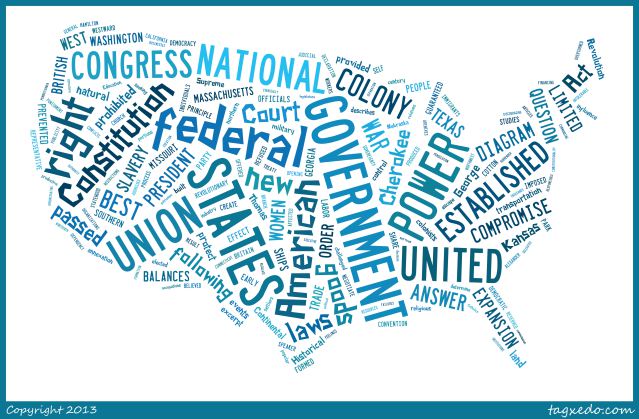
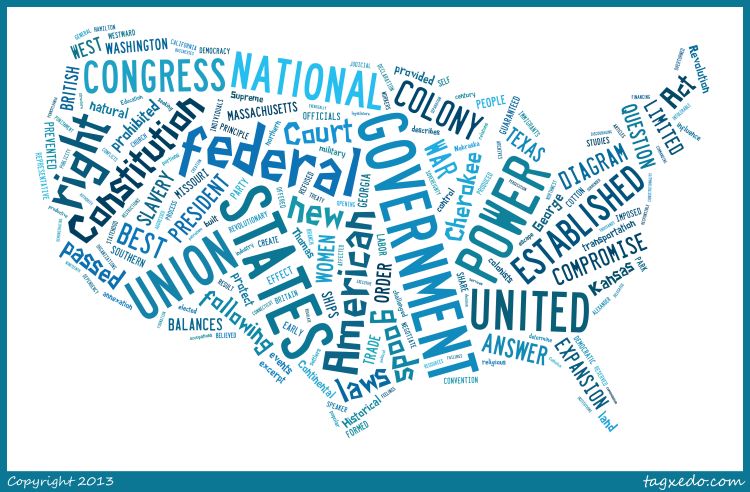
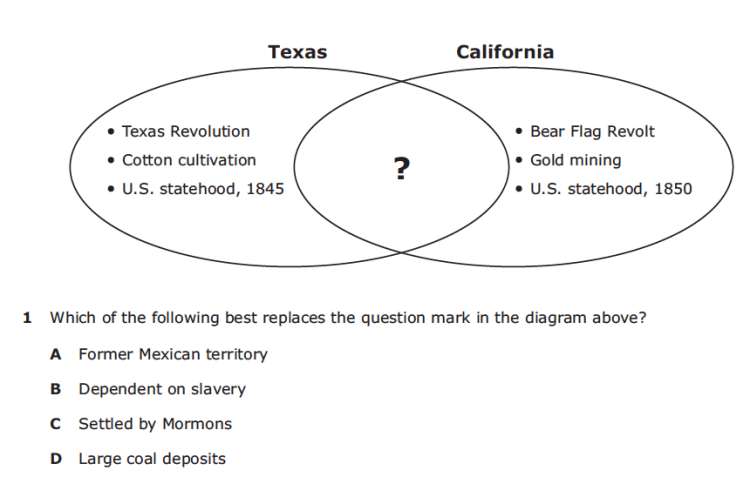
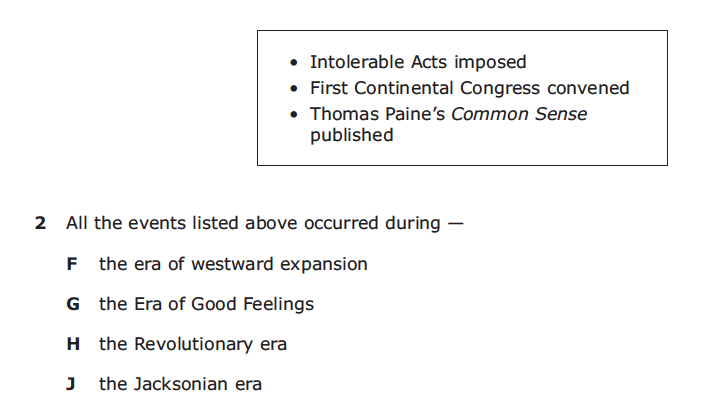
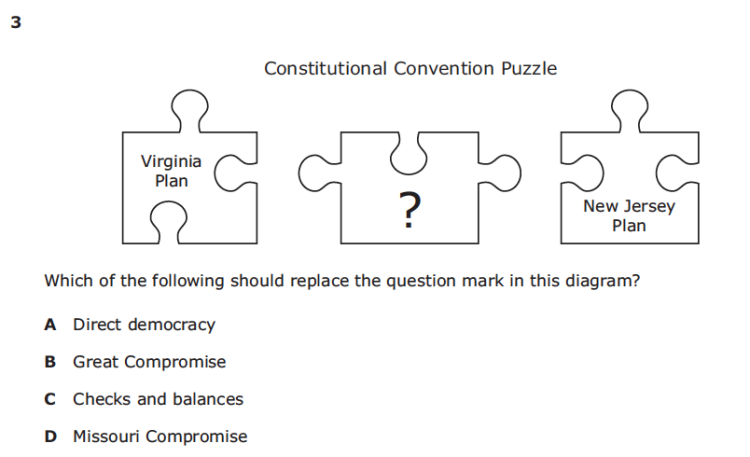
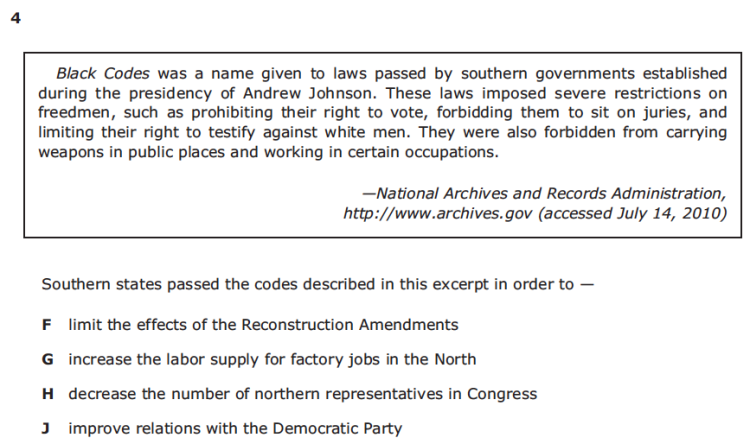
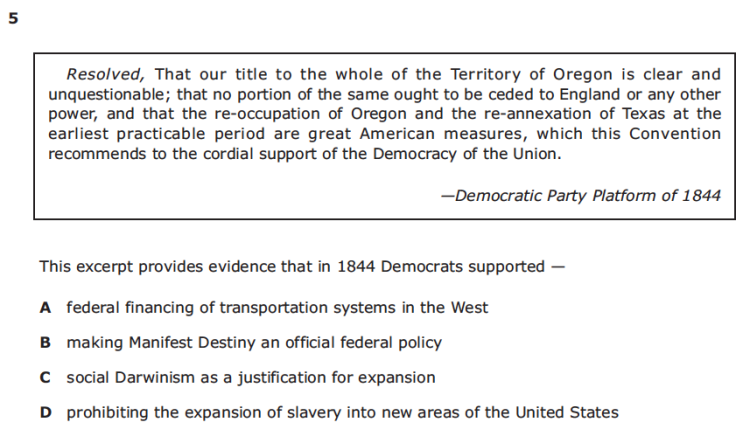
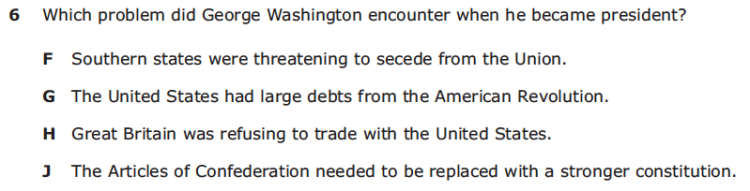
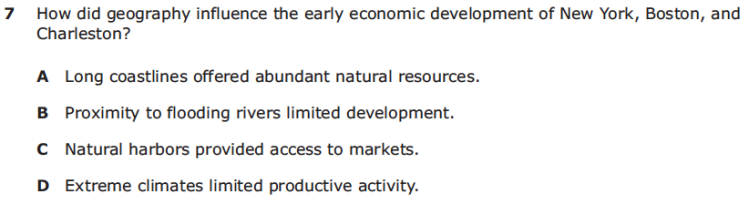
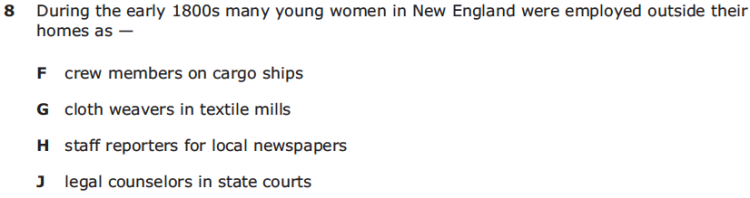
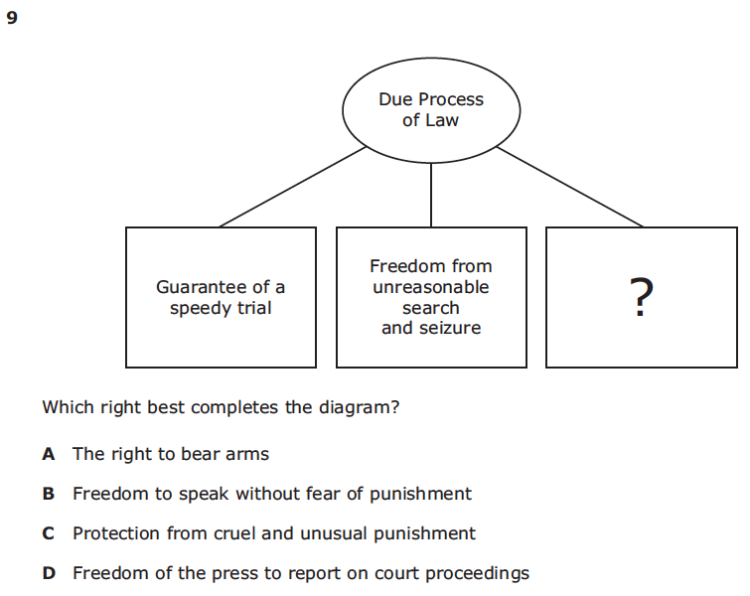
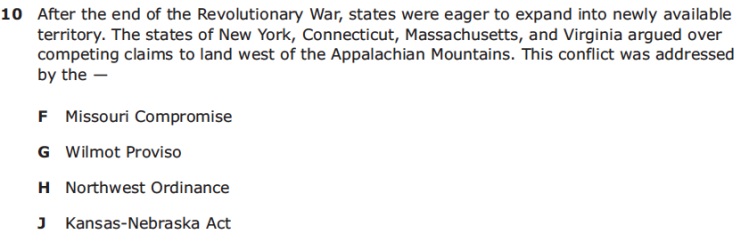
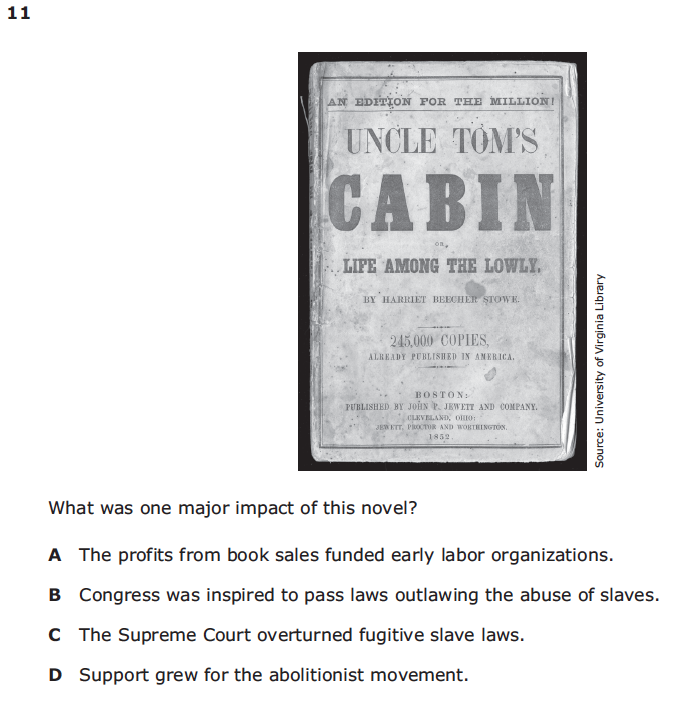
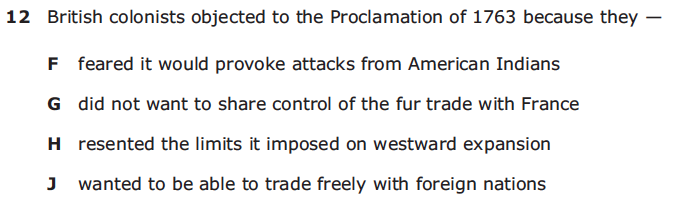
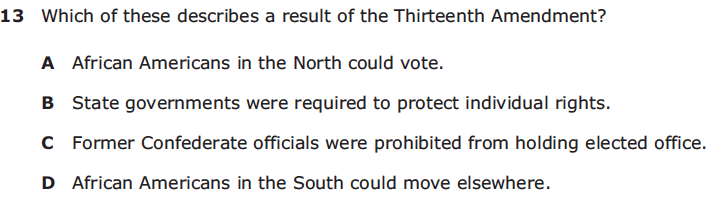
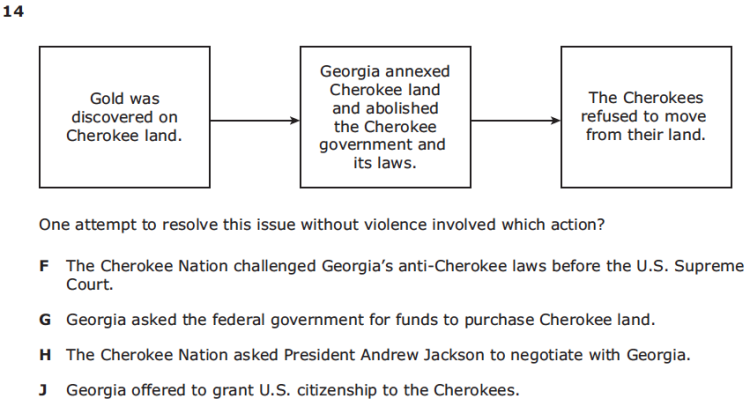
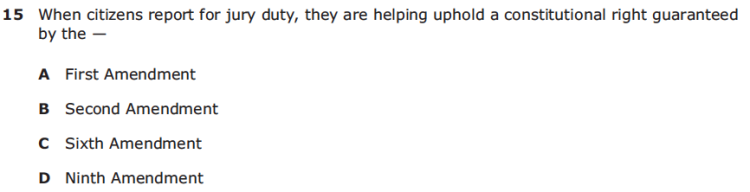
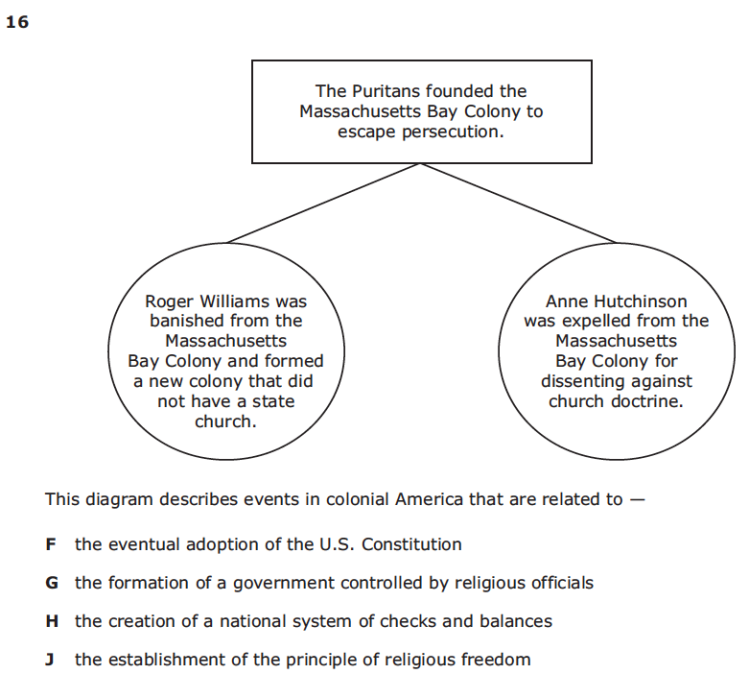
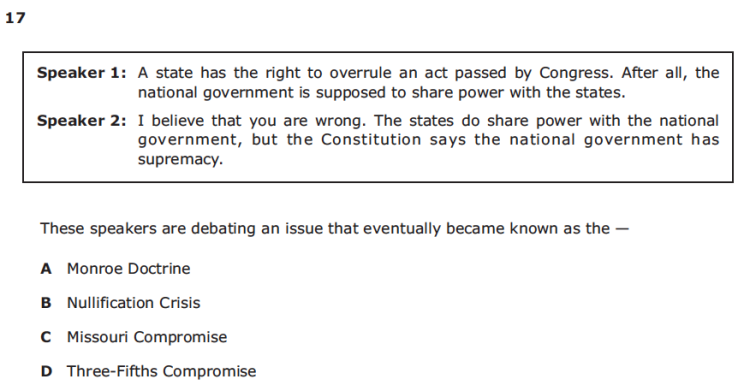
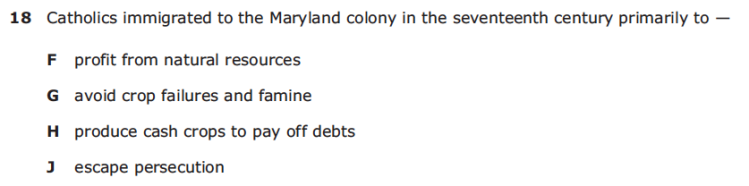
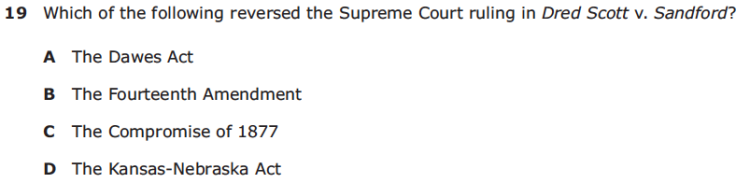
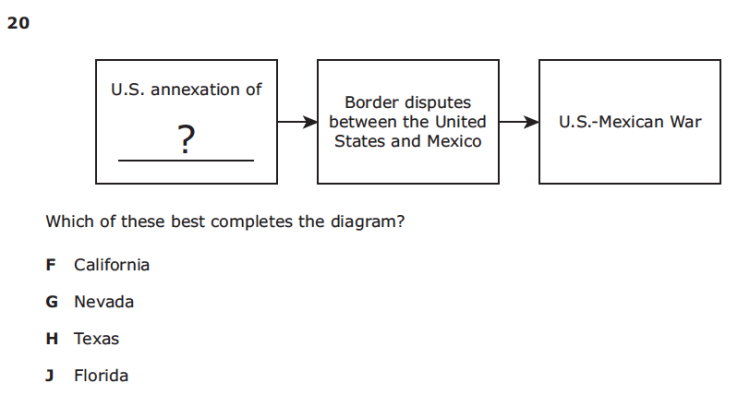
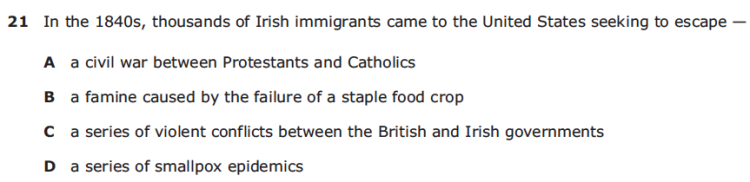
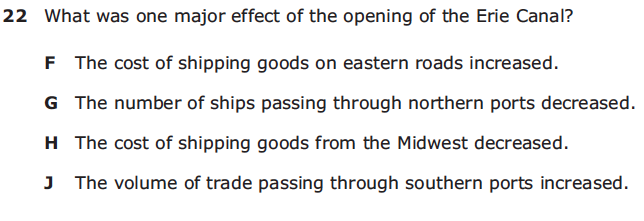 22. I have no problems with this question. “H” is the answer.
 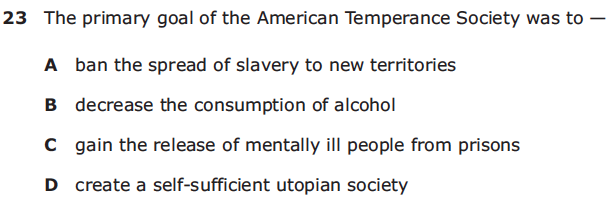 23. “B” is the correct answer. “A” again implies a better past with slavery than reality. This question, like the others, doesn’t get at any kind of larger historical backdrop/trajectory. In this case, anti-alcohol campaigns were part of a larger reform movement aiming to make conditions better across the board. Choice “D” is funny and ironic since this test generally ask questions about a utopian society that never has existed.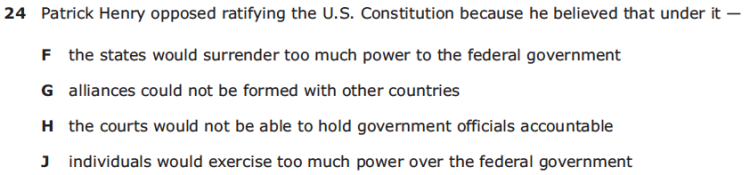
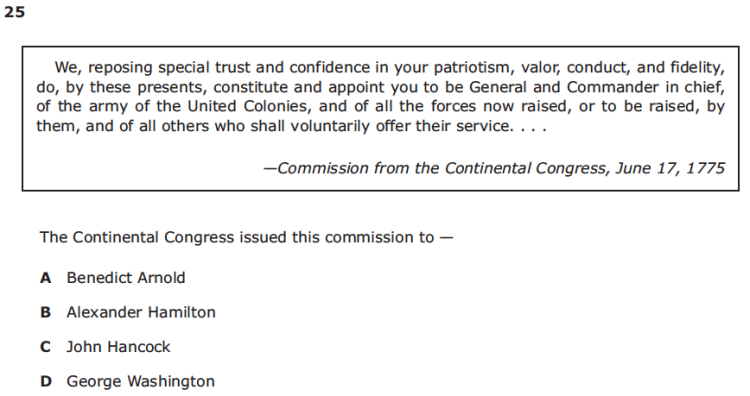
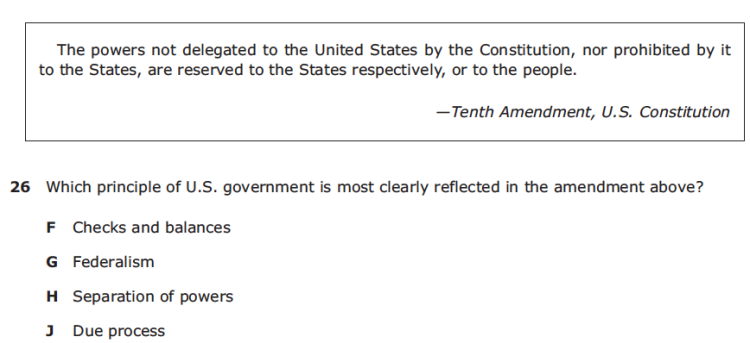 26. “G” is correct. Implies that these processes, both in the caption and in the answer choices, are important and real operations in our government.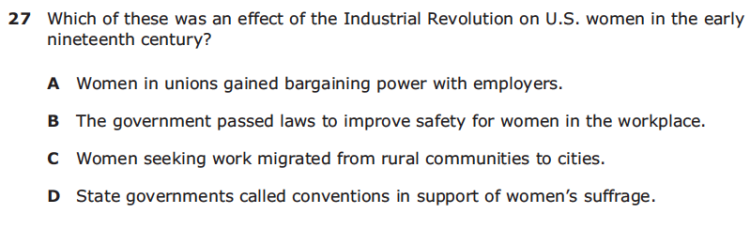
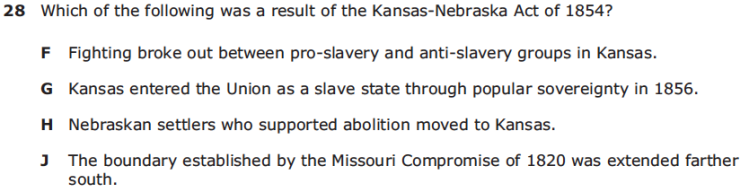
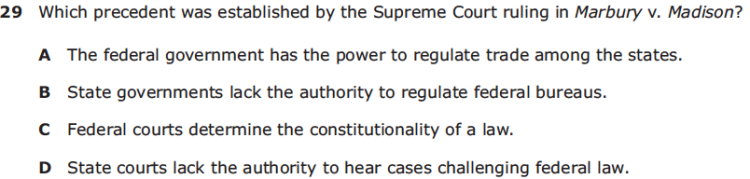 29. They are looking for students to pick “C.” No critique for this one that I haven’t said over and over.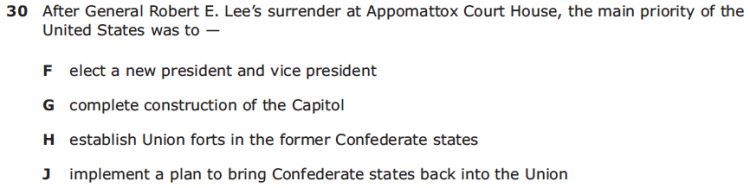
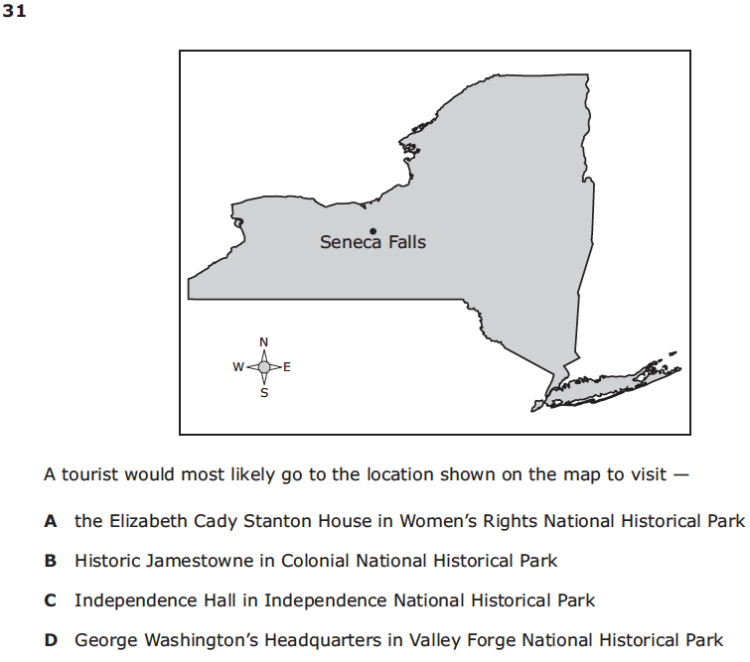
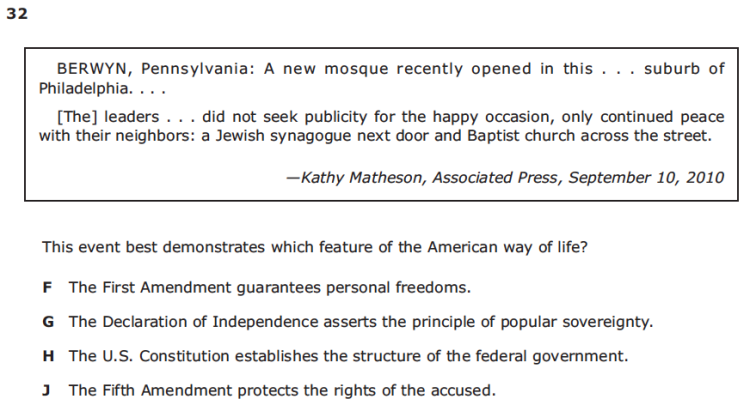
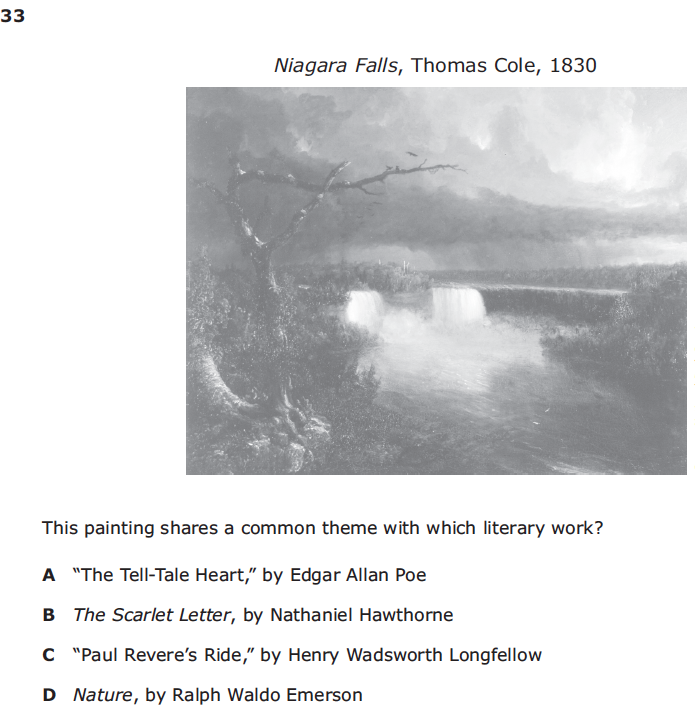
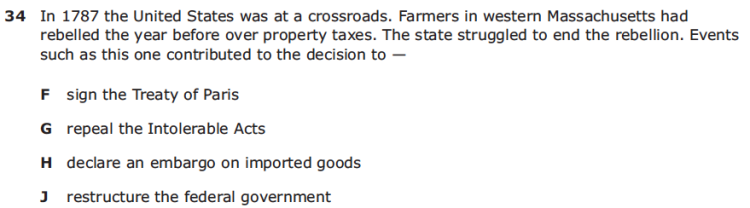
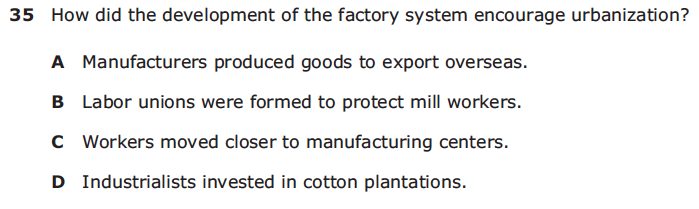
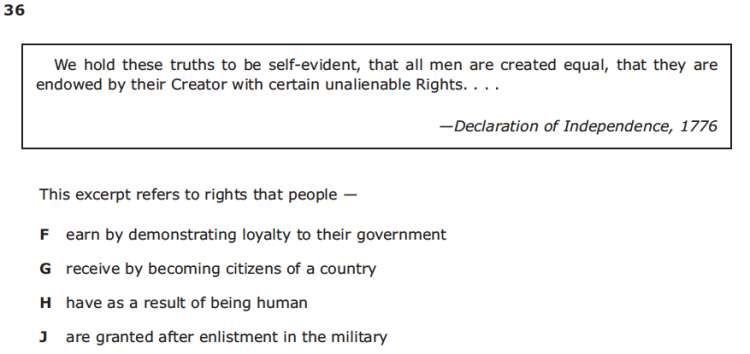
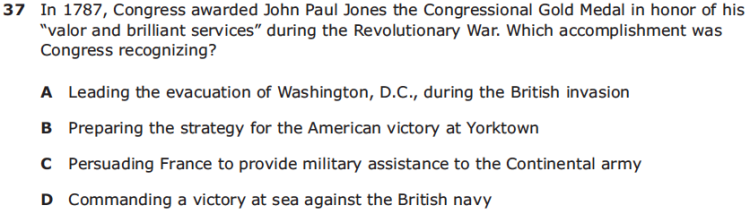 37. “D” is the correct answer. Another “great men” question.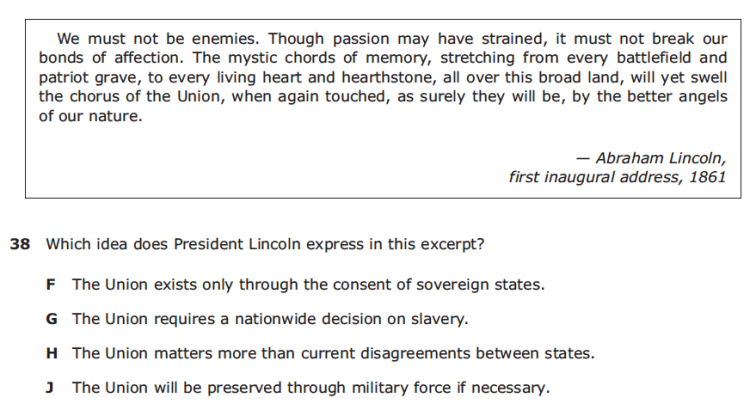
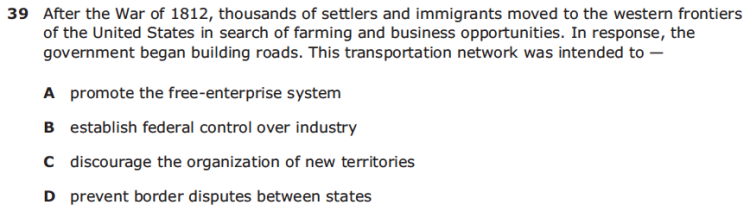
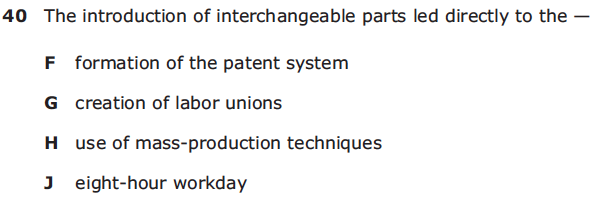 40. The answer choices here are very problematic. Unions are not supported or allowed by employers, and when they are allowed, their powers are greatly limited. 8 hour work day? I don’t know anyone with an 8 hour work day. Everyone I know either works way more than that to survive. Otherwise, they can’t get more work because their employer doesn’t want their workers to have more than 30 hours a week and a few hours each day because the employer doen’t want to provide health insurance. Regardless, people struggle to simply survive. The test is looking for students to select “H.”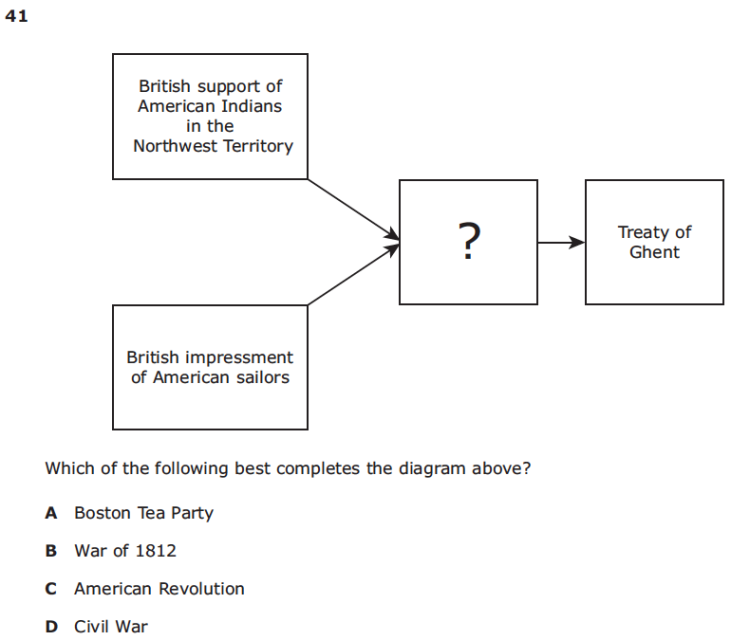
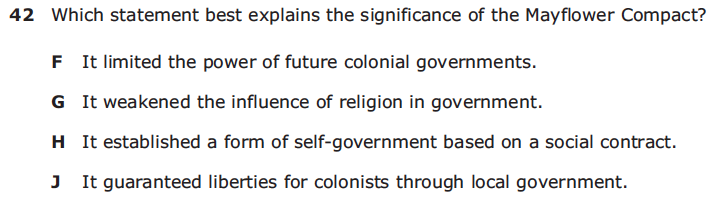 42. The main problem here is that choice “H” – the correct answer – ignores that nations and peoples exist beyond the US. Individuals with the Mayflower were not the first to have ideas about self-government and social contracts, as the question implies.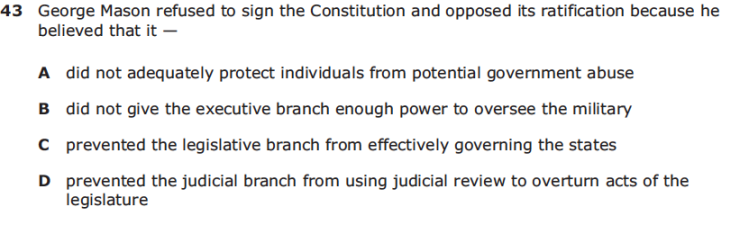
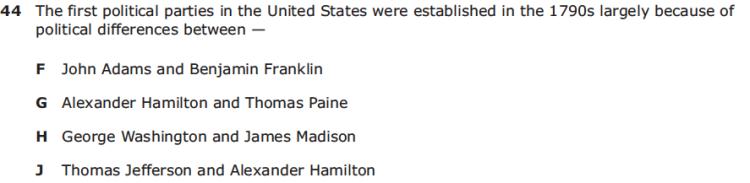
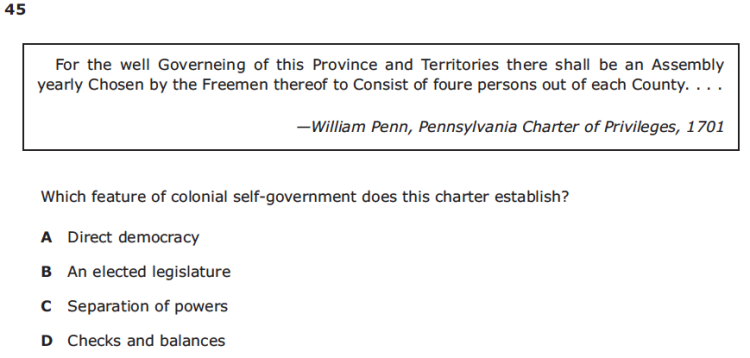
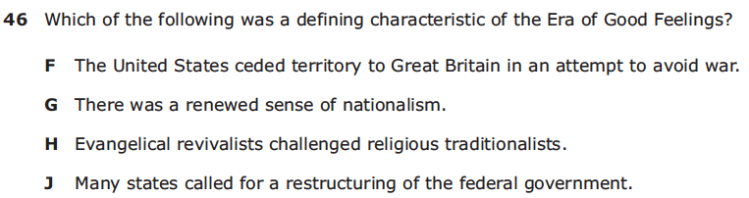 46. “G” is correct. I have no major problems with this one.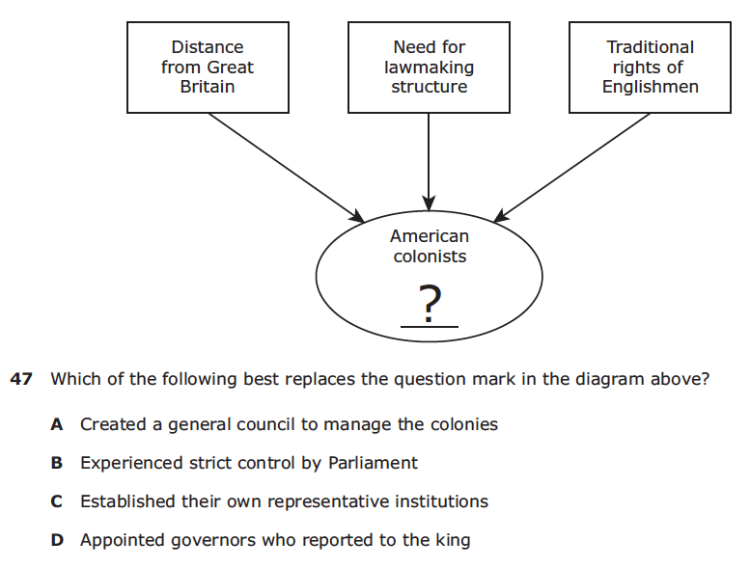
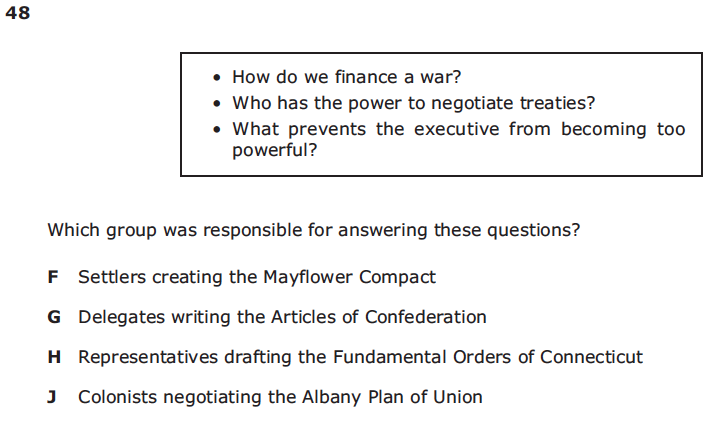
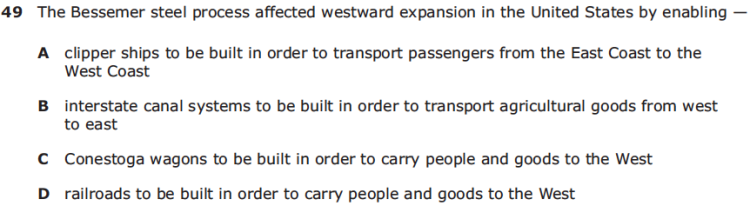
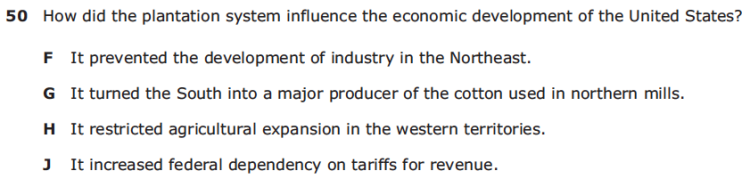
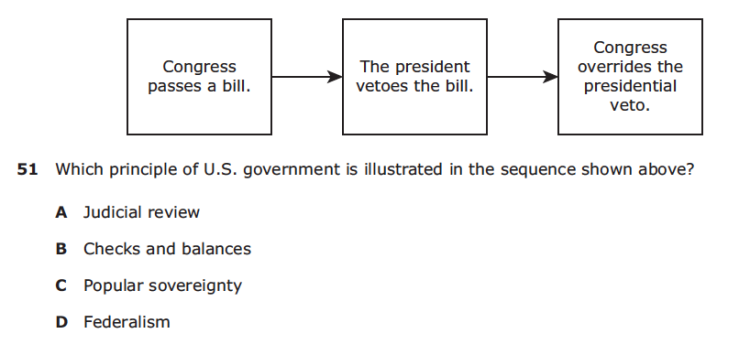
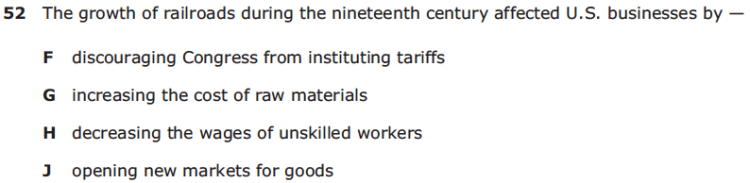

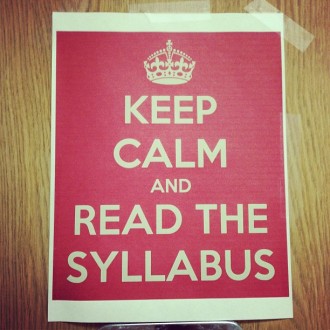






 The elementary school I attended had a long tradition of having 1st and 2nd graders in the year around program do this truly massive patriotic play (it was over an hour). In the year around program, students attended school from late August until mid July, so July 4th was an important school event.

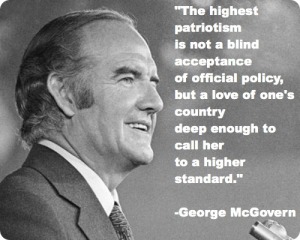 It is also increasingly important to recognize that the Constitution and Founding Fathers were firmly opposed to a society where “men” (using the language of their day) were free. They very much supported and believed that only the wealthy and educated and white male should have rights. George Washington, for example, would find a society such as ours unfathomable. Yes we have made progress, but for a nation that promotes itself as a fair and equal home for everyone, the reality is starkly different.
 Today the 4th of July is like most other days. I read, write, spend time with family, etc. Every few years I will go see fireworks, not for any particular patriotic reason per se, but because I enjoy fireworks. Today being patriotic means advocating for justice and pointing out inequalities.
 This morning I had lunch at a busy restaurant. When we got to the table, the tip was still on the table, and I couldn’t help noticing the tip was only $2. As I desire to bring attention to issues of injustice, this posting will focus on restaurants and their workers.

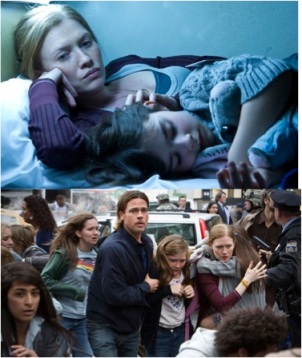


 Dr. Andrew Joseph Pegoda