“La Mission” (2009): Ubiquitous Mammy and White Savior Characters

I figure a great way to start 2017 is with a blog!

In preparation for planning and teaching Mexican American History II this Spring 2017 semester, I gave Petter Bratt’s La Mission (2009) another view this evening. Watch the trailer here. (I’m trying to select a few of the best movies for us to examine. There’s not time for everything!). 

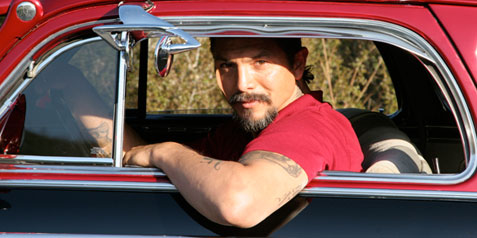
La Mission covers a variety of themes but mostly gender, masculinity (Machismo) in particular, and sexuality. The main fictional characters are a hyper Masculine Mexican father (Che), his gay son (Jes), and the new neighbor next door (Lena).

Before I started critically analyzing it, I found La Mission to be a pretty good movie — certainly not the most artistic or anything, but it has an interesting, good story with good acting. And it was a first of its kind, even in 2009.

However, like far too many movies, La Mission relies extensively–collectively speaking–on the Mammy and White Savior character tropes. Extensively because these character constructions are the glue that hold the story together and provide its transitions. These characters do have some “updates” compared to most other movies. 

Racialization matters.

Lena (Erika Alexander) is the new neighbor. She is created as a very strong, very independent, very articulate, very knowledgeable Black woman. (And she cooks!) She knows the ins and outs of living alone in a rough part of a big city. On several occasions, she provides the father and the son with the kind of wisdom and tough love “only” Mammy has. La Mission‘s Lena has insights and power that far exceed that of everyone else in the story, include those of the extended family which have semi-large roles. When a fight breaks out between the father and his son, only Lena is able to stop it, for example. Lena arrives after a large group of men are unable to stop them. Lena does it instantly. 

The White Savior aspect is trickier and more debatable.

Again, though, racialization matters. 

18_La_Mission_01.jpg

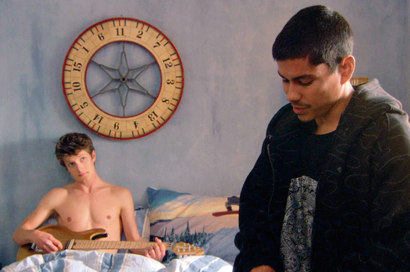
In La Mission, Jes’s boyfriend, Jordan, is White. (We also know because of a 10 second or so segment that Jordan’s mother is also White.) The relationship between Jes and Jordan is not explored or developed. At. All. except for a few very brief instances that are not vital to the plot. They are easily forgotten.

However, the boyfriend’s (and his mom’s) main function is Saving Jes from his physically and psychologically abusive father, who has a criminal record. They ultimately provide Jes shelter, as well as basic support and safety. Jordan’s Whiteness and status as a White Savior Figure is compounded by his “conventional attractiveness” vis-à-vis his able-bodiedness, physically fit body structure, blond hair, and extreme wealth (he lives with his mom in a virtual mansion).

As shown in La Mission, Jes’s extended family can only partly and temporarily help him. For reasons not explained, only a White Savior Figure can save Jes from Che, and only a Mammy can point them both, mainly Che, in the correct direction.

I look forward to hearing other thoughts about this film! 

Happy 2017!

Dr. Andrew Joseph Pegoda


Voter Suppression and Voting Locations

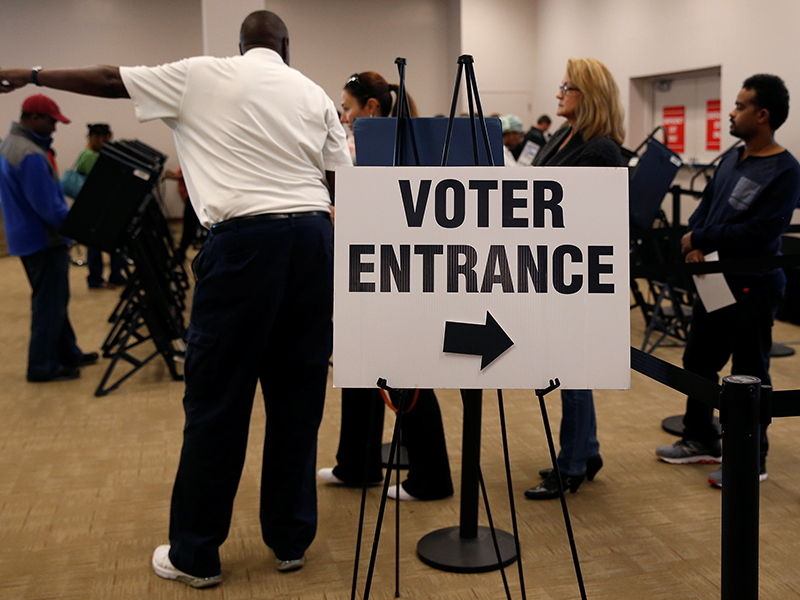
As a result of Republicans and their failure refusal to renew the Voting Rights Act of 1965, states have drastically reduced the number of possible locations where people can vote. And no surprise, Texas leads the nation – it has closed over 400 voting locations!

lseh1unuqfhucd22prz7.png

In Brazoria County, a geopolitical area with over 330,000 people, there are only 39 locations where a person can vote on election day. For comparison, in 2008 when the population was around 30,000 less, there were 77!

In order to help illustrate the problem, I made the map directly below. Each “thumbtack” represents a polling location. Notice how many places across the county have no locations and how that major population centers don’t have nearly enough.  

Screen Shot 2016-11-05 at 7.20.28 PM.png

In Lake Jackson, for example, there used to be many different locations. Now there are only two — two for a city with over 30,000 people. (Early voters had one option in Lake Jackson.) Angleton, the city next door and also a hotbed of conservatism has three locations, despite its having 33% less people than Lake Jackson.   

This is voter suppression.

People are less likely to vote if voting requires standing in line for hours (because capitalism!) and if they can’t easily get somewhere to vote – this is especially true for people with any kind of disability, job that requires unusual and long hours, or someone taking care of children.

This is voter suppression. 

Additionally, seven of the locations in Brazoria County are churches. No one should be required or allowed to vote at any kind of place of worship. We know, for example, that simply asking someone to fill in a “male” or “female” bubble on a questionnaire, prompts all of those participating to alter their answers in different, more gendered ways.

Likewise, when churches serve as polling places, people vote differently, in ways that certainly do not follow the spirit of “separation of church and state.”

This too is voter suppression.

Andrew Joseph Pegoda 

Voting Should Not Be A Selfish Act

Again and again this election cycle I see people advising others to “vote for who best represents you,” “vote for who promises to make things better for you,” “vote for the person who you think will make the nation better for you.”

One Facebook comment I found reads:

If you want to feel good about your vote on election day you’re gonna have to write in Jesus. He really is the only one that can repair our nation. Otherwise, just hold your nose and vote for whichever your lesser evil is this year.

All such comments are rooted in the self. Why are people so selfish?

I always vote thinking about who will make the nation and world better for every one. 

The Trump/Republican vision promises to hurt people–namely minorities but all people. Why would anyone vote for that? Why do people continue to vote not just in selfish ways, but in ways that go against their own best interests?

When you vote, you should think about your entire network and world of friends, family, children, colleagues, students, the strangers across the restaurant. Think about everyone. Think about how to truly make the nation and world better without thinking about yourself or your own hopes and fears alone.

If you need assistance, academic books about history, psychology, anthropology, sociology, evolution are great helpers. 

Voting for Trump and other Republicans this election GUARANTEES that minorities will encounter a world that is much more violent. The only reason to vote for Trump is if you want a society where people who are not White, are not cis males, are not Christian, are not heterosexual, are not you are discriminated againt and are forced by you to live in extended nightmares. Such a society is selffish and boring. 

Because of White privilege and male privilege and Christian privilege and cisgender privilege and so on, such lucky people don’t really have to worry. They have the opportunity AND THE ETHICAL RESPONSIBILITY to help make the world a better one.

Voting allows people the opportunity, especially the privileged people, to oppression others or embrace others.

How will you use your voice? Are you going to allow me and my students to live safely or not?

Andrew Joseph Pegoda

if-only-original630


“As long as you teach history the correct way.”

Upon hearing that I am a college professor and frequently teach History, people sometimes respond with conditional and reserved words of enthusiasm. In some way or another, these people inquire as to whether or not I teach History correctly.

What does that even mean?

I usually respond that I teach according to evidence. And this does not satisfy their suspicions.

Here’s what I’m guessing most of them mean: “Do you teach this new crazy junk that includes minorities and recognizes all the awful things the U.S. has done or do you teach that the United States is the best country ever and that the South will rise again?”

People are very resistant to encountering information, however directly or indirectly, that does not confirm their childhood (and adult) notions of the past that are taught in movies, in cartoons, and in public schools.

People get really anxious at times when you explain how an event has all kinds of interpretations and has a historiography! 

By even asking, “Do you teach history correctly,” people demonstrate they do not know what it means to actually study the past or have advanced degrees in the subject. And as a reminder, I am not a history buff! 🙂 

Here’s to teaching about the past in a way that challenges people!

Andrew Joseph Pegoda 


25 Inappropriate or Wrong Things Teachers Said That I Still Remember

Provided without comment or analysis: 

  1. “February 29th is the only day that a girl can propose to a boy. Otherwise, the boy always has to ask the girl.”
  1. “Adolf Hitler’s dog did not like him. That’s why his dog is with other people in group pictures.”
  1. “The sun does not move.”
  1. “The school nurse can determine if you actually have a headache or not by taking your temperature.”
  1. “Some people tell you there are no stupid questions, but there are. If you ask a stupid question, you will get a stupid answer.”
  1. ”Society tells you that humans are animals but actually humans and animals are different.”
  1. “You always vomit if you have a migraine.”
  1. “You’re not following directions if you can’t run or walk a mile in 15 minutes or less.”
  1. “It is inappropriate to speak in Spanish in the classroom.”
  1. “You can’t read aloud your whole life.”
  1. “The Civil War was about states’ rights.”
  1. Harry Potter is boring and ridiculous.”
  1. “Your delusional if you think you’re going to be a doctor someday.”
  1. “When you pray, you don’t have to close your eyes.”
  1. “Adam and Eve were the first humans.”
  1. “Alcohol is a drug. Don’t drink alcohol. If you do, you’ll turn out like [points to picture of someone dead/etc].”
  1. “Child abuse only occurs when a spanking leaves a mark for more than twenty-four hours.”
  1. “You can be anything you want when you grow up.”
  1. “Students aren’t actually supposed to sing in this choir class.”
  1. “Kids can’t be friends with adults.”
  1. “Kids should spend time playing with other kids no matter what.”
  1. “You can’t subtract a smaller number from a larger number.”
  1. “College is about living in a dorm and partying.”
  1. “You guys are a bunch of fags.”
  1. “World War I started because Archduke Franz Ferdinand was killed.”

Andrew Joseph Pegoda 

Ava DuVernay’s “13th” (2016) and Reel Black History

Ava DuVernay’s 13th (2016) is an excellent Netflix’s documentary. It explores the long history of the many disastrous consequences for Black people that have resulted from the loophole in the 13th Amendment and examines the desire by many White people to perpetually exploit Whiteness and White privilege. 

Neither slavery nor involuntary servitude, except as a punishment for crime whereof the party shall have been duly convicted, shall exist within the United States, or any place subject to their jurisdiction.

What follow are some of the most important and interesting points in DuVernay’s 13th – hopefully these inspire you to watch the film! 

Ironically, while the 13th Amendment outlawed enslavement, it made it more legal than ever before. This amendment changed Black people from being “slaves” to being “convicts” and then “felons.” 

Immediately following “abolition,” convict leasing (or as I call it neo-enslavement or re-enslavement), segregation, and lynching were used by White people to control and kill Black people. As segregation was “abolished,” White politicians created “law and order” policies that were specifically designed to target and imprison Black people, mainly Black men. People who are in prison are legally slaves – many of these men, the vast majority People of Color, live worse than cats and dogs.

Court room and legal dramas on televisions are designed to indoctrinate White people into fully believing that “criminals” are dangerous and are treated fairly. The shows do not show that most people are denied the right to a trial, if they get a trial they are punished more than if they took a plea bargain, and thousands are deliberately charged with crimes they did not and could not have committed – they are accused as a way to control them and to make money.

Once accused, it is never over. There are over 40,000 consequences for people accused of a crime. At least 1 out of every 3 Black men will be incarcerated in their lifetime. 

Currently, we are hearing calls for prison reform and 13th warns that we need to be prepared for the next major political system that will be used to keep Black people and other people of Color in chains.

DuVernay’s 13th argues again and again that in order to understand United States History, racism must be a central focus. It explains how that laws in the United States do not have safety and equality in mind, but rather, laws are designed to extend profits for the super rich and perpetuate racism and inequality for non-Whites.

DuVernay’s commentators (who include Michelle Alexander and a dozen others) discuss D. W. Griffith’s Birth of a Nation and its role in reflecting and shaping popular discourses, Emmett Till and his mother, Angela Davis, and many others, including Trayvon Martin. It has thought-provoking music by Nina Simone and more contemporary artists interwoven between the various sections, as well as countless visuals, of course. 

This film is ideal for those who care about social justice, who want to hear the Black family, and who do not have a solid background in these topics. I highly recommend it. This film falls within my areas of speciality, and I have zero criticisms for how it presents the past. Its information is solidly accurate. It combines over a century of history into a solid, compact, compelling account and gives voice to Black men and Black women.

Let me know what you think about DuVernay’s 13th! 🙂 

Andrew Joseph Pegoda 

“Paying the Price”: The Must Read Book on the Many Taxing Costs of College

This evening I read and throughly enjoyed Sara Goldrick-Rab’s Paying the Price: College Costs, Financial Aid, and the Betrayal of the American Dream (2016). Clear writing, scholarly activism and clear passion for simply doing the right thing regarding college costs, and an excellent balance of quantitative and qualitative data make this monograph a must read for college students and their families, college professors and administrators, as well as politicians–to just begin. 

College costs have skyrocketed. At a college near my home, tuition has doubled in a little less than ten years. Goldrick-Rab explains that while there is no “higher ed system” proper in the United States, colleges and universities across the board have become much more expensive and unaffordable for most due to on-going declines in state appropriations for public institutions, older generations not internalizing changing economic circumstances, neoliberal logic, rising costs of providing a college education, and the competing demands and pressures students face, for example.

Goldrick-Rab, however, is not so concerned with why college is so expensive as far as tuition and books and fees go but is very concerned with how people attempt to deal with such costs and what the consequences are. By telling the story of six students, she provides vivid and human examples that illustrate how very painful college can be and is for most students (and in ways that having nothing to do with debates over “safe spaces” and whatnot).  

Did you know that roughly a quarter of college students experience at least some problems obtaining everyday food? Some skip meals to save money or because they don’t have any money. Students cannot be both ‘food insecure’ and successful in their degrees. Did you know that colleges could easily have a “free food” program the way K-12 schools do? 

Did you know that college students are sometimes homeless?

Do you know the difference between private student loans, federal student loans, pell grants, financial aid and work study, and other grants and scholarships and then how these all interact and sometimes set students up to fail? Students don’t and aren’t supposed to

Did you know that the advertised costs of college are misleading? When you think of the cost of college do you consider ALL of the expenses a person encounters while a student, even those that have nothing to do with being a student, per se? Did you know that parents, in hiding their financial information, sometimes prevent thier children from getting free money? 

Did you know that students also pay an “opportunity cost”? (This is especially true for people who earn a doctorate and hope to get a full-time job!) While they might be building a career or family, they are in school – this a “cost” of possibly opportunity for a chance at better opportunity. 

Did you know that there is statistically virtually no abuse of government funding for college and that students are not “wasteful” with personal money?    

Have you thought about the emotional costs of college? Friends who don’t understand college or a change in their friend; missing out of social activities on campus because of work; missing out on sleep because of debt, work, family, and course work; rigorous courses; and so on?

Did you know that poverty is so prevalent that already-broke college students frequently help their parents pay basic bills?

Did you know that students dropout of college everyday because they are dead broke? that students just disappear sometimes and do not return calls? 

Because society says they should and need to: Did you know that students engage in paid employment for longer hours and less pay, while taking more hours and paying more than students ever before? Its common place for a student to work one or two or three jobs for a total of 20-30 or more hours a week, while taking four, five, or even six courses. And these jobs do not understand or support the efforts of college students in far too many cases. Did you know that working decreases chances of graduating?

Did you know society regularly labels people in their 20s and 30s lazy out of pure ignorance?

Did you know students enroll in programs at colleges as a way out of hopefully moving out of bad neighborhoods and perpetual poverty? as a way of protecting themselves from such pasts? 

Did you know that “higher ed” as currently operated merely maintains the status quo in many cases? Graduating from college thousands and thousands and thousands in debt somewhat defeats the purpose of going to college to advance economically after all. 

Did you know that college degrees take so long to complete, not because of course requirements, but because of expenses?

Did you know that some states already provide free college? (Some specific community colleges do for dual credit students or in-district students.) Did you know everyone could have free college and that this wouldn’t have to cost anything more for taxpayers?

Did you know that providing free college for potential students is simply the right thing to do and perfectly matches the trajectory of education in the United States? Did you know that doing so would also provide much-needed jobs for countless PhDs? 

I’m guessing you didn’t know most of the above, and if that’s the case, you now have a dozen plus reasons to read Goldrick-Rab’s Paying the Price: College Costs, Financial Aid, and the Betrayal of the American Dream!! What are you waiting on?? 

She addresses the above and so much more. You’ll be sad for many of those six students she follows and really, really glad for one of them. Goldrick-Rab makes perfect use of data to draw conclusions and generalizations and then also shows how that people are not mere statistics – people are individuals and their behavior sometimes aligns with the data, other times doesn’t.

This book is a model for the kind of conversations we should all be having so that we understand our students a bit better. I’ve been teaching in higher ed for a long time and a student in higher ed for a bit longer, and I learned so much about what my student face. This book was especially important for me since I was lucky enough to pay for college and grad school with a variety of specific scholarships and assistantships, gifts, savings, and teaching, so I never had to experience the FAFSA, student loans, or whatnot. I knew many students struggled to buy books (even $10 books), but didn’t have any understanding of what most students went through to get money for college. 

“Paying the price” for college in 2016 is no simple tasks for most people in the United States. Students, for instance, “pay” by not learning as much as they could, by not graduating as quickly or ever, by working and starving and exhausting themselves, by having conflicts with family and friends, by taking a gamble and by not having any kind of secure place in this complicated, messy modern world we’ve created. Being young in the 2010s is hard, college and technology make it all the more harder.

As a society, we have an immediate responsibilty to make sure students understand the full costs of degrees and all the realted dynamics and to make sure they know that while college is about jobs it is also about becoming a different person in ways

Although beyond the scope of this book, I would be interested in reading about how queer students (and a break down of these students by more specific identities, as applicable) experience the high costs of college. I am also very curious about the future of higher education as technology takes over more and more jobs. 

After you read the book, let me know what you think!

Andrew Joseph Pegoda