To begin, this post is not directed at any individual. I have numerous friends who regularly travel, and that’s great. I always enjoy hearing about places around the world. However, as I have recently mentioned, May is Neurofibromatosis month (read more here), and I wanted to make a few more comments about ableism and travel.
For people with numerous medical problems, long travel is much more complicated than it is for the “average” person. In some cases, it might be near impossible. These problems are seldom acknowledged and few “accommodations” are possible or even available.
In my case, any kind of travel requires gathering enough of all 13 medications. These medications come in several different forms, and some require special treatment. One of my medications is not allowed on airplanes (in part because it is very flammable and in part because it can be dangerous), so that limits by ability to travel greatly. Physical problems and my permanent leg brace also make traveling (and walking) much more complicated.
In addition, several of my medications are for my stomach. For most of my life, I have had to be extra careful with what I eat. Traveling, for someone like me who is not able-bodied, is also made complicated because I have to worry about what I will eat and how my body will react.
Travel typically involves extra physical and mental energy for all kinds of reasons. For someone who already gets tired and sick easily, this extra energy can really take a toll.
So, the overall point here is that some of us would like to really travel, but doing so seems and often is almost impossible. People who travel regularly, easily benefit from ableism and able-bodied privilege.
Neurofibromatosis is the most common genetic disorder, affecting me and approximately 1 in 2,500-3,000, yet most people (including some medical doctors!) do not know about it. There is currently no cure. Research is needed, (and because of neoliberalism,) research really, really depends on donations.
Neurofibromatosis affects the entire body.
Some symptoms include:
People can have Neurofibromatosis and basically never know they have it or never have any problems directly related to it.
Or, people can have much more serious cases, like me or Reggie W. Bibbs.
To summarize it very, very briefly because of Neurofibromatosis I have migraines, irregular heart rate, Optic nerve glioma, hypogonadism, brittle bones, pseudarthrosis, osteoporosis, excessive dry eye, and many other things. As I get order, I have more and more neurofibromas all over my skin.
For all of these problems, I currently take thirteen medications! All of these because of Neurofibromatosis.
I have also had brain surgery, heart/lung/chest surgery, pelvis surgery, and finger surgery. In less than a week, I will be having surgery #5 to remove another tumor on my finger. All of these, also, because of Neurofibromatosis.
Neurofibromatosis, in sum, causes tumors to grow, causes bones to develop abnormally, causes the body to not produce chemicals it ordinarily would, causes pain (lots of pain – there have been overall, very few days in my thirty years of life that have been pain-free), and, especially in my case, lots of random problems.
Supporting research for Neurofibromatosis is important for many reasons, including that you know people who have it! And because research on Neurofibromatosis ultimately benefits every body – people with worse cases of Neurofibromatosis have many “normal” medical problems just earlier and in much greater frequency and with greater severity.
Neurofibromatosis can also cause learning disabilities, including dyslexia, which have effected me.
One of my biggest frustrations is not so much the pain, I am used to that, but the societal assumption of ableness. Able-bodiedness is every where. People assume that if you “look” healthy you do not have any limitations or disabilities. On a similar note, the more I learn about life and people, the more I realize that, like gender and sex and sexuality, ableism exists on a spectrum – lots of people have examples of how they too are not simply able-bodied. Another frustration, of course, because we live in the United States, is insurance.
SO, research is needed, lots of it! If you would like to donate a few extra dollars, I’d greatly appreciate it, and I’d suggest donating to theTexas Neurofibromatosis Foundation. I will soon be writing an academic history of Neurofibromatosis for solicited publication, so stay tuned!
But you’re America. But you’re America. You have the power to alleviate all pain. But you’re America. You choose to be greedy and selfish. Because you’re America. You laugh and mock when people ask you to be kind. Because you’re America. You refuse to improve and change. Because you’re America. You forget your promises and never honor your word. But you’re America. You think it doesn’t matter. Because you’re America. You think you have a blank check to destroy, the world. Because you’re America. You live without a conception of history. But you’re America. Because you’re America. You teach White people to be narrow-minded. Because they too are America. You allow White people to continue corrupting you. Because you are both America. Because you’re America. You bring disgrace. But you’re America. America doesn’t care. Because you’re America.
Given how many of my students have been watching and talking about 13 Reasons Why, as well as how many think-pieces I have been seeing, I figured I had better see what it is all about for myself. I binge-watched the entire series, thirteen episodes, a few days ago. Netflix’s 13 Reasons Why revolves around Hannah Baker, a high school student who kills herself and the thirteen tapes she left explaining why she did so. The series is currently very popular with middle school and high school students.
As others have said, this series is generally problematic, yet interesting, too.
Here are 13 comments for your consideration:
1. 13 Reasons Why is not about suicide, despite the entire premise. It does not address mental illness, be it depression or any other kind of mental medical situation. Suicide itself is never really addressed or analyzed. There is no psychological exploration of Hannah. There is no discussion of suicide prevention.
2. Where 13 Reasons Why does actually kind-of address suicide, it focuses on thirteen people and why they caused Hannah, in Hannah’s mind, to commit suicide. Screen time is devoted to these thirteen people regretting how they treated Hannah, regretting something they did or did not do, regretting something they said or did not say, and trying to hide their past actions involving Hannah for fear of getting into trouble. Suicide will not be properly addressed when people in the victim’s life are blamed.
3. 13 Reasons Why is much more of an adventure, game, a puzzle to be solved in the spirit of Extremely Loud & Incredibly Close and Jumanji, for example, instead of an exploration of causes and consequences of suicide.
4. 13 Reasons Why revolves around a fit, able-bodied wealthy White heterosexual male high school student named Clay Jensen. The thirteen episodes are entirely too much about an “ideal” White male and his worldview. All thirteen episodes are spent with Clay listening to Hannah’s tapes and trying to fit everything together. Clay’s overall privilege and opportunity receive the attention and sharply contrast with Hannah’s (absence of a) story.
5. 13 Reasons Why is entertaining. It has the prefect combination of comedy and drama that keeps viewers (passively?) glued to the screen. It is (almost – I fast forward through a few parts) never boring. This mix along with the very serious topic of suicide deserves pause, especially considering who is watching it. As others have said, it also relies on themes of nostalgia.
6. 13 Reasons Why exist in something of a vacuum. There is no context: no history, (almost) no time, and (almost) no place. Religion is curiously completely absent from this series, as are all non-human animals.
7. 13 Reasons Why is entirely fictional. There is no Hannah Baker who lived. There is no Hannah Baker who made thirteen tapes about why she was ending her life. There is no Hannah Baker. There is no Clay Jensen either. All of these fictional characters in this fictional plot were designed to entertain and to make money.
8. 13 Reasons Why is illogical and impossible. As others have said, the series depicts incompetent and unrealistic high school counselors. The tapes and their topics are impossible. After Hannah’s death her parents sue the school she and Clay attended, Clay’s lawyer-mom, in a clear conflict of interest, defends the school. The interwoven nature of the characters is equally impossible, too. Tony’s character is especially mysterious and other-worldly.
9. 13 Reasons Why does not accurately portray (high school) life.Although common practice, it is worth noting that all of the people playing high school students are actually adults. And they were created to behave and act like adults. They are all far too independent. None of them have parents actively involved in their lives. Characters are all manifestations of some kind of stereotype.
10. 13 Reasons Why does address bullying and social media. High school students are shown using technology to send and distribute pictures and messages meant to ridicule one another. Parents are shown as being unaware and unable to know how bad it can be for their children. If this series makes conversations about bullying possible and more effective, wonderful. However, the short film Imagine A World Where Being “Gay” The Norm & Being “Straight” Would Be The Minority!does a far better job of directly and honestly addressing bullying and social media and opening the door for important conversations.
11. 13 Reasons Why ultimatelynormalizes violence. All of the characters, at least at some point, are shown as initiating, perpetuating, and participating in violence of some kind or another. The narrative does not address these as learned behaviors. The narrative suggests that these are basically normal behaviors.
12. 13 Reasons Whyneverdoes have a clear message. Clear messages, of course, are not automatically necessary, but there is never a message–built into the narrative–of “help is available.” There is never a move–built into the narrative–to actually challenge everyday life.
13. 13 Reasons Why ends with another suicide.
(Be sure to also see 13 Reasons Why I Hate 13 Reasons Why from the blog Living With Power here.)
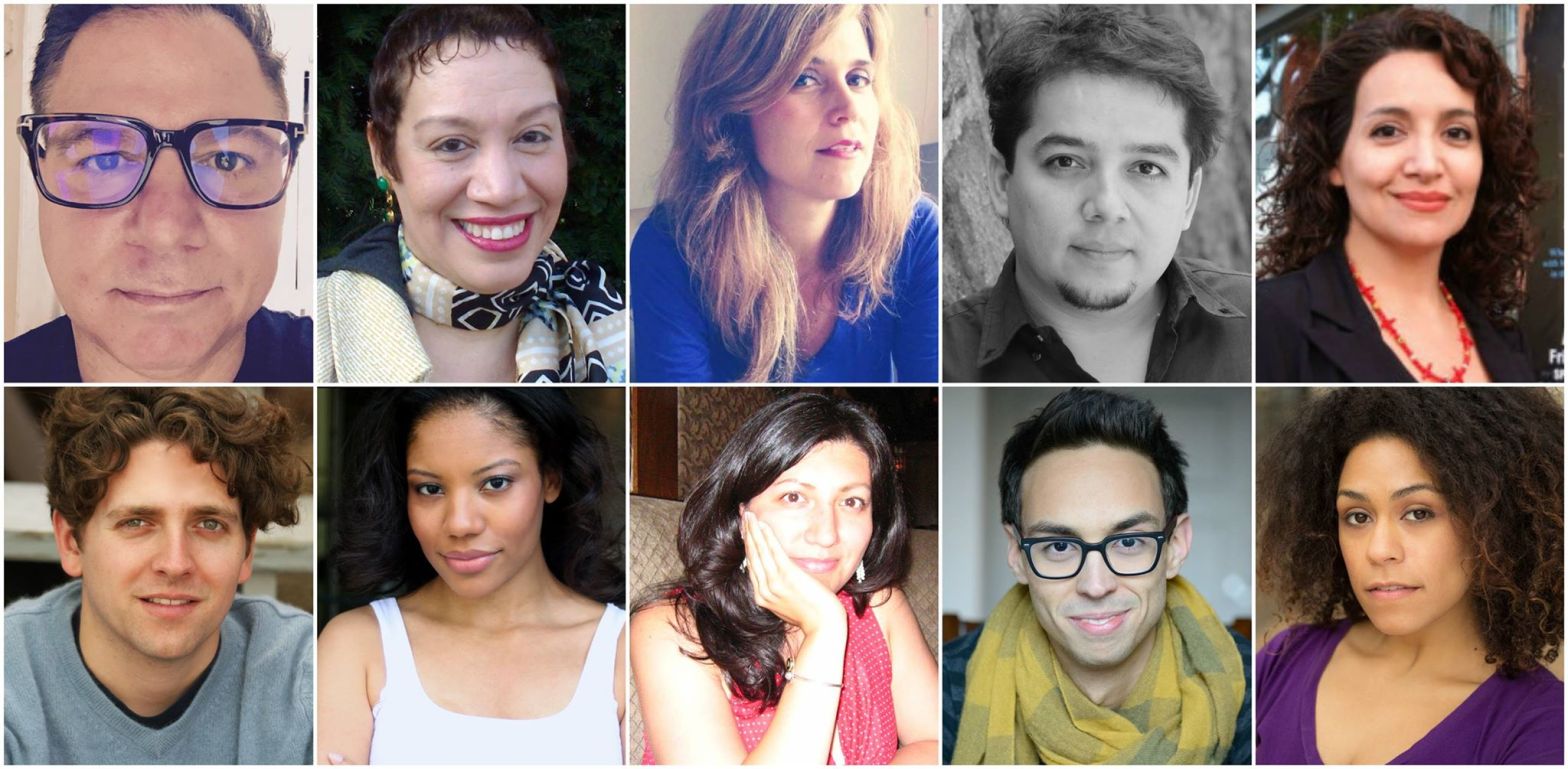
In March 2016, Dr. Trevor Boffone and I chatted about the launch of his 50 Playwrights Project, which focuses on Latino, Latina, Latin@, Latinx theatre and its playwrights. You can read that interview here. Recently, I had a chance to interview Dr. Boffone again and see what has happened with 50 Playwrights Project (or 50PP, as it’s abbreviated) over the last year. Keep reading below the pictures!
Dr. Andrew Joseph Pegoda (AJP): Thank you for taking the time to chat with me about 50PP again! It sure has been exciting to see all that has happened.
Dr. Trevor Boffone (TB): Thank you for the interview!
AJP: 50 Playwrights Project has been getting a great deal of attention on Facebook, Twitter, and elsewhere. Can you tell us about this?
TB: Since I launched the 50 Playwrights Project in February 2016, the attention on social media has grown at a steady rate. I think that folks in the Latin@ theatre community are excited to see the people that they work with being recognized in an accessible, public forum. I think that people outside of Teatro circles are eager to learn more about voices that might be unfamiliar to them; I routinely field emails from people who are new to the site and want to be connect with playwrights.
AJP: What has surprised you about 50 Playwrights Project since its launch?
TB: What has been most surprising has been the sense of community that the project offers. I always imagined it as a digital resource that scholars and students would use. It’s accomplished this. But I never imagined that theatre-makers would find each other and connect through the website. For example, writers have been able to find other playwrights in their region, of the same career stage, or tackling similar themes. These playwrights have connected and began forming community both in-person and digitally. Another example has been the countless theatre change-makers who have reached out to me about the playwrights; these people want to expand their circles and bring new voices to their communities.
AJP: Who all have you interviewed for the 50 Playwrights Project?
TB: As of May 8, 2017, I have interviewed 55 different playwrights (See: Interviews). These playwrights represent all parts of the Latin@ spectrum and embody diverse identities in terms of race, ethnicity, age, class, gender, sexuality, religion, and ability. 50PP is committed to equity, diversity, and inclusion at every level and this is reflected in not only the interviews but the process of building the digital archive.
AJP: Is there anybody you’re wanting to interview soon?
TB: While I’m still working on interviewing John Leguizamo and Lin-Manuel Miranda, I’m mostly focused on interviewing early career playwrights, women, and LGBTQ+ playwrights. While I love their work, Leguizamo and Miranda don’t need exposure. Their voices already have platforms.
AJP: I know we both teach and write about intersectionality and that might not be a concept all readers are familiar with. Can you tell me more about the various identities, involved with the people you have interviewed for 50 Playwrights Project?
TB: One of the most interesting parts of the 50PP interviews is the question: “How do you self-identify?” When I envisioned the interview template, I imagined this question would be answered very straightforward: Latina, Chicano, Puerto Rican, American, etc. Unexpectedly, the playwrights have used this question to really complicate the idea of Latin@ identity. Their responses really speak to the need to an intersectional, multi-layered understanding Latin@ identity. For instance, Quiara Alegría Hudes identifies as “Feminist muckracker. Boricua.” Kyoung H. Park identifies as “Human… a playwright… Korean-Chilean, queer, immigrant.” Ricardo Bracho: “Primarily, as a Marxist. Also, as a creative intellectual of urban homosexual acts and melodramatics. An LA Mexican writer who writes plays and essays and posts and sex site flirtations from a bottom perspective informed by gay liberation and anticolonialism. Antirealist, antizionist, caribbeanist, europeanist, indianist.” Virginia Grise: “I am an artist, a Chinese-Mexican, a Marxist, a dyke.” And the variations in identity go on and on. These playwrights can’t be definied simply by their Latinidad.
AJP: On this topic and thinking about privilege and oppression: How do you manage or acknowledge your status as a White person working with Latin@ theatre?
TB: I’m always aware of Whiteness and the systems of oppression that impact the Latin@ community in the United States. All of this influences what I do and how I do it. First and foremost, I approach my work in Latin@ theatre as an advocate and ally. I’m always looking for ways to speak with the Latin@ community rather than speak for. So, if we look at 50PP specifically, I have created a platform to showcase playwrights’ voices. The focus isn’t on me. Rather, the spotlight is entirely on the playwright.
AJP: So what’s next for 50 Playwrights Project? What can you tell us?
TB: After reaching 50 interviews (which happened much quicker than I imagined), the project began its 2.0 phase. The name remains the same and harkens back to the original mission of the project: to just interview 50 playwrights (See: The Original 50). Once I reached that milestone I began to branch out. 50PP will still regularly publish interviews with playwrights. I also launched a second interview series–FAQs–which are interviews focused on specific plays that are commonly taught in the college classroom. My goal is to create more resources that will be beneficial to students while also promoting the work on Latin@ playwrights.
In addition, in March 2017, we released our list of the Top Unproduced Latin@ Plays, which was met with a massive amount of positive feedback. The call for our second list will go out this fall, and I am currently working with different theatre organizations to find ways to support the writers/plays on next year’s list. I want this to be more a reward besides just being recognized on a list. I want to take it a step further.
As the digital presence of the 50 Playwrights Project continues to grow, I am also invested in finding ways to support playwrights in the new play development process. I’m currently working on some projects that I can’t quite announce yet, but I’m looking to make more of a commitment to the actual process of getting Latin@ plays produced.
AJP: What can people do to help support you and 50 Playwrights Project?
TB: The easiest way to support 50PP is to visit the site and read the interviews. For artists and theatre-makers, I’d love to see more people learning about other Latin@ artists and looking for ways to connect. For scholars, I’d love for my students to be aware of the site. I know of a few professors who have used 50PP in their courses, but I’d like to see this number grow. This is a resource explicitly created for students.
AJP: Is there anything else you’d like to tell my readers?
TB: Yes! In April 2017, 50PP began hosting a monthly happy hour for emerging theatre folks in Houston. Not only am I trying to make more of a local impact in Houston, but I’m interested in finding ways to build community through 50PP. The idea of a happy hour just for early career theatre practitioners grew out of a need to expand my circles and meet other like-minded people. The April happy hour was a big success; I met several new people that I’ve stayed in touch with and hope to collaborate with going forward. The May happy hour is on Wednesday, May 10, at Wooster’s Garden from 5:30-7:30.
AJP: Wow! 50 Playwrights Project is doing so many great things. I highly recommend it for anyone! I have really enjoyed this chat! We’ll have to do this again sometime and see what other great things 50 Playwrights Project has done. Thanks, Trevor.
TB: Thanks, AJP!
Alex Beech, playwright on 50PP and Dr. Trevor Boffone, editor of 50PP
Despite the optimism and excitement felt by the majority of people in the United States when Barack Obama was elected in 2008 and reelected in 2012, a sizable number found his presidency unacceptable. People deemed Obama a Black Muslim. Questioned his place of birth. Critiqued his Blackness.
You know the rest.
Obama’s eight years as President of the United States scared some people more than we’ll ever be able to “calculate” or understand. People weren’t so afraid of his liberalism (which was actually neoliberalism or moderate conservatism, by definition, and which has basically dominated politics for decades), as his Otherness.
His Blackness is all that was different.
The United States has been built on the exploitation of Black men, Black women, and Black children. The United States and its people have made it their on-going goal to make it impossible for people racialized as Black to achieve power and success. As Vershawn Ashanti Young wrote, people en masse took his Blackness, as well as his status as a successful Black man, to mean he was both weak, gay, and feminine. All qualities the United States historically ridicules, qualities which to some people also made the United States look weak, gay, and feminine. All of this is in addition to the long cultural fear of Black men and their supposed innate violence.
As you know, (White) Republicans made it their number one goal to oppose everything Obama wanted to do, even if it came to saving their own children.
People are that afraid of Blackness. That afraid of Whiteness losing its significance.
People are so afraid of Blackness that the backlash resulted in fascism-like ideologies first in the Tea Party and now in the mainstream Republican Party. The backlash ultimately resulted in people en masse embracing Trumpism, embracing policies and leaders that will, that are killing them and killing their children and killing their grandchildren and killing their friends.
So, to the nation that had a Black president for eight years, years during which equity was embraced more than ever before, years during which you did well, why, why are you insisting that we move backward; why are you afraid of Blackness; why, really why, are you clinging to Whiteness?
Today as my students in Mexican American History II and then in Texas History entered the classroom I announced that we were going to have a pop quiz and that this pop quiz would top all pop quizzes ever, anywhere. This prompted a variety of entertaining reactions and prompted a great deal of laughter!
Next week during the Final Exam period students will be doing 7-10 minute presentations over their semester projects. Today, I had them give practice presentations as the pop quiz to top all pop quizzes. Students did not know anything at all about this in advance, so they had minutes to “prepare.”
And, like the previous times I have done this exercise, they did excellent!!
It works, in part, because students don’t have time to get nervous.
This exercise also shows them that they already know (and have internalized) a great deal of information about their topics without specifically preparing or prating. It helps increase their confidence.
At the same time, it shows them in the real environment what they need to work on, revisit, or polish a bit. They figure this out on their own and get to hear my feedback, as well as feedback from students in the class.
I think it also works because, unfortunately, it will be the only time a few of them practice.
For some, it might have been the first time to practice. Procrastination is always an issue, starting is also always an issue. And we solved that today–a week and two days before students do the real thing.
Students can always use more practice discussing their research, presenting their research, and answering questions live about their research, so it was a great class day and, I’d say, a great use of class time.
It’s always fun doing something different and surprising, too.
We also spent some time talking about the importance of “dressing up” a bit for professional presentations and necessity of developing strategies to connect with audiences.
I Am Not Your Negro (2017), Raoul Peck’s documentary film inspired by the life, work, and vision of James Baldwin, is a masterpiece. I have really been looking forward to seeing this film, as I have heard so many good things about it. I watched it this evening, as it was finally fully released today. Here I share a few immediate thoughts.
I Am Not Your Negro and its polemic, poetic, intellectual nature demands much from its audiences. It demands attentiveness, flexibility, an open-mind, and patience. It’s far from your typical documentary (or blockbuster). It makes people think and reach their own conclusions. Peck’s film most reminded me of Beyoncé’s insighful film Lemonade (2016).
I Am Not Your Negro address the hopes and fears of Dr. Martin Luther King, Jr. and Malcolm X, in addition to those of James Baldwin. It also addresses state-sanctioned violence spanning the entirety of United States History. And much more.
Most of all, I really appreciate that I Am Not Your Negro did not adhere to a conventional timeline.
(With my work on historical memory and now with having spent a semester teaching my Texas History course backward, I am more and more interested in approaches to history that do not follow linear, left-to-right timelines. When people think about the past they do so in “random” snapshots. People actually learn most of what they will ever learn about the past in anything but a chronological, linear, left-to-right fashion.)
I Am Not Your Negroassembles history not to teach or adhere to such modern, professional philosophies of history but to create useable pasts.I Am Not Your Negro helps makes sense of the past (including what some would call the present or current events), helps organize the information in interesting, understandable ways, and helps people make creative connections. Thus, the film constantly moves forward and backward through time and place.
I Am Not Your Negro is required viewing for anyone concerned about the past or open to further learning about the cruel, cruel and ignorant ways in which the United States has treated its Black members. If anything, hopefully, people will realize after watching I Am Not Your Negro that racism toward non-White people has absolutely not improved, that While people are, as Dr. Koritha Mitchell says, held to very low standards, and that Black people are always active agents fighting for change.






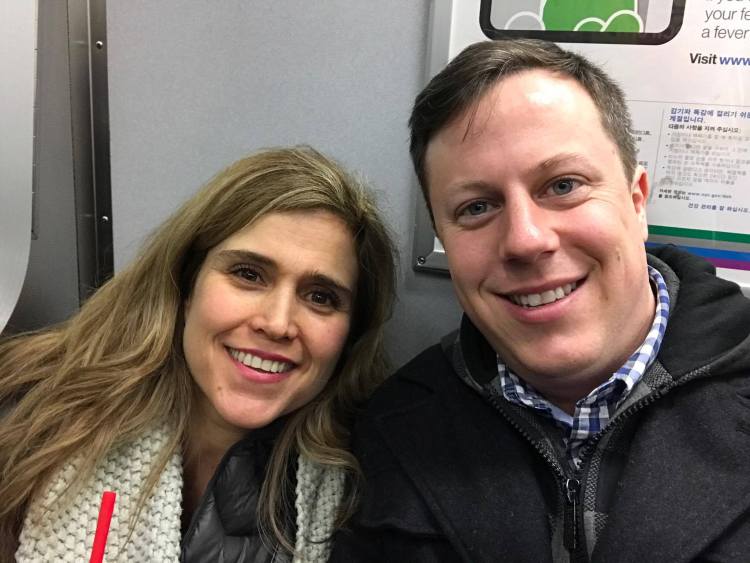


 Dr. Andrew Joseph Pegoda