Abortion and 9 Things to Understand

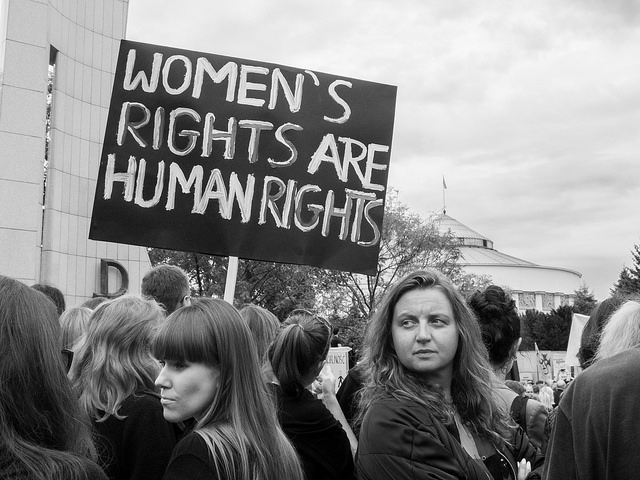
  • Just because someone with female reproductive organs is pregnant does not mean the fetus will survive until its birth. Approximately, 30 percent (or more) of all pregnancies end in what is called a “spontaneous abortion,” more commonly called a “miscarriage.” The number is likely higher because this often happens before a person knows they are pregnant and because of social stigma, occurrences are not always reported.
  • Humans have been having abortions for millions of years. Nothing is going to change this. When/where abortion has been outlawed, abortion still happens but only becomes more dangerous.
  • People purporting to be “pro-life” are historically only pro-life until the “life” in question actually begins.
  • Current regulations related to abortion have often been made exclusively or almost exclusively by rich powerful White men–men who refuse to listen to women and men who at times have had affairs and have paid for their girlfriend to have an abortion.

  • Calls for bans on abortion are coded “alarm bells” for the declining birthrate among White women. No one really voices concern about abortion when its Persons of Color seeking the abortion.

  • Women who have abortions don’t make the decision lightly. Abortions are often medically/psychologically necessary, especially in the case where the mother’s life is in danger or in the case of rape (remembering that approximately 20-25 percent or more of all people have been or will be victims of rape).
  • The Southern Baptist Church, for example, vocally supported a woman’s right to an abortion through the 1960s and through Roe v. Wade, only changing its position with the rise of Jerry Falwell in the early 1980s.
  • No one questions a man’s right to control his body. No one should question a woman’s right to control her body. Control includes what goes in the body, what is in the body, and what comes out of the body.
  • Life has always been defined as starting at birth, not conception. 

Stop the war on women. 

Dr. Andrew Joseph Pegoda 

Increasing Budgets, Empty Rooms, and Missing Representatives

As a graduate of Brazosport College and as a citizen who pays taxes to the Brazosport College Taxing District, I enjoy keeping up with some of its activities when/where possible.

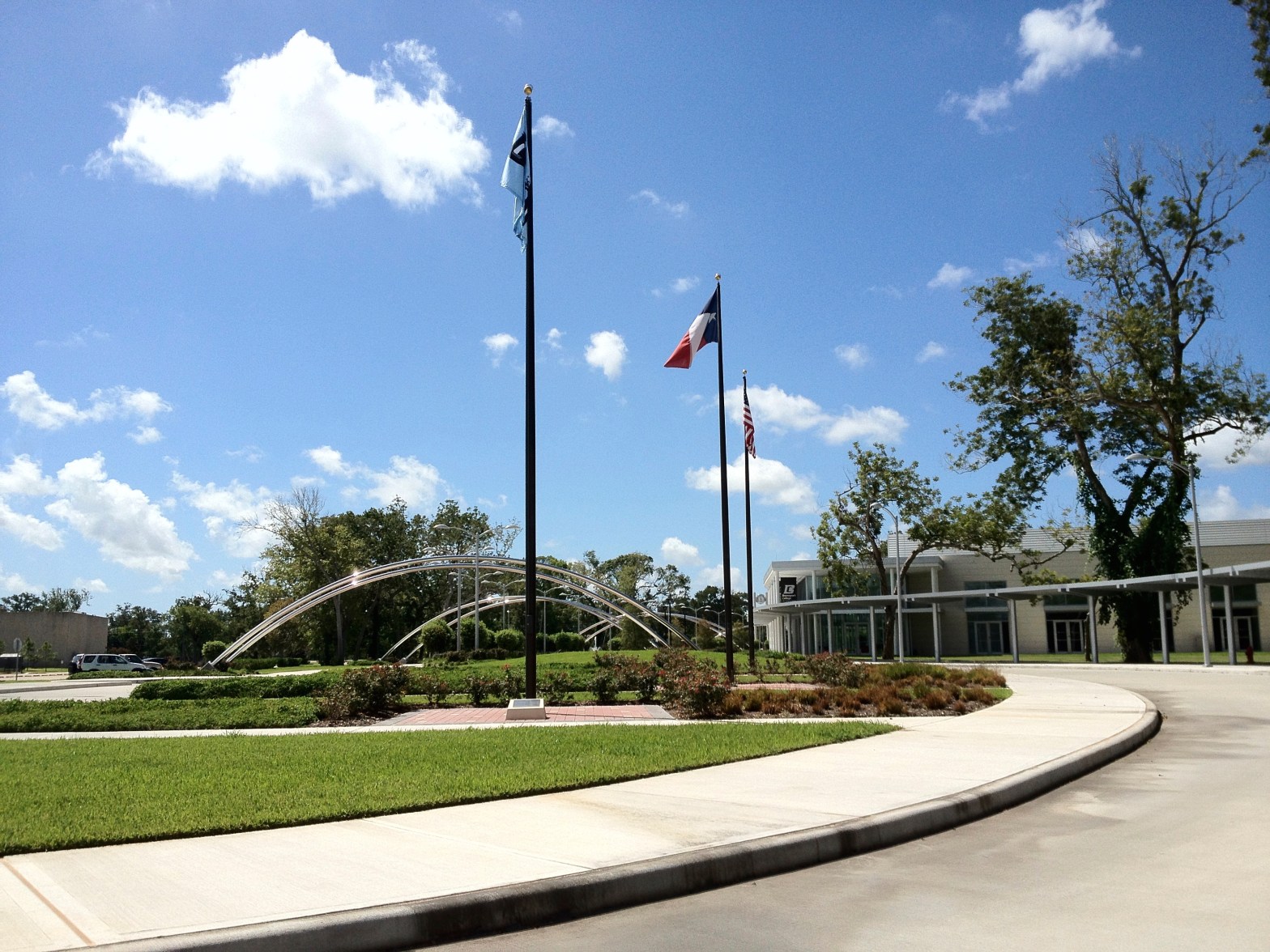
In 2007, voters approved a $70,000,000 bond. This bond included a number of items but two new buildings and various remodels accounted for the bulk of this amount. One of the new buildings is mainly for science and nursing classes, the other for community and college special events. The college emphasized the urgent need for more classroom space during the bond efforts.

The problem is that these buildings (old and new) are empty most of the time–even during the day. According to Brazosport College’s master schedule Astra (select “all events” next to “choose calendar”)–which is available to the public–the vast majority of classrooms (and other rooms) are never used or are only used for two or three classes a semester.

(This is in contrast to the University of Houston, for example, where every room is booked solid from at least 10 am to 4 pm during the week.)

For some quick examples in the form of PDF documents, click here and here for a look at how many classroom spaces were not used during the Spring 2018 semester at Brazosport College, click here for a look at how many spaces are not currently being used during the first Summer 2018 session.

(Take note: There is some variation for special events, of course, not occurring of the days shown in theses examples; however, there are few special events. Additionally, five of the classrooms–the ones that start with “HS”–are rooms at the high schools and are for dual credit classes only.)

Of note is that the number of students attending Brazosport College has not, for all practical purposes, changed for over ten years. There are additional online courses compared to ten years ago (before the new buildings opened) but no where near enough to account for the number of empty rooms in 2018. 

Of additional note is that Brazosport College’s budget increased from approximately $25,500,000 in 2007 to $38,000,000 in 2013 to $50,500,000 in 2017. Budgets at institutions of higher education have been increasingly everywhere lately, but the increase at Brazosport College is about 30-40 percent more than elsewhere in the same timeframe. Tuition at Brazosport College has gone from one of the lowest in the state of Texas to one of the most expensive during the same time period for community colleges.

Of further note is that no one on the Brazosport College Board of Regents has actually been “elected” in about thirty-five years. Regents are appointed through what I consider to be legal loopholes. In particular, systematically, when a Regent is ready to “retire” from the Board, they resign several months to a year before the end of their official term; a new regent is appointed; and the newly appointed regent runs as an incumbent. And because openings are not truly advertised, for all practical purposes, there are seldom any challengers. The citizens of the Brazosport College Taxing District do not have actual representation.  

Dr. Andrew Joseph Pegoda

Book Review–“Why Gender Matters: What Parents and Teachers Need to Know About the Emerging Science of Sex Differences”

Last night I read Why Gender Matters: What Parents and Teachers Need to Know About the Emerging Science of Sex Differences published by Penguin Books. The author–Leonard Sax–has a Ph.D. and a M.D., so I expected a monograph of quality.

However, I’ve never read an academic book more offensive, problematic, inaccurate, queerphobic, transphobic, sexist, hateful, opinionated. I’m still in shock. In a nutshell, the author argues that boys are biologically better and completely different than girls, that gender nonconforming people had bad parents, that trans people are mentally ill, and that all of the problems boys have in school would be solved if their soft-spoken female teachers spoke louder! 

The author never defines “gender” or “sex.” Throughout the book, he uses “gender,” when “sex” would be more appropriate and accurate in most instances. The author suggests correlation implies causation and uses a handful of examples and broad generalizations to “create” rules of behavior. The author neglects discussions of race, class, ableism, etc. #IntersectionalityMatters #PositionalityMatters 

Why Gender Matters relies on dated, disproven notions of essentialism. This book completely rejects all of the emerging science on the subject. The book does not allow for social constructionism at all and ignores the role of the historical unconscious.

Don’t read this book! Please don’t. This book could only futher harm people, especaially those who more directly resist soceity’s expections for “men” and “women.” Why Gender Matters was so bad and so offensive, I emailed Amazon to express my thoughts and to request a refund–they granted it even though it was slightly past the refund window for Kindle Books. I also suggested they shouldn’t sell the book as it promotes discrimination. 

Read Cordelia Fine’s Delusions of Gender: How Our Minds, Society, and Neurosexism Create Difference to actually learn about why gender matters and about its power on society. 

Dr. Andrew Joseph Pegoda

On the Limits of Poststructuralism

Of course, representations always matter. Both choices and implications.

Disregarding the author and his/her/their background and intent (see, for example, “The Death of the Author”) is typically important when analyzing culture. Humans are generally blind to their own circumstances and why–truly why–they make the choices they make. Only with time can we begin to see aspects of the historical unconscious.

For example, those involved with the reel version of The Help said they were committed to giving a voice to the voiceless and to producing an anti-racism film. However, numerous authors–including myself–have found The Help to be extremely racist and ahistorical.

(A film can be anti-racism and still show historically/culturally relevant racism.)

In other examples, Hollywood frequently receives much warranted criticism for casting White characters in non-White roles. Black women are still cast as Mammy in far too many cases, as I and others have argued elsewhere. White men who are jocks are cast as privileged, know-it-all bullies in too many cases. White characters are often cast as “innocent” pure victims, drawing on the virgin/whore trope. 

These representations have implications: They teach audiences, and they perpetuate inequalities. The institutional problems are endless. 

However, sometimes knowing about the author(s) and the related circumstance(s) is vital and makes poststructuralist criticism unwarned and arguably, inaccurate.

For example, if a group of people work together to make a high-quality but low-budget film about issues they are all passionate about, critiques regarding representation are not as important or accurate, especially when this group of people consist of close, long-time friends or colleagues. In this case, critiquing the work because people play characters that might ordinarily be read differently in a Hollywood production completely misses the existing beauty.

The dominate film and music industry has thoroughly manipulated and skewed audience feelings and expectations such that we (“must”) criticize all media, even though we know that any given cultural text cannot possibly include representations of everything and be completely free of anything that could possibly be associated with a stereotype.

With their limited funds and resources, independent films or local theatre productions, for example, cannot be fairly accessed by analyzing the text alone or by using the same standards used for major-studio-funded works and their bottomless pockets. 

Dr. Andrew Joseph Pegoda

18 Ways to Have Different Class (or Group) Discussions

The following outlines various techniques I use when teaching to enhance or change discussion-based activities. I’ll update it as necessary. I’ve had a number of students say they enjoy my classes in part because they never know what we’ll be doing that day! 

1. Bring out the maps. Have students draw maps and discuss their perceptions. Also, have students pin-point where events occurred and where people lived. When I taught Texas History, I had one group discussing an article about a woman who gave lectures throughout the entire state. They pinpointed these places on a map. Internalizing “where” things occur is important for students and their understanding. Occasionally, map quizzes can make for important lessons, too.

2. Make timelines. Have students make timelines based on lecture or reading topics, while also researching and adding context both in the same region/state/nation and elsewhere in the world.

3. Edit Wikipedia. I did this one for the first time recently. Students worked in groups of two or three to update the Wikipedia pages for important people in the assigned reading. Most of them didn’t really realize they could edit these pages and expand the pool of online knowledge. Or do other activities to have students think in terms of presenting information for the public, such as making a script for a podcast or YouTube video and then actually making it and posting it. 

4. Use Urban Dictionary. Have students compare course vocabulary (or concepts in a definition essay) with definitions on Urban Dictionary. This helps them think about point-of-view, connotation and detonation, medium, and much more. Students can also add their own definitions! 

5. Incorporate theater. Have students make skits. Or travel back a few thousand years and have students given oral interpretations of ancient myths–turn on a campfire video from YouTube, sit in a circle, and turn the lights off. 

6. Work backward. Discuss topics, or an aspect of a topic, from the present backward in time. The backward approach to studying history is powerful and arguably more natural. 

7. Examine current events. Have students examine current events and consider how much or how little has changed. Students could also consider how current events shape understandings of the past.

8. Give your students an IQ test. This IQ test will show students how such ideas are socially constructed and how IQ is problematic. 

9. Have students discuss college. In particular, powerful conversations result through small-group or class-wide conversations about the emotional demands of college and learning worth crying about. 

10. Discuss the big concepts of the discipline  One way of doing this is through the “Big Idea Syllabus” framework. I have a “Big Idea Syllabus” for Writing and History courses.

11. Use the Digital Humanities. Students can look at the occurrence of a given word in printed material spanning millions of books and hundreds of years. Students can make a graph (word cloud) of any collection of text to get an idea of word frequency and visualize the text in abstract ways. Students can make a concordance of any group of text to get an even better idea of how many times any given word or phrase was used in a body of text. 

12. Discuss interdisciplinary concepts. Important concepts for students to know, concepts that can fit into any number of lessons, include gaze, historical/cultural memory/representations, imagined community, intersectionality, mores, rhetoric, social construction, positionality.

13. Bring in the cultural artifacts. Have students discuss how film and music embody ideas of the course. I have given a final exam where students were asked to find a song (and not the first one on the radio) that somehow had special meanings to them and related to course topics in unique ways. We all had a blast. 

14. Approach the material as a complete outsider. The Nacirema method is an excellent approach for this. 

15. Have “what is” conversations. For example, when I taught Texas History we discussed “What is Texas History” at length. We also discussed when Texas History begins and ends, chronologically and geographically. 

16. Do art projects. 1) Draw people. Working individually or in groups, students can draw (or make sketches). These sketches–of say the typical Texan or a typical United Statesian–can be revealing. 2) Write poems, Haikus work especially well. 

17. Have students cite each other. Recently in an effort to get students to listen to one another and to take more notes, I required them to write one of our regular end-of-class responses and cite at least two classmates.

18. Do experiments. I have a number of various activities I do that help students challenge their own preconceptions of race, gender, and violence.

What would you add to this list?

Let me know if you have any questions! 

Dr. Andrew Joseph Pegoda
Real Problems Under Cloaks of Success, or How Polk Elementary Handles Bullying

I attended Gladys Polk Elementary in Richwood, Texas, from August 1992 to May 1999. It was a huge part of my early life (and some bad memories, discussed here), and I continue to keep track of what is going on at Polk–thanks to the Internet.

This past December, I read through its 2016-2017 Campus Improvement Planned (2017-2018 version is here) and noticed a few problems and a few interesting items. This report outlines its successes, challenges, and goals.

Reading through the 2016-2017 version, I was struck by the following statement: 

We have had only one bullying report that proved to be bullying this year.

I immediately remembered a meeting at UH about sexual harassment on campus. In this meeting, the person talking with us (a group of professors in the Women’s, Gender, and Sexuality Studies program) explained that she gets concerned when numbers are too low because that means people are not reporting sexual harassment/sexual assault.

The same goes with bullying. With an enrollment of around 500 students–ranging from people in early childhood to fourth grade–bullying is certainly happening every day, in every room. This is common sense. While times have changed and my experience is certainly not necessarily an indicator of all experience, I remember being bullied daily at Polk by other students and by teachers.

Claiming there was only one (real) case of bullying is to make a mockery of bullying. It gives bullies–student and teacher bullies–a “get out of jail” card, and it tells people bullied–student and teacher victims–that no one is listening.

While it might seem like a good thing, Polk’s “one occurrence” of bullying is absolutely alarming. What is it trying to hide? Or did it adopted some kind of artificial, narrow definition of “bullying”?

And further alarming, as I discovered while writing this article, is that Polk’s Campus Improvement Plan has this exact same statement about bullying in both its 2016-2017 and 2017-2018 reports. Sadly, they really don’t take bullying seriously.

Both reports also assert:

100% of students and staff expressed in the survey that they feel safe at school and that they feel valued and supported at school

Again, this result must be questioned. What kind of questions were asked in this survery? How were they framed? This survey is clearly hiding problems because there is no way every student feels safe, valued, and supported at Polk, even if they don’t yet have the agency or voice to see it. 

On the note of interesting, students now recite Polk’s mission statement each day:

The mission of Polk Elementary is to ensure all students learn at high levels and are future ready.

Mission statements are typically interesting, but this statement strikes me: only students are supposed to learn? Why doesn’t it say “to ensure all members of the community learn”? And it should be “future-ready.”

Dr. Andrew Joseph Pegoda

Notes on: “Social Construction”

As I have written numerous times, and as my students can attest, I am a proponent of seeing everything as a social construction.

Such a position is easily misunderstood. I often hear: what do you mean that so-and-so is a social construction.

There are different ways to look at this, but at its core, social constructions are products of societies, times, and places. The ideas and objects that exist in our world are not products of biology, of essentialism – they were/are no inevitable developments. 

Ian Hacking’s The Social Construction of What addresses some of these ideas and overall, tends to object to the idea that everything is a social construction.

For example, he suggests that child abuse has always existed and is real, but the “idea of child abuse” is new and is socially constructed. This example is thought-provoking but rests on essentialism and leaves important questions unanswered, including:

  • Who is a “child”? Is this determined/altered by race, gender, age, (dis)ability? What boundaries are there before and after being a “child”? 
  • What is “abuse”? Does the definition of “abuse” depend on who is giving and/or receiving the “abuse? Does the definition of “abuse” depend on what the “abuse” is for? Does “abuse” include physical, psychological, and systemic abuse?

History teaches us that the notion of “children” is fairly new. History also teaches us that enslaved Black “children” in the United States could be sold or killed with full sanctioning from community, political, religious voices, for example.

If one still maintains that child abuse has always existed, one is asserting an ethnocentric position. 

Suggesting that only “the idea of child abuse” is socially constructed also ignores semiotics–the construction of the signs and symbols of language–and linguistic relativity/Sapir-Whorf Hypothesis.

When I say something is “socially constructed,” I think about my comments in this blog, where I explain that “facts” exist within specific contexts and within spectrums. Although not as common, I include even sexual attraction and sexual desire (as partly articulated in “Anthropology Rediscovers Sexuality”) and include science in the domain of items that are socially constructed.

There are different levels to what we consider “social constructions.” Some items such as mores, are more “absolutely social constructions.” In addition to being socially constructed, they are relative. Other items, such as preferences for certain foods, are social constructions and subjective. 

That humans have a body part called a “stomach” is a social construction, too. At least in regard to what we call this body part (and how we spell it and pronounce it) and that we have a specific name for it. At least in regard to that as scientific discoveries continue–if they do, for such is not enviable–our understandings will change in unpredictable ways: today’s “science” is often tomorrow’s “pseudo science.” At least in regard to how society understands the stomach.

Even evolution is a socially constructed theory (and also an essentialist theory, per se).

Society’s base of knowledge and historical memory is socially constructed. Always. The Declaration of Independence was basically forgotten for decades! It’s not inevitable that people living on the land currently called “Texas” in 100 years will “know” they have a stomach. And maybe they won’t even have a stomach–technology could come up with something better, or science may find what it considers a more accurate classification system. Knowledge must be actively and deliberately kept alive.

While seemingly “common sense” and “core ideas” to most scholars in 2018, notion of “social constructionism” officially date back only to the World War II era and notion of “relativism” only to the late 19th century. 

Saying all of this, I wonder if it might help more people understand social constructionism if we took the emphasis off “culturally/socially constructed” and created a new category, potentially one called “culturally/socially informed“? Would this help people grasp that we are not saying so-in-so is meaningless?

Biology makes it more difficult. We know ascribing anything to essentialism quickly becomes problematic. We also know, as Gloria Steinem says, we’re clearly products of both nature and nature. Teasing out biology’s role is impossible – but even the world we create influences and changes our biology.

Dr. Andrew Joseph Pegoda

Modern Life and the Problem of Memory

Several days ago, I was on the way to Houston to teach and suddenly had a fear that I had forgotten to put deodorant on that morning!

(Luckily, I had put deodorant on, even though I never could retrieve that memory.)

And this got me to thinking: We have a lot to remember each day in 2018!

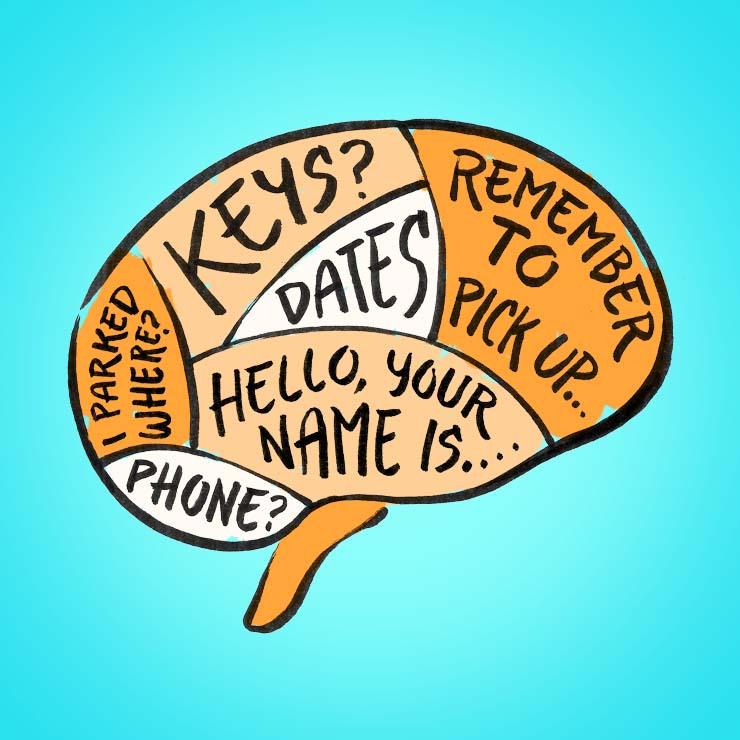
Take medications. Floss. Gas for the car. Check the mail. Charge the iPad. Return the text message. Pay that bill, and the other bill. Change the light bulb. Feed the cat. Use the coupon. Count the calories. Get enough sleep. Wake up on time. Schedule the followup. Fix the fence. Read the new book. 

And on and on.

Such constant to-dos pose significant strains on human memory…. and cause stress. The list only grows for people with bosses and/or professors and/or friends to satisfy. 

Humans have not adapted to the cruelties of Modern life.

“Modern” is one of those peculiar words that has such an array of definitions it has long been problematic. For purposes here, I use it to refer to the historical era dating from roughly 1450 with the slow rose of the State, the city, and industrialism. I also use it to refer to life now and over the last few decades.

Prior to capitalism (see, What is Capitalism, if not Bureaucracy) and industrialism, life was not as dangerous or stressful (especially if you ask Michel Foucault). People had much less to remember when 98 percent of the population dedicated their efforts to farming and being as independent as possible. Certainly there were plenty of things to remember and keep track of, but these were a natural part of the everyday rhythm of life and were much more specifically tied to survival. Modernity and capitalism constantly create new necessities — people went without deodorant for hundreds of thousands of years — and new things to remember!

All humans suffer from such limitations of memory. And all of this is on top of how poorly humans can process and understand the world around them and their own thoughts. We have people who only process a tiny percent of what occurs around them, who only grasp a tiny percent of their own thoughts and actions, yet who are expected/required to remember never-ending ever-growing responsibilities.

These thoughts I am having only further confirm how unnatural Modern education is when it involves mere memorization. And no wonder students have trouble remembering what we tell them. 

Dr. Andrew Joseph Pegoda