48 enslaved individuals work for me. How many work for you?

One of the biggest misconceptions we have here in the United States is that the practice of enslaving (Black) individuals ended with the Civil War. (In fact, it continued until the WWII era in the form of convict leasing, also known as neo-slavery) Additionally, people often don’t realize that the United States was far from the only nation that enslaved individuals racialized as black and that this practice specifically began in what became the United States in 1619. By looking at world history, we can see that enslavement has been a mainstay across societies, times, and places. Although, to be sure, the practice of race-based, chattel enslavement by forcefully moving individuals collectively called “Black” to countries in the New World and forcing them to endure violence and extremely harsh conditions from the 1420s until 1888 was a distinct period in Atlantic World history. 

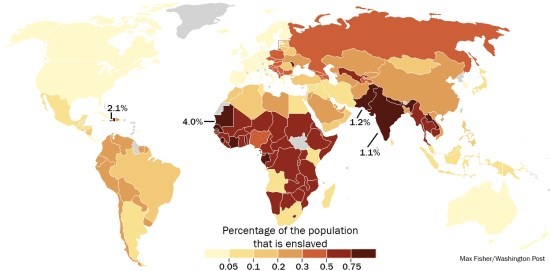
Recently, there has been more media and academic attention (see the website, Historians Against Slavery) given to the practice of contemporary enslavement. There is a website called Slavery Footprint that ask a variety of questions about where you live and what kind of things are in your home to determine how many enslaved individuals work for you. The website also provides other resources related to advocacy.

The survey indicated that 48 enslaved individuals work for me.

How many work for you? I urge you to take the survey, too. Be patient. The website is a bit slow and cranky. 

Slavery Footprint’s survey, while an approximation, is important at reminding us how we still pretty much live in a “slave society” (not a “society with slaves”) because the practice of enslavement is and has been thoroughly interwoven into the economic, legal, and social fabric of the United States (and the World). Students studying the 1800s, especially, frequently aren’t taught and don’t realize that the institution of slavery was present everywhere, in the North and the South, throughout the United States (see: Case Study: History, Myth, and Public Schools).

As I wrote in, Boycotts and Protestors, Companies, and (Sad) Realities of the World given the nature of business practices today, it is extremely difficult to avoid or stand up to these big companies and to have clothes, electronics, and food made by individuals compensated fairly. 

At the very, very least, recognize that by virtue of reading this blog, you are among the richest 0.01% of people who have ever lived on this planet.

slavery-per-capita-map-wo-arrows
Please click the map for more information.

slavery today copy

Case Study: History, Myth, and Public Schools

The following is a review sheet with answers exactly as sent to the parents of 5th grade students by the social studies teacher at a school near where I live. My analysis and thoughts follow the three centered diamond icons. Be sure to see the last paragraph for my full analysis. 

Unit 9 Test Review

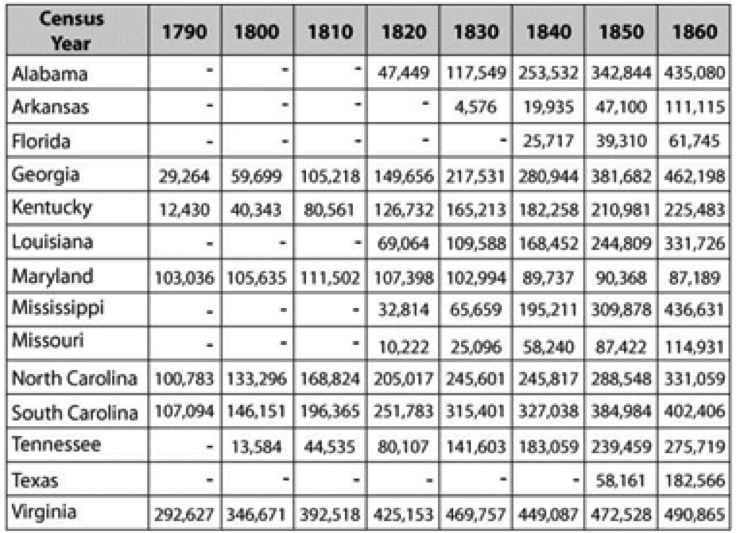
Total Population of Enslaved People,
United States, 1790-1860 (by state)
Untitled

1)    In 1860, which state had the highest number of slaves? Virginia

2)   In 1820, how many slaves did Georgia have? ­­­­­­­149,656

3)   What do you think caused the increase in the number of slaves in the south? ­­­­­­­­­The increase was caused by the invention of the cotton gin, mechanical reaper, and cast steel plow.  These inventions increased production on plantations.

4)   List the states in order of highest to lowest number of slaves owned in 1860.­Virginia, Georgia, Mississippi, Alabama, South Carolina, Louisiana, North Carolina, Tennessee, Kentucky, Texas, Missouri, Arkansas, Maryland, and Florida.

5)   The Northern states economy depended on industry (factories and textile mills), while the Southern states economy depended on agriculture (famring [sic] and plantations).

6)   Define sectionalism: regional loyalty

7)   The United States changedgreatly [sic] between the Industrial Revolution and the Civil War.

8)   Who was the 16th President of the United States?  Abraham Lincoln

He did not want slavery to spread.
He issued the Emancipation proclamation.
He believed that all people were equal and free.

9)   What were 3 causes of the Civil War? Slavery, states’ rights, sectionalism (and the secession of the southern states).

10)   What was one direct result of the Civil War? The end of slavery

11)   REVIEW:  What war was James Madison a part of?  The War of 1812

12)   What happened in the south as a result of the invention of the cotton gin, mechanical reaper, and the cast steel plow? An increase in slaves and food (crop) prices began to drop because there was a larger supply.

13)   What is a primary source? A record of an event made by a person who saw it or took part in it.

14)   What is a secondary source? A record of an event written by someone who was not there at the time.

15)   Define supply: The amount of a product or service that is available.

16)   When there is a shortage of supplies or goods (or a higher demand), the price goes up on these items.

17)   Define demand: The need or want for a product or service by people who are willing to pay for it. 

18)   Harriet Tubman led people out of the South on what was called The Underground Railroad.

♦♦♦♦

There are a variety of subtle and not-so-subtle inaccuracies and agendas in this seemingly short and innocent study guide. 

The table with population numbers distorts the chronological timeline of enslavement and the number of individuals enslaved. The chart does not list population numbers for Texas during decades in which the institution of slavery was indeed present. Same for other states. The chart gets around it with its title “…United States, 1790-1860.” Likewise, enslavement occurred prior to 1790. Naturally, charts can’t be all-encompassing, but such a presentation of data perpetuates the historical memory that doesn’t recognize the role of slavery prior to the nation’s founding. By not recognizing its roots, people don’t understand the full development and legacy of all the interconnected issues. Finally, and this is a more picky point, the chart should really say “Total REPORTED population.” We know that enslaved populations were not always fully reported by their enslavers.

Question #1, #2, #4, #11, #15, #17 are basically fine but are low-level questions.

#3’s answer doesn’t allow for the reality of a very pro-slavery Constitution, group of so-named Founding Fathers, and culture in general. Additionally, the cotton gin was innovated, not invented at this time. 

#5 likewise undermines the role of enslavement. BOTH the North and the South had economy’s entirely dependent on the success and perpetuation of the institution of slavery. The response required for the North is more acceptable than that for the South, as it does not recognize that slavery existed in the South.

#6 by implication perpetuates the idea of a unified North and a unified South that were divided against each other.

#7 doesn’t make sense. Plus, it suggests the Industrial Revolution was an event, rather than a process.

#8 is inaccurate in saying that Lincoln supported the notion that all people were equal and free.

#9 perpetuates the inaccurate and offensive idea that the Civil War involved other issues than the institution of slavery. From experience, the “states’ rights” argument will be and is emphasized over and over. There is NO EVIDENCE anywhere that anyone during the war thought the war was about states’ rights. This was deliberately created in the decades after the Civil War to rewrite and undermine the nation’s wrong-doings-also to create a “happy,” unified narrative for the nation. 

#10 is problematic because the Civil War did not end practices of slavery for those racialized as Black and did not end racism.

#12 subtly suggests that the institution of slavery was good. Additionally, its use of “increase in slaves” hits the sensitive ear wrong, “increase in the number of enslaved individuals” is much better.

#13 is okay considering the grade level.

#14 is wrong. A secondary source is not a record of events written by someone who was not there at the time. Secondary sources are based on primary sources.

#16 doesn’t make sense.

#18 by implication over perpetuates the myth of the Underground Railroad. And Tubman did NOT “led people out of the South” – she led “ENSLAVED black men and women out of the South.” The question completely omits the role of the institution of slavery. 

While this presentation of history is problematic, it is a perfect example of how history as practiced by virtually everyone, everywhere, for all of time is not intended to be accurate per se (see the first link under “see also” for my blog on this point specifically). Because if it was intended to be accurate, they wouldn’t be teaching all of these things that are known to be wrong by those who can and choose to be informed about such issues. Both these questions and answers reinforce history as popularly conceived and presented at large. They both reinforce the dominant White power structure and undermine those individuals racialized as Black. They emphasize economics and capitalism. Both undermine the role of everyday people–White, Black, male, female, etc. Both undermine the horrors and agency of involved in the institution of slavery. All of this deliberate and careful omissions and inclusions by curriculum makers work toward maintaining the status quo (with an emphasis on making good capitalists) and keeping people unaware of the realities of the nation’s past as known by evidence. Additionally, this narrative suggests that the past wasn’t that bad and that the present, by implication, is free from trouble. More importantly, these issues are further evidence that we won’t and can’t take an honest, hard look at the past and the complexities of diversity and people. 

See also:
The Nature of History and the History of History

Professional, university-trained historians are brand new in the scope of the planet’s history. Using the analogy of the entire Earth’s history in a day where humans arrive at 11:58:43 p.m., modern history would arrive at something like 11:59:59 p.m.

For most of history, conceptions of history (see, we need different words in the English language for history as in the past, and history as in the study of!) were not necessarily intended to be accurate. This holds true for historians and non-historians. They were intended to provide hope, guidance, establish authority. They were narratives about where they had been, where they were, and where they hoped to go – with an emphasis on those deemed to be brave and right. They were based on “real” events and feelings, hopes and fears but were myth, not history. “Contrary to colloquial usage, a myth is not a story that is patently untrue. Rather, a myth is a story that speaks of meaning and purpose, and for that reason it speaks truth to those who take it seriously.” Additionally, to the general public, history is frequently seen as “dead” and something that does not influence the present, as this quotation articulates: “THE PAST IS DEAD. It is done. It is over. It is finished. It is dust. It is a new day today.”

Modern, professional, university-trained historians first emerged in the late nineteenth century in the context of the Gilded Age. Connected to the rise of a new and powerful phase of industrialism and the rise of other social sciences, “History” became a professional, academic discipline. For the first time, professional historians emerged and strived for objective, accurate, and evidence-based accounts, accounts that would be free of mythology. Of course, postmodernism has helped us recognize that no one is free of bias, but there remains a huge difference in striving to be free of bias and purposely being biased.

As a professional, modern historian, I define History (the study of) as not what happened in the past but a story about what happened based on available evidence, resources, interests, and prevailing mores/prejudices, for example. Additionally, I define history (the past) as everything that has ever happened, didn’t happen, everything that has been thought, etc., from less than a millisecond ago. To me, there is no such thing as “the present” – everything is the past or the future. I recognize the reciprocal relationship between biology, physics, and geology, for instance, and what happens or does not happen. The relationship between all of the pasts (earlier today or earlier this millennial) and the future is also an important reciprocal relationship. Finally, I do not see myself as a “history buff.” “History buffs” tend to be more concerned with dates, facts, and events. I care about cultural expressions, thoughts, feelings, significance, and change or lack of change over time and place.

Since the rise of professional history, with some exceptions (notably Cold War-era consensus scholarship), there has been an increasingly large gap between academic history and history as generally thought of by everyone else (“everyone else” includes lay historians).

Public schools, politicians, and (frequently) museums promote conceptions of the past that serve ideologically-driven agendas. These uses of the past also have the effect of making most people, especially the majority, or the targeted audience in the case of politicians feel proud of who they are and the nation in which they have citizenship.

For example, the last time I visited the Bullock Texas State History Museum, the entire “comprehensive” museum of Texas’s history had ONE mention of enslavement and this mention was inaccurate. Additionally, seemingly more than ever—given the power of present-day mass media—politicians (especially, WASP male heterosexual cisgendered politicians) manipulate anything and everything to control others discourage any kind of critical thinking. Check out this article and this article (HT to my friend, Daniel, the author of this blog for the second reference-link goes to his article about Carl Sagan) for information about what children are learning in schools using books from the A Beka Book company, which “is one of the three most widely used Protestant fundamentalist textbook publishers in the country.”

I’m regularly alarmed at what people believe about the past. I hear parts of conversations while eating out and people have no idea that what they are saying is simply wrong. Of course, there are a variety of perspectives and interpretations on everything, but we know from evidence, for example, that Black men have faced institutionalized, government-sponsored discrimination en masse since well before the nation’s founding. People still want to believe that there is no such thing as White Privilege or that Black people “just enjoy getting intro trouble.”

This gap relates to the conception of history most have held across time and place: History is not supposed to be accurate per se. It’s suppose to reinforce power structures and make those in the majority group feel better about themselves. Although, this process of constructing deliberate historical narratives to reinforce the privilege of some goes largely unnoticed and is an unconscious process, at least to a large degree.

In this blog, I said one way to be sure students will continue hating history is to insist students abandon myths by which they have lived. As history professors and educators, we have to realize that what we teach and require of our students (methodologically and instructionally) is contrary to everything else they have ever encountered (and will likely ever encounter). We know that physiologically, students humans are not capable of easily changing such deeply ingrained practices for both themselves and for their culture and world. The historical unconscious is a powerful force that guides who we are and what our culture is without us fully grasping the how and why.

For instance, public schools and politicians (especially, if not basically exclusively, in the South) still teach that the Civil War was over states’ rights. This is not accurate. We know from secession documents, soldier diaries and letters, and speeches, such as the Cornerstone Speech, that slavery was the cause. Students, however, really don’t understand why we are telling them something they have always taken as a core truth is wrong. They can’t fully internalize and change such a belief because we say so and because we show them evidence. To them, the “evidence” is that their parents, grandparents, school teachers for over a decade said it was over states’ rights. It takes an exceptional student and willingness to break free of one’s culture to rise above mythology and move into the study of  history.

This kind of “adapting” is no different than the “adapting” (e.g., abridging, changing, combining) we do everyday, depending on who we are talking to or where we are, when asked how are day went or about some past personal experience. All narratives are equally legitimate history and are likewise not meant to be accurate per se but are meant to present specific fronts of sorts as desired based on hopes, fears, and goals.

We still, of course, want to and have to teach evidence-based history, but we have to be careful not to offended students and potentially turn them off from history forever. It’s a tricky boundary. One way I have found to help ease this barrier is to focus on cultural artifacts from the eras under study and to also focus on historical memory. We can help students examine various narratives, how and why they developed, and the purpose(s) they serve. This is also the point at which history (the study of) fully becomes not just a social science but also a humanity. 

Be sure to also see History Repeats Itself, Why I Study History, and History as a Science and my other articles about History.

Also, Check out these two articles on Nick Sacco’s blog on similar topics.

The Reciprocal Relationship Between the Past and Present

Reflections on Museum Interpretation and Audience Agency

Meister_der_'Cité_des_Dames'_002

Creative Writing: The Rivers

The Rivers

See how it lifts You away,
Triumphantly soaring,
Rolling
From afar.

See how it mirrors Your morning sky,
Magically knowing,
Singing
From above.

See how it guides Your day,
Secretly leaning,
Training
From around.

See how it prophesizes Your way,
Gently hoping,
Providing
From afar.

See how it knows Their way,
Gently weeping,
Crying
From behind.

See how it provokes Their sore,
Secretly expecting,
Wondering
From where.

See how it delays Their stay,
Magically casting,
Condemning
From below.

See how it shows Their sorrow,
Triumphantly falling,
Passing
From afar.

See how it

Kissimmee River, natural setting

Creating Writing: We Shall Have Your Future!: A Riddle

We Shall Have Your Future!
A Riddle
 
We are…
 
The,
gently–leisurely globe.
 Uncrowned Monarch.
 
Annals repeating of Ancient times.
Changing, Ceasing, … Creating History.
 
The World is,
corrupting around Our necessity, too.
Fantastically fond of fashioning fraudulency.
Fraudulently full of fantastic fabrications;
although not Art.
 With Our restraint, riches,…supremacy.
 
Considering everything else We do that is good.
Our worst quality is,
welcoming everyone and anyone,
prejudiced against, no one–
if We weren’t this We would be pure evil.
 
Growing more expensive,
but notwithstanding still very inexpensive.
Don’t like money;
lessening Our persuasiveness.
Reachable royal arrays,
ever popular.
 
Everyone tries Us,
never to find Us guilty, ha!
Addictive and attractive.
Originating other obsessions, too.
We create illness, experiences,
tax aspirations, epochs, and feelings of adoring.
You must go at Our speed.
 
And strife sentiments.
Care for you?,
not even Ourselves, not even Our … friends.
Don’t you care for others.
 
Cause the most damage, the most universally.
 
We witness to the World,
except—snow, it hurts,
rabbits hurt, too.
 
We obliterate original natural life,
Destroy identical,
 family, friends, and cultures, too.
 Frying would-be intellectual human brains,
You can’t get enough of Our enthrallment and enthrallment.
Don’t like Us, but Don’t know it.
BUT,
We create and have consciousness on apprehensiveness,
bullies–be keen on Us,
use Us even knowing Our cruelty.
 
“Dim the mind.”
You;
turn up to Us,
turn Us up to,
a role-model,
providing spiraling blurs;
teaching mind-shortcuts.
An escape.
 
Indeed a challenging drug,
that challenges no one,
but demands everything!
Trade your psyche to Us.
Robots evaluate and appraise existence for.
No one can ever forget,
fantastically fretful,
rulers, Rulers.
 
Turn to Us more for troubles.
To establish and exterminate troubles is Our purpose.
 
Become a god for some.
 
Revealing restricted realizations;
Our powers are really not relaxing.
Please do not avail to the evil side;
We Have vital reassure for you tonight.


Who am I?

bosch


“Massive Resistance: The White Response to the Civil Rights Movement” – Book Review Series #2

Historians of the Modern Civil Rights Movement of the 1940s, 1950s, and 1960s naturally tend to focus on the movement’s activism and the variety of forms it took. White segregationists receive much less attention, and when they are covered, they sometimes become monolithic historical actors. Although somewhat natural perhaps because history does tend to focus on winners and victims and studying people who truly were vicious can get depressing, this is problematic for two reasons. Primarily, as I have said for a few years now, every one is part of a movement even if by nonparticipation; therefore, to fully understand the struggles and accomplishments of the Modern Civil Rights Movement, we need to also give those who are either in opposition to or nonchalant about the movement’s goals serious attention. By not giving these other men and women serious attention we have also denied them agency and have missed elements of the Modern Civil Rights Movement’s richness.

800px-101st_Airborne_at_Little_Rock_Central_High

George Lewis’s (a Lecturer in American History at the University of Leicester in the United Kingdom) primarily synthetic Massive Resistance: The White Response to the Civil Rights Movement (2006) provides a provocative look that aims to correct this historiographical void. Lewis scrutinizes the term “massive resistance” and argues that massive resistance was a complex, changing movement that varied by person, social class, time, and place.

The term “massive resistance” emerged in 1956. While it never came to have a single, static meaning, it came to define an era and a collective philosophy. As Lewis puts it, “massive resistance, in other words, was more of an umbrella term than a clearly defined counter-revolutionary programme [sic]” (9). Taken collectively, however, participants who engaged in en masse massive resistance were both those who were truly opposed to increasing minority rights (for reasons including that they believed Black individuals could not handle more freedom, and it would destroy the “White race”) and those who were simply afraid of change, those who did not want the world as they had always known it to change. Those in opposition to basic civil and human rights for Black individuals were primarily working class individuals and then politicians responding to the pressure from these constituents. In the New [Old] South, tradition and conformity were top priorities.

While his study is generally situated geographically/culturally in the South, Lewis divides the era of massive resistance chronologically into five periods. The first two periods, Brown and its Aftermath, 1954-1956 and Resistance Rampant, 1956-1960, were initially characterized by a wide variety of responses to Brown. At the beginning, massive resistance was not inevitable. For example, directly prior to the Supreme Court’s ruling, Alabama began efforts to equalize pay between White and Black teachers, and South Carolina began to equalize funding provided to the “separate but equal” schools. After the ruling, individuals and institutions had a variety of responses. As time moved on, these first periods were also characterized by figuring out how to persuade others to oppose civil rights, further state-based codification of anti-civil rights measures, and full-on attacks (primarily spoken or written) on anyone supporting any measures of change or civil rights, and escalating violence. For example, state-based elected officials gave the governors in Louisiana and Georgia dictatorial powers to respond to the school situation as needed. Additionally, Louisiana passed 136 measures opposing Brown and supporting segregation from 1954-1957. (Does that remind you of all the votes taken to overturn Obamacare?)

The next period, Responsive Resistance, 1960-1965, was an era ripe with vicious violence and politicians fully committed to preserving a culture of segregation. The final period, Confederate Chameleon, while not necessarily connected to massive resistance per se, describes the rise of conservatism as a political party rooted in opposition to Black individuals. This period has also been characterized by the rise of private clubs to maintain all-White groups. For example, the number of private schools in Mississippi increased from 17 to 150 within one year after Congress passed the Civil Rights Act.

Therefore, as I see it, the South very quickly transformed from a “society with resistance” to a “resistance society” (borrowing Ira Berlin’s framework of “societies with slaves” and “slave societies”).

Throughout the life of massive resistance southerners voiced their belief through publications, speeches, organizations (e.g., the Citizens’ Council had 90 chapters with 250,000 members and many “fellow travelers”), and mob activities. Published literature, propaganda really, sought to blackmail the NAACP and label civil rights protesters as foreigners who were actually communists seeking to destroy the United States, for example. All age groups were included in this widespread campaign to indoctrinate White individuals. For example, an 8-page cartoon was produced to teach children the “right” way to live and think.

One limitation of Lewis’s book for experts is that the majority of his examples of massive resistance are already well known. Lewis discusses, in significant detail, the mob violence that occurred in Little Rock, with the Sit-in Movement, with the Freedom Riders, and throughout a variety of university segregation/desegregation events. The difference to other account being that the emphasis is on the counter protestors.

Lewis’s book sometimes reads a bit too much like a textbook. (I even double-checked half way through to see if I actually was reading a textbook.) Collectively, Massive Resistance is a collection of a whole variety of names, dates, and events and has little analysis. In a number of places, interesting assertions are made without specifics – the lack of analysis makes for some awkward assertions. For example, Lewis says, “By May 1924, there were legal standards for ‘whiteness’ in the Old Dominion” but never describes or analyzes them (15). “Kilpatrick was able to demonstrate before a nation-wide audience that being an avid segregationists was not necessarily incommensurate with displaying a quick wit, possessing fiery intelligence, and appearing both personable and eminently reasonable” (111). Toward the end he discusses lesser-known limitations of the Voting Rights Act saying that Mississippi passed 30 voter restriction bills, but he does not provide any details or examples. In other places throughout the book, Lewis seems to suggest that the South could have won and successfully resisted segregation if it would have prepared and organized a unified response to Brown.

Nonetheless, this monograph deserves praise for reminding readers that while there have been very real similarities throughout the South then and now (today the South has the very lowest rankings in funding for education, number of people with college degrees, number of people with health insurance, the highest ratings for diabetes, etc), the South is not one place. Additionally, massive resistance was a complex phenomena.

Future scholars can further enhance the line of inquiry explored by Lewis by both looking at regions outside of the South and by doing a close analysis of everyday life. For example, how did sermons, school curriculum, and newspapers “frame” events and how did all of these connect to a culture desperately hoping to perpetuate the culture of segregation? A cultural studies analysis of such material would be very interesting.

71iyUbHnA-L._SL1063_

See also:

Jane Sutcliffe, A Barack Obama Biography, and Looking at the Full Picture

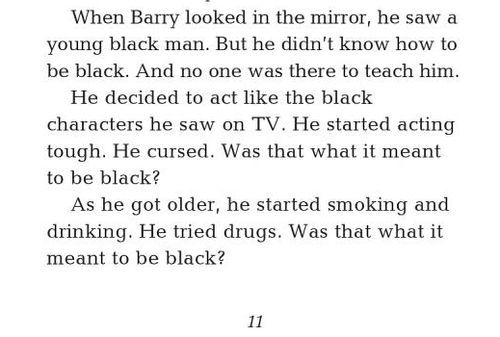
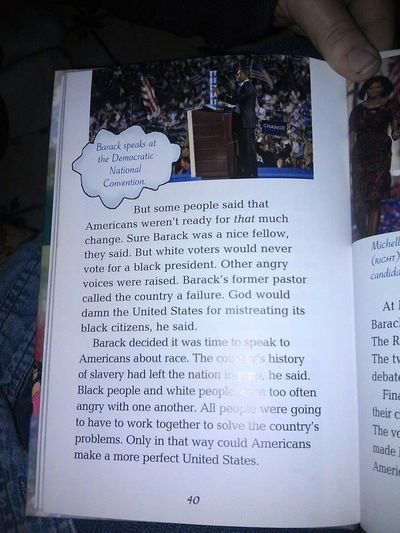
Over the past several days various places on the Internet, places across political and educational spectrums, have been expressing outrage over the following two passages in Jane Sutcliffe’s biography of Barack Obama for children. 

Barry-looked-in-mirror barry-book

Indeed, I was concerned when I saw these passages. I read this news article and these reviews on Amazon. All of these assert that the book is racist, biased, and doesn’t belong in a classroom and should be burned. One says, it’s a book Hitler would like. Many accuse the book of rewriting history to make White people look bad.

As a scholar with a primary interest in racism, these accusations made me very interested in what was actually in the book–the entire book. I rushed ordered a copy so that I could write an article and get it out as soon as possible. Considering all of the attacks on the book, I fully expected the book to be worthy of much criticism.

Last night I opened the book and started reading it. And, to my delight, this book is not an attempt to rewrite history, it is not an attempt to show a distorted view of the President, White Americans, or of anyone else. It is a nice book. It is very obvious now that 90% or more of the people who have left reviews on Amazon have not actually read anything more than the two small excerpts going around the Internet. Apparently, Fox “news,” is also covering the story. And you know (or should know!) if Fox “news” covers it, it is not going to be accurate.

Context matters. Actually reading the book before having any opinion matters. And the drama around this book is a good reminder for all of us, including myself, that two passages do not represent an entire work.

The book simply tells the story of Obama’s life. It opens with details about his childhood, family, and early school days. It talks about his “coming of age” events and starting college. It talks about how he worked long and hard from being somebody no one knew to somebody many people knew. It talks about his rise to becoming president. That’s it.

The two passages “in question” are easily explained.

The first one focuses on: “He decided to act like the black characters he saw on TV…He tried drugs.” This is in the context of a discussion about Obama dealing with not having his dad in his everyday life, of dealing with people who made fun of him and his family- in the context of being a kid and trying to fit in and figure out who he was and wanted to be. The rest of the book goes on to explain how he overcame the mistakes with drugs (although the word “drugs” is never used again and the subject never discussed, which is important to mention considering the number of reviews that said they didn’t want their kids learning about drugs) and came to find an identity he embraced, happily embraced. Some might suggest instead of the specific drug reference, the author should have just said “mistakes” or something similar. Perhaps. Although, I remember as early as first grade we learned about the importance of being drug free and the risks people faced who did drugs. Drugs, studies show, are something many children will encounter- they need to be aware of the world around them. The only sentence that should be phrased a bit differently is, “But he didn’t know how to be black.” Something like, “But he didn’t know how to be what the media said black was” might be better. But, this is something I would have probably never noticed if I didn’t spend all day, every day studying language and culture.

The other passage people are angry about says: “…But white voters would never vote for a black president…” This is in the context of how Obama went from not being known to being know. It is in the context of his vision of change for the United States and the very real factor that for many Whites the skin hue of the person really does matter. It goes on to explain how he continued on anyway and was elected President. In this passage and elsewhere, the author simply recognizes the actual role of racism. By also saying that “But for Barack, speaking with white voters was just like talking with his grandparents,” the author also shows the absurdity of racialized divisions. The book does not (but certainly could have) discuss how all of the White Republicans have done everything possible for five years now to try and prevent the President from being successful.

My only concern with the book is that Obama is always called by his first name or his nickname. When the book discusses him as a senator, for example, it should call him “Senator Obama.” But I recognize that the majority (if not all) children’s books call their subjects by their first name. I also kind of wish there were more actual photographs instead of illustrations. That said, the illustrations are tasteful and in no way equate caricatures.

As one of the legitimate reviews on Amazon says, the President Barack Obama presented in this book is one who shows the “American Dream” is still a possibility. I think this is a readable book that children should enjoy and will find inspirational, especially those children who come from less privileged upbringings (read my articles and others’ articles about privilege and all of its nasty manifestations). Jane Sutcliffe deserves praise, not criticism, for the above reasons and because she discusses a much-discussed person without discussing politics or misrepresenting history. There is nothing in this book that should be controversial, noting is politicized.

Katy Perry and Neo-Blackface

I don’t have television (by choice). But last night I knew something was going on when so many people kept posting on Twitter and romacebook talking about some big, questionable, weird event. This morning I leaned that the controversy related to Katy Perry’s performance at the 2013 American Music Awards.

131124223722-ama-katy-perry-performance-horizontal-gallery

Perry, whose career took off in c. 2007, belongs to a group of music artists that include the famous and infamous Lady Gaga and many others. These singers are known for incorporating a significant amount of dancing and costume, as well as numerous “extras” into their performances–both the live versions and the music videos. While this generation of pop artists has made many important contributions to the evolution of music per se (namely the definition of “music”) and they have been significant advocates in pressing society to recognize basic human rights, these pop artists have been highly controversial and “unusual.” (The first time I ever heard of Lady Gaga, I was watching a YouTube video, and she was wearing a spider outfit that was many, many times larger than the size of a typical adult.)

At the American Music Awards last night, Perry’s performance of Unconditionally immediately resulted in a viral spawn of comments across social media. Here is a video of her performanceLyrics can be found here. (While I was writing this article the American Music Awards association took down their copy. I posted the link from a different YouTube channel. If it is also taken down, I’ll try to post another link.)

As much as it might surprise those who know me, personally or through my writing, I do not automatically think that everything and everyone is racist. Of course, racism is rampant (very rampant), the primary force causing division today, and has many manifestations, some harder to detect than others.

One of the first questions I had about this video and accusations/possibilities of racism was: Do the lyrics and the meaning of the song, for any reason, necessitate these costumes? No. They clearly do not. Moreover, I see a huge disjuncture between the stage, the dancing, and the lyrics. The “music” is not at all related to “traditional” Japanese music. For one example of legitimate Japanese music listen to this.

Perry’s performance and the lyrics are indeed full of racism and perhaps even sexism. 

Perry is dressed as a Geisha wearing a kimono (although one highly sexualized). In Japanese culture, Geishas are “Japanese woman educated to accompany men as a hostess, with skills such as dancing, conversation, and music.” The stage is full of signs and symbols that match the West’s stereotypical expectations of Japanese culture. The lyrics, combined with the stage setup, are overtly racist in one place at the beginning when Perry speaks about still loving even with “all the dirty laundry.” “Laundry” is a note-worth word choice and fair game for criticism. Individuals racialized as Asians have been stereotypically associated with clothes, cleaning, laundry, and the like, and this immediately struck me as uncomfortable.

As Jeff Yang suggests in his review, the lyrics combine racism with sexism by promoting a stereotypical image that women, especially Asian women, are/should be submissive to men. This additionally perpetuates stereotypes of women being small, quiet, and subservient. While I agree the performance itself had sexist elements, I do not automatically see sexism in the lyrics. Nonetheless, despite the seeming progress society has made in recognizing the rights and autonomy of women, a sizable body of music by contemporary artists–both men and women–promotes messages that women are objects, that women belong to men, that rape is acceptable, that men are allowed to cheat on “their” woman, etc.

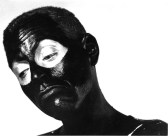
Mark Blackface 2Perry’s performance is ultimately racist because it is no different than when individuals racialized as Black were prohibited from being in films and White people would paint their skin black and pretend to be Black, for example. Looking at these performances today, we can clearly see how racist, discriminatory, and derogatory these really were. Perry’s performance is what we might call “Neo-Blackface.” Neo-Blackface because there is a significant chronological gap from the decades when Blackface was popular, widely used, and acceptable. But also because there is an additional very strong cultural element today, and a variety of cultures are targets of becoming costumes, so to speak. Perry is far from the only one guilty of such performances or cultural appropriation. This phenomena has become so wide-spread that this past Halloween, there were social movements starting around the Internet’s social media websites reminding people that it is offensive to “be” an Asian, Indian, or whoever for a few hours.

culture4

Why, specifically, is it considered offensive for Perry to dress as a Geisha? Several reasons off the top of my head. For starters, Japanese women wear pretty much the same everyday clothes as people in other industrial or postindustrial societies. Perry’s costume matches the stereotypical image society provides of Asian and Japanese culture; and therefore, it perpetuates representations that are wrong. Perry reduces not just Geishas but an entire nation and even hemisphere to a “visual sound bite” – and inaccurate one at that. Additionally, considering the United States both today and its long and terrible trajectory of not truly embracing or welcoming diverse performers, it would be basically impossible for such a woman from Japan, especially the particular cultural manifestation Perry uses, to have anywhere near the fame, status, and opportunity Perry has. Such an actual woman or music of her culture would not be welcomed. Perry also doesn’t have to deal with the very real discrimination Japanese women face: She dresses up and “enters” into a complicated, diverse, wonderful human world in the “safest” way possible and then “leaves.” Not only is she “safe” from discrimination she would face if she were actually a Geisha or probably any Asian woman, but she also shields herself, so to speak, from the real richness of the culture she mimics. Finally, throughout this performance the focus is specifically on Perry at least 90% of the time. We see the cultural signs and symbols surrounding her, but the focus isn’t on them. The Japanese culture portrayed, while very “in your face,” is secondary to Perry.

Looking at it from an audience point of view, with Perry’s performance, the audience (and audiences are notorious for wanting their world views confirmed, as has been established very well in film scholarship) has a similar kind of “Neo Blackface” or masks they are wearing. They immediately know that everything is pretend, they get carried away in the “exoticness” of the moment because they are able to “pretend” (even if unconsciously) perhaps that they are multicultural and are learning, but they do not, in general, actually embrace diversity or know anything about the true richness of diversity that occurs culture-to-culture, subculture-to-subculture. This parallels the “male gaze” and is arguably a kind of “White gaze” or “US-centric gaze”: The people and ideas in this music performance all become objects to viewers, objects that are devoid of any true cultural or human value. Japanese culture, a stereotypical version, is ultimately turned into a four-minute commodity that most certainly cost entirely too much money and even more in human feelings.

We need a culture that allows for actual diversity and truly embraces antiracism and multiculturalism.

Setting aside the racism and sexism for a second, this was a poor performance. There was too much going on and too many people running to or from their position on the stage all the time. The back wall of the stage was entirely too visible, as well.

I find it interesting that in the official version of Unconditionally on YouTube, the setting is one of stereotypical Victorian culture. Watch it here. In this version, there is an equal emphasis on men and women. Its historical representations in places would have been impossible. This version also makes use of magic realism. Overall, nonetheless, this version is more enjoyable and truly diverse.

451900245