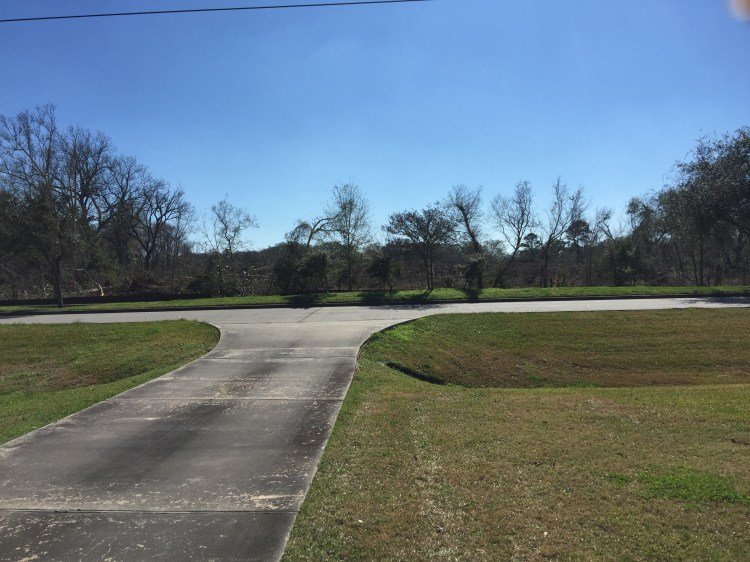
Photo taken by Andrew Joseph Pegoda, February 9, 2015, Lake Jackson, Texas
Greed all around us
Sly forces killing all breath
Clear blue skies cry, why
A scholarly life.
Photo taken by Andrew Joseph Pegoda, February 9, 2015, Lake Jackson, Texas
This thought-provoking and problematic “check your privilege” list has been circulating on Twitter this morning, seemingly at least partly originating from this tweet.
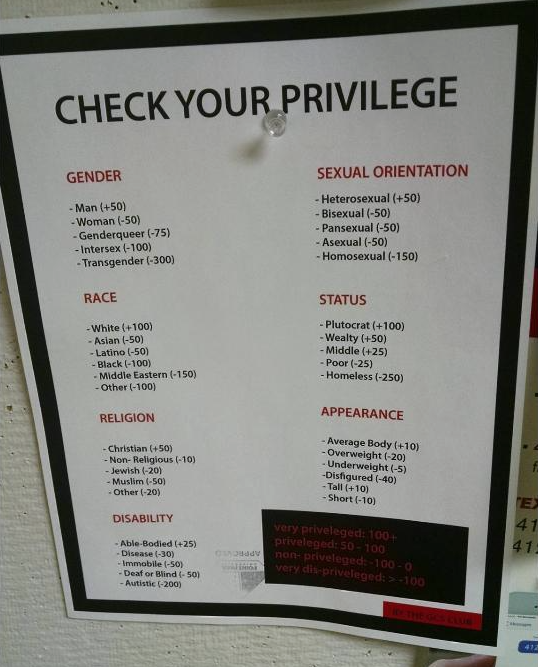
Normally, I am all for discussions of privilege. These conversations are needed and don’t happen anywhere near often enough. But this chart, goes about it (almost) all wrong.
For starters, it legitimizes that being classified as White, Man, Able-Bodied, etc are good and characteristics to aspire to – you get more “points” after all. The entire “point system” is problematic too because there are no “points,” there is no exact science to discussing and measuring systems of privilege in real, everyday life. Indeed, part of their power is that they can’t be measured. The power of invisibility. Likewise, as we know from Invisible Man, being a minority is to be invisible at times, and this is also problematic.
The point system, as this twitter user suggests, encourages comparisons about who is treated worst. According to this chart: a transgender, Middle Eastern Muslim who is a disfigured, autistic, gay, homeless man is the “least privileged of all.” This is kind of ridiculous. Ridiculous in terms of having an “exact calculation.” Additionally, this privilege list is “racist,” “sexist,” etc., in terms of how it classifies (and doesn’t) such ascribed and achieved statuses.That is to say, this chart implicitly suggests it covers all possible variables, when it doesn’t.
In the humanities, we know that nothing has an exact answer and that there is never any one answer. Given this, I still have questions about these rankings. For instance, I would think that a person being non-reliigous would “cost” him/her more than ten points.
From another perspective, this chart is ambiguous. How “poor” does someone how to be before they are considered “homeless”? What is the difference between being “poor” and being “middle class” given today’s economy? How “tall” is tall? And being a 6′ 6″ individual, sometimes being tall is not a privilege. Also, privilege and discrimination are not static. Gay people have only faced en masse discrimination since around the World War I/World War II era and in ways it is getting worse as (most) Republicans hate gay people and we’re so close to having codified human rights.
Context is important. And this chart ignores context. It also ignores geography (and chronology). Depending on what era, country, state, etc someone lives in the discrimination and “privileges” one receives differ.
This checklist does get credit for recognizing intersectionality. For example, it readily shows that a “White woman” is treated very different than being a “Black woman.” It might help some people realize how good or bad they have it, but it does little else.
Especially meaningful conversations about White Privilege, Heterosexual Privilege, Cisgender Privilege, etc, etc, etc, take an approach like this, this, and/or this. Lists such as these provide direct and indirect solutions, too. White people regularly complain that discussions of privilege are too pointed and oriented toward blame. In reality, discussions of privilege should be focused on being more and more conscious of the world and helping others have better and better opportunities and a happy existence.
What are your thoughts?
Often times we have urges to clean and downsize our possessions. I’m guilty of this, too. Sometimes too much so. We see something we haven’t used in forever and decide to get rid of it. Or see “old stuff,” “boring history” and see no value in it. Doing this too much is dangerous–yes, “dangerous” is appropriate diction–because objects, more than our brains, store memories.
For example, after guest speaking at Alvin Junior High, I went down memory lane for about a week. During this time, I looked at all of my old yearbooks from elementary and intermediate school. If I had gotten rid of these, I wouldn’t have these memories: pictures, names, and notes from teachers.
When people talk about having houses that are almost empty or that have been destroyed by natural disasters, memories have been destroyed. (Keep lots of pictures and have backups as possible!)
Or as this article discusses, when children don’t want any furniture from their parents, memories have been destroyed.
Objects (just like people) store memories. human brains are infinitely powerful but need help. It functions better with cues. Students learn retrieval strategies for taking tests. Objects are retrieval mechanisms.
I’ve read that if you stopped speaking and writing in English, for example, that in 5-10 years, you would have “forgotten” most of English. With brains it’s less about “forgetting” and more about under use. Similar things happen when we get rid of things, and consequently, memories are forever deleted. If you don’t use it, you lose it.
Part of why nursing homes are so sad and detrimental is because people have to give up almost everything that gives them memories. Indeed, we are who we are because of other people and other things. Living in an empty, strange, isolated place is bad news.
Additionally, knowing and studying History is in part dependent on people not discarding everything. Imagine how much less we would know about 1800-1899 if no one kept anything! Save “stuff” for future individuals, if not for yourself.
Finally, we must acknowledge that we are privileged to be able to save primary sources and cultural artifacts. We have means of storage and shelter. When you decide to get rid of something, you are giving up your own voice as an historical actor. Think of all those across time and place who long for a voice.
Help yourself and others preserve and understand themselves and future peoples by saving and preserving, not discarding. Everybody can be a historian.
(Did you notice that “the” is not in this article once!? Compare that to most blogs/articles!)

Michael Frisch‘s “American History and the Structures of Collective Memory: A Modest Exercise in Empirical Iconography” caught my attention some time ago. Please read or at least skim the article if you can. If you do not have access to an academic database, send me an email, and I can email you a copy of it. Anyway, in this article Frisch talks about a really interesting experiment he did from 1975 to 1988 with 1000 students. This experiment focused on giving students a survey where they wrote down ten names that came to mind in response to the given topic. I decided it would be interesting to duplicate this experiment, with a few minor changes. I conducted this experiment in my Fall 2015 class at the University of Houston. 47 students were enrolled in this class. On the first day, before talking about anything, I gave each student a piece of paper that said:
Without thinking more than just a few seconds, please write the first ten names that pop into your head in response to the following prompt: “United States history from 1877 to the present.”
Ten blanks followed. Looking at results for names placed on the first line, there were 41 total responses and 23 (or 56%) unique answers. Specific top results for the first line were as follows.
| Word | Occurrences | Frequency | Rank |
| Off Topic | 6 | 14.6% | 1 |
| Abraham Lincoln | 4 | 9.8% | 2 |
| John F. Kennedy | 4 | 9.8% | 2 |
| Barack Obama | 4 | 9.8% | 2 |
| George Bush | 3 | 7.3% | 3 |
| Martin Luther King, Jr. | 2 | 4.9% | 4 |
| George Washington | 2 | 4.9% | 4 |
“Off Topic” answers had responses such as “racism” and other things or places, not names. Technically, George Washington is “off topic,” too, but it is a name at least. Two students ranked him as the first name that comes to mind when they think of U.S. history from 1877. I’m not sure if this is a “not following directions,” “not fully reading the directions,” or a lack of historical literacy. Looking at the results collectively, so all of the responses for the ten blanks, all students wrote in their top ten list, there were 321 responses and 161 (50%) unique answers. Top results were as follows:
| Word | Occurrences | Frequency | Rank |
| Off Topic | 46 | 14.3% | 1 |
| Barack Obama | 23 | 7.2% | 2 |
| John F. Kennedy | 17 | 5.3% | 3 |
| Martin Luther King, Jr. | 17 | 5.3% | 3 |
| Richard Nixon | 12 | 3.7% | 4 |
| George Bush | 11 | 3.4% | 5 |
| Bill Clinton | 11 | 3.4% | 5 |
| Abraham Lincoln | 10 | 3.1% | 6 |
| Ronald Reagan | 8 | 2.5% | 7 |
| Bush | 8 | 2.5% | 7 |
| George W. Bush | 7 | 2.2% | 8 |
| George Washington | 6 | 1.9% | 9 |
| Teddy Roosevelt | 5 | 1.6% | 10 |
| Clinton | 5 | 1.6% | 10 |
| LBJ | 4 | 1.2% | 11 |
| Dwight D. Eisenhower | 4 | 1.2% | 11 |
| Ford | 4 | 1.2% | 11 |
| Adolf Hitler | 4 | 1.2% | 11 |
| Rosa Parks | 4 | 1.2% | 11 |
| FDR | 3 | 0.9% | 12 |
| Hilary Clinton | 3 | 0.9% | 12 |
| Malcolm X | 3 | 0.9% | 12 |
| Mitt Romney | 3 | 0.9% | 12 |
| Albert Einstein | 2 | 0.6% | 13 |
| Henry Ford | 2 | 0.6% | 13 |
| Ben Franklin | 2 | 0.6% | 13 |
| Thomas Jefferson | 2 | 0.6% | 13 |
| Harry S. Truman | 2 | 0.6% | 13 |
| Herbert Hoover | 2 | 0.6% | 13 |
| Winston Churchill | 2 | 0.6% | 13 |
| Malcolm X | 2 | 0.6% | 13 |
| James Madison | 2 | 0.6% | 13 |
| Roosevelt | 2 | 0.6% | 13 |
I also asked students:
Without thinking more than just a few seconds, please write the first ten names, excluding presidents, generals, politicians, etc., that pop into your head in response to the following prompt: “United States history from 1877 to the present.”
(Will save these results for another day.) and also asked:
Without thinking more than just a few seconds, please write the first ten topics, themes, ideas, images, sounds, etc., that pop into your head in response to the following prompt: “United States history from 1877 to the present.”
For this question, looking at the first line, there were 38 responses with 28 (or 74%) unique answers. Results were as follows:
| Word | Occurrences | Frequency | Rank |
| racism | 5 | 13.2% | 1 |
| World War I | 3 | 7.9% | 2 |
| war | 3 | 7.9% | 2 |
| World War II | 3 | 7.9% | 2 |
| jazz | 1 | 2.6% | 3 |
| hippies | 1 | 2.6% | 3 |
| segregation | 1 | 2.6% | 3 |
| Roaring 20s | 1 | 2.6% | 3 |
| slavery | 1 | 2.6% | 3 |
| retro | 1 | 2.6% | 3 |
| Civil Rights Movement | 1 | 2.6% | 3 |
| social media | 1 | 2.6% | 3 |
| Off Topic | 1 | 2.6% | 3 |
| wars | 1 | 2.6% | 3 |
| Industrial Revolution | 1 | 2.6% | 3 |
| capitalism | 1 | 2.6% | 3 |
| jazz and rock | 1 | 2.6% | 3 |
| music | 1 | 2.6% | 3 |
| emancipation | 1 | 2.6% | 3 |
| Holocaust | 1 | 2.6% | 3 |
| The Beatles | 1 | 2.6% | 3 |
| gender inequality | 1 | 2.6% | 3 |
| baby boom | 1 | 2.6% | 3 |
| golden | 1 | 2.6% | 3 |
| economic crisis | 1 | 2.6% | 3 |
| agricultural plowing | 1 | 2.6% | 3 |
| civil rights | 1 | 2.6% | 3 |
| rush | 1 | 2.6% | 3 |
I did the same survey, with the same questions the last day of class, too. For the first question (list ten names), there were 29 responses (unusual number of late/absent students this day!) and 19 (or 66%) unique answers for the first line. Top results were:
| Word | Occurrences | Frequency | Rank |
| Richard Nixon | 5 | 17.2% | 1 |
| Martin Luther King, Jr. | 3 | 10.3% | 2 |
| John F. Kennedy | 3 | 10.3% | 2 |
| Barack Obama | 3 | 10.3% | 2 |
Total results for all students top-ten answers included 229 responses with 107 (or 47%) unique answers. Specific results were:
| Word | Occurrences | Frequency | Rank |
| Martin Luther King, Jr. | 22 | 9.6% | 1 |
| John F. Kennedy | 16 | 7% | 2 |
| Barack Obama | 12 | 5.2% | 3 |
| Richard Nixon | 11 | 4.8% | 4 |
| George Bush | 8 | 3.5% | 5 |
| Off Topic | 8 | 3.5% | 5 |
| Adolf Hitler | 8 | 3.5% | 5 |
| FDR | 8 | 3.5% | 5 |
| Anne Moody | 8 | 3.5% | 5 |
| Bill Clinton | 5 | 2.2% | 6 |
| Ronald Reagan | 5 | 2.2% | 6 |
| Rosa Parks | 5 | 2.2% | 6 |
| Dwight D. Eisenhower | 4 | 1.7% | 7 |
| Hillary Clinton | 4 | 1.7% | 7 |
| Charlie Chaplin | 3 | 1.3% | 8 |
| Teddy Roosevelt | 3 | 1.3% | 8 |
| Roosevelt | 2 | 0.9% | 9 |
| George W. Bush | 2 | 0.9% | 9 |
| Malcolm X | 2 | 0.9% | 9 |
| Susan B. Anthony | 2 | 0.9% | 9 |
| LBJ | 2 | 0.9% | 9 |
| Harry S. Truman | 2 | 0.9% | 9 |
| George Washington | 2 | 0.9% | 9 |
| Thomas Jefferson | 2 | 0.9% | 9 |
For the third question (the one about images/themes/etc), on the last day of class looking at just the first response, there were 27 responses with 22 (or 81%) unique answers. Looking at all ten blanks for each form, there were a total of 268 responses with 177 (or 66%) unique answers. The list is too good to not include everything. Results were as follows:
| Word | Occurrences | Frequency | Rank |
| Great Depression | 9 | 3.4% | 1 |
| racism | 8 | 3% | 2 |
| war | 7 | 2.6% | 3 |
| liberalism | 6 | 2.2% | 4 |
| Civil rights | 6 | 2.2% | 4 |
| WWII | 5 | 1.9% | 5 |
| women’s rights | 4 | 1.5% | 6 |
| postmodernism | 4 | 1.5% | 6 |
| LGBT rights | 4 | 1.5% | 6 |
| Vietnam | 4 | 1.5% | 6 |
| Enlightenment | 4 | 1.5% | 6 |
| conservatism | 4 | 1.5% | 6 |
| Women’s suffrage | 4 | 1.5% | 6 |
| lynching | 3 | 1.1% | 7 |
| Manifest Destiny | 3 | 1.1% | 7 |
| sexism | 3 | 1.1% | 7 |
| White Privilege | 3 | 1.1% | 7 |
| equal rights | 3 | 1.1% | 7 |
| Neo-slavery | 3 | 1.1% | 7 |
| slavery | 2 | 0.7% | 8 |
| minority rights | 2 | 0.7% | 8 |
| segregation | 2 | 0.7% | 8 |
| immigration | 2 | 0.7% | 8 |
| feminism | 2 | 0.7% | 8 |
| “The Immigrant” | 2 | 0.7% | 8 |
| imperialism | 2 | 0.7% | 8 |
| Industrial revolution | 2 | 0.7% | 8 |
| terrorism | 2 | 0.7% | 8 |
| “Pie in the sky” | 2 | 0.7% | 8 |
| antiwar | 2 | 0.7% | 8 |
| Civil Rights Movement | 2 | 0.7% | 8 |
| Conservation | 2 | 0.7% | 8 |
| change | 2 | 0.7% | 8 |
| industrialism | 2 | 0.7% | 8 |
| Indians | 2 | 0.7% | 8 |
| Roaring 20s | 2 | 0.7% | 8 |
| WWI | 2 | 0.7% | 8 |
| hopes and fears | 2 | 0.7% | 8 |
| Birth control | 2 | 0.7% | 8 |
| Military Industrial Complex | 2 | 0.7% | 8 |
| Liberal Consensus | 2 | 0.7% | 8 |
| “Aint No Bugs On Me” | 2 | 0.7% | 8 |
| fear | 1 | 0.4% | 9 |
| Femme fatale | 1 | 0.4% | 9 |
| Macy | 1 | 0.4% | 9 |
| Cold War | 1 | 0.4% | 9 |
| economics | 1 | 0.4% | 9 |
| Wealth inequality | 1 | 0.4% | 9 |
| Police killing everyone | 1 | 0.4% | 9 |
| White v Black | 1 | 0.4% | 9 |
| Scientific Management | 1 | 0.4% | 9 |
| freedom songs | 1 | 0.4% | 9 |
| skyscrapers | 1 | 0.4% | 9 |
| “The Bitch Manifesto” | 1 | 0.4% | 9 |
| Normandy | 1 | 0.4% | 9 |
| film noir | 1 | 0.4% | 9 |
| assignations | 1 | 0.4% | 9 |
| the power of media | 1 | 0.4% | 9 |
| “Brother Can You Spare A Dime” | 1 | 0.4% | 9 |
| factories | 1 | 0.4% | 9 |
| communism | 1 | 0.4% | 9 |
| MAD | 1 | 0.4% | 9 |
| McDonald’s | 1 | 0.4% | 9 |
| hope | 1 | 0.4% | 9 |
| politics | 1 | 0.4% | 9 |
| politics | 1 | 0.4% | 9 |
| lynching | 1 | 0.4% | 9 |
| dust | 1 | 0.4% | 9 |
| Uncle Tom’s Cabin | 1 | 0.4% | 9 |
| Vietnam War | 1 | 0.4% | 9 |
| “Kill the Indian Save the Man” | 1 | 0.4% | 9 |
| Second Industrial Revolution | 1 | 0.4% | 9 |
| soldier song | 1 | 0.4% | 9 |
| progress | 1 | 0.4% | 9 |
| amendments | 1 | 0.4% | 9 |
| anticommunism | 1 | 0.4% | 9 |
| soul music | 1 | 0.4% | 9 |
| Trail of Tears | 1 | 0.4% | 9 |
| Constitution | 1 | 0.4% | 9 |
| “Coming of Age in Mississippi” | 1 | 0.4% | 9 |
| protests | 1 | 0.4% | 9 |
| Men v Women | 1 | 0.4% | 9 |
| schools and federal guards | 1 | 0.4% | 9 |
| freedom | 1 | 0.4% | 9 |
| poverty | 1 | 0.4% | 9 |
| highways | 1 | 0.4% | 9 |
| global power | 1 | 0.4% | 9 |
| history | 1 | 0.4% | 9 |
| evolution | 1 | 0.4% | 9 |
| rebellion | 1 | 0.4% | 9 |
| Civil Rights Revolution | 1 | 0.4% | 9 |
| first electric chair execution | 1 | 0.4% | 9 |
| Watergate | 1 | 0.4% | 9 |
| economic problems | 1 | 0.4% | 9 |
| tears | 1 | 0.4% | 9 |
| Holocaust | 1 | 0.4% | 9 |
| “Over There” | 1 | 0.4% | 9 |
| war and peace | 1 | 0.4% | 9 |
| Indian massacres | 1 | 0.4% | 9 |
| suburbs | 1 | 0.4% | 9 |
| Henry Ford | 1 | 0.4% | 9 |
| new | 1 | 0.4% | 9 |
| Whites v Indians | 1 | 0.4% | 9 |
| prohibition | 1 | 0.4% | 9 |
| communists | 1 | 0.4% | 9 |
| military | 1 | 0.4% | 9 |
| industrialism | 1 | 0.4% | 9 |
| Wage gap differences | 1 | 0.4% | 9 |
| modernism | 1 | 0.4% | 9 |
| fears | 1 | 0.4% | 9 |
| worker’s rights | 1 | 0.4% | 9 |
| historiography | 1 | 0.4% | 9 |
| Great War | 1 | 0.4% | 9 |
| Depression | 1 | 0.4% | 9 |
| voting rights | 1 | 0.4% | 9 |
| “Strange Fruit” | 1 | 0.4% | 9 |
| destruction | 1 | 0.4% | 9 |
| cell phones | 1 | 0.4% | 9 |
| telegraphs | 1 | 0.4% | 9 |
| Roosevelt Corollary | 1 | 0.4% | 9 |
| race | 1 | 0.4% | 9 |
| Ghost Dance | 1 | 0.4% | 9 |
| Mad World | 1 | 0.4% | 9 |
| Great Depression | 1 | 0.4% | 9 |
| Black Renaissance | 1 | 0.4% | 9 |
| conservatism | 1 | 0.4% | 9 |
| Civil Rights Movement | 1 | 0.4% | 9 |
| hopes | 1 | 0.4% | 9 |
| love | 1 | 0.4% | 9 |
| internet | 1 | 0.4% | 9 |
| Golden Age | 1 | 0.4% | 9 |
| gender equality | 1 | 0.4% | 9 |
| bayonets | 1 | 0.4% | 9 |
| idealism | 1 | 0.4% | 9 |
| Not so roaring 20s | 1 | 0.4% | 9 |
| economy | 1 | 0.4% | 9 |
| Victorianism | 1 | 0.4% | 9 |
| happiness | 1 | 0.4% | 9 |
| railroads | 1 | 0.4% | 9 |
| patriarchy | 1 | 0.4% | 9 |
| activism | 1 | 0.4% | 9 |
| abolition | 1 | 0.4% | 9 |
| “Cotton Mill Colic” | 1 | 0.4% | 9 |
| 13th Amendment | 1 | 0.4% | 9 |
| Sit-ins | 1 | 0.4% | 9 |
| Progressive Era | 1 | 0.4% | 9 |
| Imperialism | 1 | 0.4% | 9 |
| White Man’s Burden | 1 | 0.4% | 9 |
| industrialism | 1 | 0.4% | 9 |
| racial tension | 1 | 0.4% | 9 |
| protest music | 1 | 0.4% | 9 |
| capitalists | 1 | 0.4% | 9 |
| Second Wave Feminism | 1 | 0.4% | 9 |
| suffering | 1 | 0.4% | 9 |
| environmentalism | 1 | 0.4% | 9 |
| Victorianism | 1 | 0.4% | 9 |
| the war | 1 | 0.4% | 9 |
| hate | 1 | 0.4% | 9 |
| Microsoft | 1 | 0.4% | 9 |
| “Birth of a Nation” | 1 | 0.4% | 9 |
| Moral Majority | 1 | 0.4% | 9 |
| Great Society | 1 | 0.4% | 9 |
| privilege | 1 | 0.4% | 9 |
| white | 1 | 0.4% | 9 |
| Rise of Conservatism | 1 | 0.4% | 9 |
| feminism | 1 | 0.4% | 9 |
| propaganda | 1 | 0.4% | 9 |
I haven’t done this survey enough to have a true comparison to the original, but the idea is that we all have a very similar cluster of big names that come to mind. Looking at the results from my students, I mainly just enjoy looking at the data. The informal survey/assignment was fully anonymous, by the way. I’m not ready to really interpret it, but I thought I would put it out there and get some ideas and reactions. I was surprised in the post-survey at how different many of the names were and at how many names were included that we never discussed in class. Many of the names were very contemporary, too. In a number of cases, when only a last name was provided, we don’t know who the student was specifically thinking about. I also think it is really interesting how many more different types of answers came out when the question asked about images/sounds/etc. By not focusing on names specifically per se, we might realize there isn’t as much of a collective memory or a very different kind of collective memory. One thing the survey shows that I really like is that they learned because they mention things they would have only heard about in my class! Special thanks to my mother for entering the first part of all of this data for me from the papers, so I could focus on other projects and just analyze and edit the data. Excel and Textalyser were also huge helps! 

A scholar from China visiting the University of Houston has been sitting in on my Saturday class. She brought this bookmark to me about three weeks ago.

I got this heavy paper weight/book holder around 2005 at a small bookstore going out of business.

Found these antique glass marbles in Abilene, Texas, in the attic at my great grandparent’s house around 1997. The picture doesn’t do justice at showing how many there are or how beautiful they are.

This one-of-a-kind, limited edition paperweight is one of my newest items from a professor I had at UHCL and now a really good friend/colleague/grandmother. (I’m the adopted grandson!)

This really awesome antique three-carat ring is also from Abilene. My great-grandmother gave this to me in 1997.

This really neat and heavy-for-its-size elephant was given to me when I was a little kid (kindergarten or something) by a waitress at a small, “mom and pop” restaurant in Wallis while traveling to Austin with my mother.
What are some of the cool objects you have?
Today I had the privilege of talking with eight groups of twenty 8th graders at Alvin Junior High School.
My day was a blast!
These students were curious and have a love of life far too many adults have lost. They were eager and fully innocent of all the things that stress far too many adults. They wanted to be marine biologists, surgeons, veterinarians, pilots, engineers, and many, many other things!
I used my typical very interactive teaching style. I asked these students, “What do you want to be?,” “What do you think a history professor does?,” and “How do you think you become a professor?” They already knew parts of the answers to all of these! I showed them my MA thesis around this point. I also used this as an opportunity to talk about how I teach and to talk about the skills of strong students and to share all the other things a history professor does besides teaching.
I passed around some old BlueBooks exams from former students for them to look at. I said this was a three hour test, how many questions do you think it had? They initially said “200” or “500” and other lively responses. When I told them the test had two questions, they were shocked, as I expected! But, then I used this to talk about how you always learn and grow and improve and that when you get to college it will be a piece of cake if you study.
In some of the sessions we had time to analyze a primary source. We looked at a photograph from the Great Depression. I passed copies of it around to the students and had them analyze it (based off various questions on my master list), and they did a great job – better than some college students! In particular, we talked about how various people would respond to the photograph.
In some of the sessions we talked about various definitions of “history” and how that anything and everything is history. When I asked them “how long ago does something have to be before it’s called history?,” I was delighted that in each group before I even said anything, they said “yesterday!” and “five minutes ago!”
We talked about the advantage of starting at a community college, too, and how dual credit can provide important opportunities.
They had so many wonderful questions, too. I wish I could remember all of them. At one point one of them asked what my favorite TV show was and thought it was “awesome” that I didn’t even have a TV!
I also had some really great conversations with other presenters at career day and faculty/staff members at AJHS. AND, a really neat and unexpected thing happened when I ran into Mrs. Setzer (our picture below), who was my social studies and science teacher in fifth grade at Polk Elementary in the 1998-1999 school year.

They say good journalism is free from (overt, excessive) biases. Such standards are impossible, without even considering the personal interests of a writer. The rhetoric of an article, even when seemingly balanced, helps speak to the “true” agendas–conscious or unconscious–of the author. What kind of pictures are included? Who is given a specific voice in the article? Who is talked about early on in the article and who later on? We all know that few people will read an entire article, especially online news articles that are not required reading.
This article in the Victoria Advocate (originally from the AP) about recent events at the University of Oklahoma prompted these thoughts.
This article primarily gives specific voice and attention to White Men (especially powerful ones at that) – the University’s President, the White House Press Secretary, and the national organization of the Sigma Alpha Epsilon. Just a few other specific voices are included and to a much lesser degree. Surprisingly, the chant is not discussed. Interesting, too, the articles does not give voice or attention to why the racist chant is a problem (of course it is – but this is a much needed conversation), does not give voice to the supporters or opponents of the University of Oklahoma’s actions, and it does not give any kind of meaningful response to how students, especially the 5% who are Black, and faculty on campus are responding and planning to heal.
The picture with the Victoria Advocate‘s article (directly below) caught my attention before the written content.
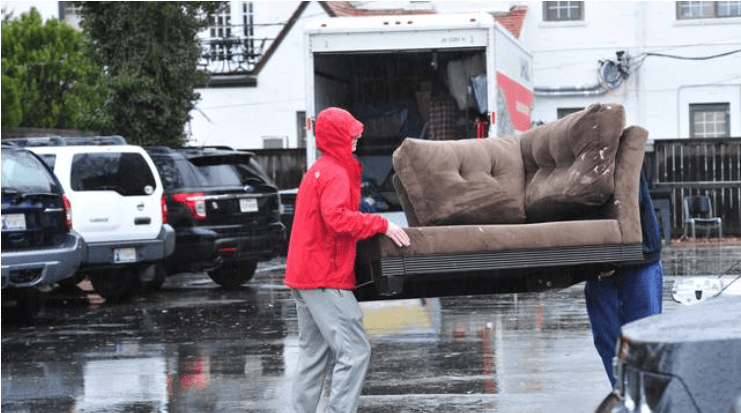
The author’s sympathies are clearly with those ordered to move out. The photographer’s/camera’s gaze is important, vitally important. This specific frame was deliberate –both the taking and electing to publish it. Recognizing the seemingly obvious is important! In the chosen picture, the weather is not ideal – cold and rainy. Of course the weather can’t be changed, but any good author knows or should know that weather conditions have tremendous influence on our emotions and perception. Students are shown as alone. There is not a crew working together or helping them. The moving van in the background is near capacity. Why was this photo used? Why not picture a group of students (supposedly) talking about the events? Or even have a still from the video of the racist chant?
Always think. Always question. Always.
My students are beginning to really focus in on their argumentative research papers for the semester. They have the option to write on anything that is in anyway related to Black History. I asked them to post a quick blog about their topic with an outline of some sources they plan to use so far. Then plan has been that I would then do a quick blog with a link to their topic and ask readers of my blog to add in additional ideas and/or possible sources, such that they have as many ideas and as much feedback as possible.
So, please click the links below, and add in your thoughts! I’m hoping this works out to be a really neat, positive experience for my students.
Thank you!
See previous updates: #1, #2, #3.


 Dr. Andrew Joseph Pegoda