9+ Things No One Tells You About Recovering From Surgery Based on Four Surgeries

1. There will be unexpected complications.

2. Recovery will be (much) longer than doctors indicate.

3. The area of the surgery will very likely be forever numb and tingly. Occasionally, the area will be very itchy. Gently patting the incision in a circular motion might help.

4. Each hour under full anesthesia equates to at least one month of recovery.

5. Immediate and short-term side effects of anesthesia include fatigue, difficulty sleeping, dizziness, depression, moodiness, memory loss, and impaired ability to read, speak, and write. Your memory during the recovery time will also be very poor. 

6. In the specific area of surgery and related areas and really the entire body you will lose a lot of strength and muscle.

7. During the days and weeks following, stomach problems are likely. Food and drink taste weird. You’ll be really hungry at times and not hungry at all other time.

8. For the time of recovery your memory will be really blurry.

9. Pain medicine doesn’t really work but just vastly, vastly amplifies side effects of anesthesia.

surgical_suite

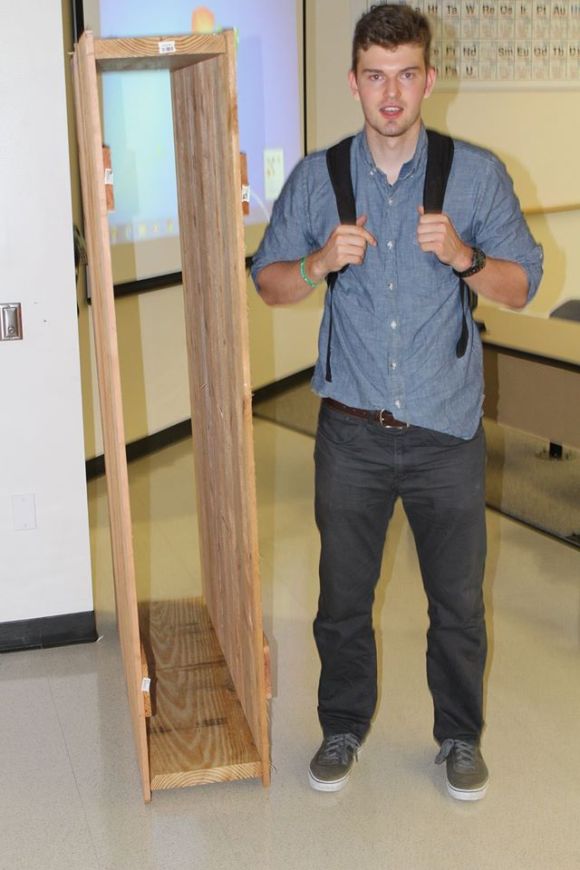
Life-size replica showing the amount of space enslaved people had on the Middle Passage.

As I have written about already, my class of four (five counting me) in African American History was absolutely outstanding. I’ll write more about it soon, too.

I wanted to share part of Tim’s project, and lucky for you (!), he gave permission to do so. (Make sure to check out the blog he created for the class!) In the pictures below, you’ll see his replica of approximately how much space enslaved Blacks had on the Middle Passage. On ships using the “tight packing” method, each person had somewhere around 6′ by 16″ by 30″. Tim’s replica would be the amount of space for two or three people. 

IMG_0337 IMG_0338 IMG_0339 IMG_0340 IMG_0341 IMG_0344 IMG_0346 IMG_0347

10848588_10153822809583032_2771172702399056458_o

A picture replica is worth a thousand words. I’ve talked about and read about the amount of space many times but had not at all internalized how impossibly small the space actually was.

When asked “What was it like being inside that space?,” Tim said, “It is ridiculously tight. I’ll just be frank, It was extremely uncomfortable for the few minutes that I stayed in it. I can’t imagine being stuck in a space that size, not being able to move, for months on end. It was so tight for me that I had to be helped out.”

In a Facebook chat just now, we then talked about difficulties associated with such representations, regardless of their accuracy, because they perpetuate negative, not positive, elements of Black History. More on this later. 

A Century and Two Great Ages of Consensus: Politics and History Repeating

People are weird. And contradictory. And emotional. Etc. Etc. Politics make people even more passionate. Historical perspectives, however, are important because we see how little things change, from one perspective, and from another how today’s hopes and fears and everyday events are one small part of many much larger discourses and historical moments.

In particular, people say that political polarization and alienation in the twenty-first century and especially since Barack Obama’s election and reelection, is worse than it has ever been, that people both don’t care and are so divided nothing can happen without angering many. That the common person does not have legitimate representation is also a popular and important observation.

As many problems as there are with politics, one thing stays the same: politics stay pretty much the same. One cliché voices part of the problem: If voting made any difference, they would have outlawed it by now.


Beginning with the Great Depression and New Deal, political parties and ideologies in the United States completely reorganized. Political parties and ideologies pre-Great Depression Era and post-Civil Rights Act of 1965/Voting Rights Act of 1965 are completely different institutions. Given the collective experiences of people in the United States and in the world through World War I, the Great Depression, and World War II, not to mention all of the thoughts of related events with important rippling effects, a political consensus emerged–certainly not the first in the nation’s history.

From the 1930s to 1968-1972, a Liberal Consensus dominated political life in the United States. (Not to be confused with the political ideology of Modern Liberalism in the United States or Classical Liberalism.) Politicians and political parties shared basic sets of ideas that can be summed up in three points: 1) the United States is a prosperous, middle class, Christian society, 2) communism is bad, capitalism is good, and winning the Cold War is essential for all lovers of freedom, 3) the government must and will use its political and economic power to ensure basic survival and civil rights for all citizens, especially minorities. Focus is on the collective. (See Godfrey Hodgson, “The Ideology of the Liberal Consensus” in America in Our Time [1976].) 

Similar to today, the (White) silent majority and the (White) moral majority felt alienated and left out and thought society was full of more divisions than ever before, and that immorality reigned.

Today, we have what I would call a “Conservative Consensus.” This consensus began in the mid-1970s and, regardless of whether a person is Democratic or Republican or another party, it is almost 100% agreed upon, in practice, if not fully in rhetoric, and includes four components: 1) un/low-regulated and taxed big business represents the highest form of democracy and these people deserve to be rewarded, 2) to be a moral, well-rounded person, a person must be an active Christian, 3) education, if not carefully regulated and tested, will corrupt children, 4) the United States is exceptional and should defeat terrorism for the world. Focus is on the individual. 

Sadly, I am not being sarcastic! We live in a world where survival of the fittest philosophies rule the day. Where “I am right,” and “you are wrong,” is always right. While these core values are very different than those of a half-century ago, these are still shared by politicians with very few exceptions and most people, especially non-Whites, feel left out and alienated. More and more White people feel the same way, especially those whose intersectionality makes them a minority in some way or another.   

Ideally, of course, the rich should pay more taxes, and businesses would be regulated or just simply behave. People would recognize that a religion (or lack of) does not make one a moral person or not. Things are changing. Recent polls show this is changing. Education is best when critical thinking is emphasized, teachers are highly-qualified and compensated. The United States is clearly not exceptional–certainly not in positive ways as “exceptional” connotes.  

Why do such “great” ages of political consensus occur? Why do we have a Liberal Consensus and then a Conservative Consensus? Partly, societies are naturally largely homogenous – that’s what makes them a society. Partly too because regardless of hopes and fears elsewhere in society, the big money has almost identical, self-serving interests, and big money has controlled politics since the beginning of the United States. Politics in the Untied States was created by big money, for big money. Have you ever considered that Capitalism – not the feared communism or loved democracy – is our actual form of government. 

Screen Shot 2015-05-16 at 7.00.54 PM

Why it might not be such a good idea for Harriet Tubman to be on the twenty dollar bill.

harriet-tubman_wide-627759ed4b5a8fb71b6d996687420086c84a7b51-s700-c85

A powerful, grassroots group Women on 20s emerged earlier this year with the goal of petitioning the White House to order a redesign of the twenty dollar bill such that a woman, not Andrew Jackson, would be featured. “A woman’s place is on the money,” they said.

I voted in both rounds and proudly supported these efforts.

However, like the talented Jay Smooth, I have reservations, but for different reasons.

My concerns relate to historical memory. Ask anyone, probably as young as first grade, who Harriet Tubman is, and they have one answer: Harriet Tubman was the leader of the underground railroad. While Tubman absolutely did do many wonderful things, people intentionally and unintentionally use her narrative (and use her as a historical stand-in) to present a worldview in which enslavement was not nearly as bad as views that emerge when rigorously analyzing evidence. Indeed, the underground railroad is largely not true per se. This article does a pretty good job of looking at the myths of the underground railroad.

Narratives about underground railroad, in sum, suggest enslavement wasn’t as bad as it actually was because White people helped Black people and enslaved Blacks ran away forever, all the time. In turn, for those who did not runaway, the underground railroad mythology says they enjoyed or benefited from enslavement.

Given the widespread historical illiteracy (or under-literacy) in our culture, having Harriet Tubman on money would only further perpetuate misinformation about enslavement and further complicate the institution’s legacies. However, it would for sure change national discourses. 

Personally, I wish the extremely rebellious Rosa Parks would have won! 

[Added 6/14/15, see also: Keep Andrew Jackson on the $20: Critics of the current $20 bill forget the president who made American democracy democratic.]

A Careful Response to: “To be a criminal is also a choice” – Hidden Power of Words Series, #18

According to the dictionary, crime is “an action or omission that constitutes an offense that may be prosecuted by the state and is punishable by law” or more simply “illegal activities.”

“To be a criminal is also a choice” involves a variety of problems and limitations: 

It fully embodies essentialism and not constructionism to classify and analyze actions. 

Essentialism suggests that all things are absolute and that there is no subjectivity in the world – no room to question or analyze.

Examinations of history make abundantly clear the historical reality that “criminal” has no one, no universal definition. What is a “crime” in one place or time, is “normal” or “tolerated” or “celebrated” in another time or place. Enslavement, homosexuality, or being an outspoken women were all “crimes” not too long ago, to just name a few examples. Also, a “crime” is not necessarily a “moral” wrongdoing. “Crime” does not necessarily have “victims.” 

Additionally, the “to-be-a-criminal-is-also-a-choice” rhetoric ignores the role of genes. Notions of biological determinism are dangerous, of course, but we cannot ignore the role of nature and nurture. We also cannot ignore that some studies have shown some people are more prone to violence. Likewise, we cannot ignore that memories and trauma are transmitted, at least some, through DNA for generations. 

“Criminals” don’t necessarily have a choice due to circumstances, too. For example, Black Men for over a century have been almost prohibited from working in the so-called main stream economy. Society forces these people into an underground economy that is subjectively criminalized. Due to structures of the overall Criminal Justice System, those released from imprisonment almost have no choice but to return to prison.     

“To be a criminal is also a choice” ignores all evidence that says minorities are targeted for “crime” far more often. If we say “crime” is a “choice,” we also have to look at enforcement of said laws. Many, many “criminals” never get caught – especially White Men who are CEOs or who are politicians. What about the “choices” involved here – both of law enforcement and of those involved in “illegal”/“immoral” acts that most clearly do hurt all life.   

Criminals are also by no means fully “bad” even if they did something really “bad.” The negative connotation associated with “criminals” is too strong to allow objectiveish conversations. 

When we internalize history and biology and studies from psychology, anthropology, and sociology, we know all very little we have any choices, per se. Far more is predetermined than anyone wants to acknowledge. Far more is guided per se and created per se vis-à-vis interactions with others (i.e., texts.). Everything is created and re-cretaed through hermeneutical relationships. 

(White) United Statesians, given the pervasiveness of Horatio Alger like-myths, are very hesitant to consider and internalize that anything except a person’s hard work (or lack of hard work) ties to their everyday life. It continually baffles me that we have trouble acknowledging that hard work has little to do with anything tangible in terms of economic or social compensation. It also continues to frustrate me that we have so much trouble recognizing the role various demographic variables play in everyday life.  

165650740

Whispers of the night

Whispers of the night,
Though its breeze
And stillness,
Long for a voice
Long for the impossible, really
Its requests simply ask
For a love of intellectualism
Amidst the sea of distractions
And confusion
And fear
And stubbornness
And refusal to see
Hear
And love
Yet,
Whispers of the night
Retain hope
Knowing all was once “impossible”
Utopian dreams can inspire some
Exercise the mind of some
Yet too those who think
Are forced to worry
And think for others
Whispers of the night
Demand much
Recognizing its insight is rare
And hard
Recognizing its brave army
Whispers of the night
Occur at night as not to burden all
Whispers of the night
Can’t get too loud
People fear whispers and night time and subjectivity
Whispers of the night
Have increased and decreased in volume
But remain audible and visible to a few,
Hopefully enough to save
While open to all, always
Whispers of the night
Resent, rather loathe
Humans desire to control
And cause perpetual silences forever
And forget their places in the circle of the universe
Our pale blue dot
So much to discover
Yet knowledge is feared
And hated
Whispers of the night
Long to keep discovering and sharing the
Whispers of the night
In hopes of golden choruses
Whispers of the night

IMG_0671
Photo taken by Andrew Joseph Pegoda, May 1, 2015, Lake Jackson, Texas

History, intertextuality, and how Barack Obama has influenced Dr. Martin Luther King, Jr., not the other way around.

Historians are typically adamant that present-day events cannot be used to interpret the past. I would basically consider myself a follower of this school of thought. For example, labeling science of the 18th and 19th century that said only White males were human as mere “pseudo science” delegitimizes the seriousness of these ideas to past societies. 

Historians also typically oppose “upstreaming”–or studying the past beginning with the present and moving backward in time–because such approach suggests what actually happened was inevitable. This approach might reach the conclusion that because registered individuals over 18 (except convicts) can vote, Founding Fathers created a democratic society and conditions for such society to thrive. Probably not the best example, but hopefully the overall idea is illustrated.

All the time, people interpret the past and “present” based on constantly changing circumstances, hopes, and fears. In reality, all history involves some form of upstreaming.

My larger thought relates to intertextuality – that is the relationship between various texts – where every thing, every one, every place is a text.

From this point of view, Barack Obama (as a text) influences Martin Luther King (as a text) far more than King influences Obama. (We could say the same about Obama’s influence on any other well-known person before now, such as Booker T. Washington or Anthony Johnson.) People en masse look at Obama’s power and achievements as a sign that racism has declined. When people learn about King, especially younger individuals, they hear his words already knowing about Obama; therefore, King’s words serve as a harbinger for a better future that happened and that was welcomed.

Or in the case of Anthony Johnson–a Black man forcefully brought to Jamestown, Virginia, shortly after its founding who bought his freedom and his wife’s freedom and owned at least one Black enslaved person–we hear the story of his life knowing about society today and use it as an example, in ways and largely unconscious way, of the forward march of “equality” in North America, without always considering  related more abstract, complex issues. Obama influences Johnson far more than Johnson influences (or influenced) Obama.  

To give another example, television and movies influence Shakespeare more than Shakespeare influences television and movies, in ways. People who read Shakespeare are, in general, throughly media “literate” and throughly aware of television and movies. What they hear, see, and think all goes through this filter and influences every single thing. Starting with Shakespeare and then learning about movies and television is impossible.

Since people will likely read the Harry Potter books before they will read The Tempest or Brave New World, to these readers Harry Potter will also be what influences everything else, per se. 

At the same time, intertextuality asks that we recognize how consciously and unconsciously, television shows and recent literature respond to Shakespeare and even Beethoven, for instance.   

Just as there have been calls for historians to stop focusing on microscopic chronologies and geographies, perhaps historians need to stop denying that articles and monographs can be free from upstreaming.

In ways, this is where notions of the activist scholar come into play. Historians (and academics in other areas) study the people and places and themes they do because of some kind of interest or desire prompted by contemporary hopes and fears. Recognizing that we are all involved in some form of upstreaming is just one more step after recognizing, which is embraced by the academy, that we are all biased. 

Intertextuality gives us the opportunity to recognize how we are all connected in ways beyond the methodological, conceptual, and terminological boundaries of history or sociology or biology per se. Indeed, part of why we discuss texts in the present tense is that they are constantly alive, thriving, and changing. Susan Sontag describes this beautifully: 

“I really believe in history, and that’s something people don’t believe in anymore. I know that what we do and think is a historical creation. I have very few beliefs, but this is a certainly a real belief: that most everything we think of as natural is historical and has roots…and we’re essentially still dealing with expectations and feelings that were formatted at that time, like ideas about happiness, individuality, radical social change, and pleasure. We were given a vocabulary that came into existence at a particular historical moment. So when I go to a Patti Smith Concert…I enjoy, participate, appreciate, and am tuned in better because I’ve read Nietzsche.”

See also: Uses of the Past: Legacies and Predictions and History Repeats Itself, Why I Study History, and History as a Science 

elements-of-intertextuality

Criminal Justice System and Society: Individuals vs. Systems – Meme Analysis

image1

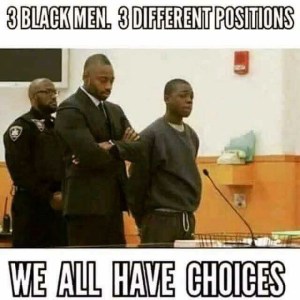
In my African American History class, the students all decided to blog about this image and then compare our thoughts. I said I would join in. Like any good meme, this is thought-provoking and delivers a bunch of information very quickly.

The problem with this meme is that it focuses on individuals and uses these three individuals inappropriately as historical stand-ins. Meaning these three men–without any discussion of all of the millions and millions of tangible and intangible factors that resulted in them being where they are–represent the sum and total of being racialized as Black and sexualized as a Man in the United States in 2015. Tangible and intangible factors would relate to intersectionality and history – both personal histories and larger social, micro and macro, histories.  

Additionally, statistically the Black “criminal” in this picture would not be there if he had skin several shades lighter. Additionally, while there is no geographical reference in the meme, statistically speaking, Black Men in Blue states are much less likely to be taken to courts.

And, we must remember that today, right now, 1 in 3 Black Men across the nation are in prison or jail or they are on probation or parole. At current trends, 1 out of 3 of those accidentally born Black and Male will be in prison at some point in their life. Issues are not related to “crime.” Crime has gone down. 

Additionally, the meme is problematic because it suggest there are extremely easy problems and causes, solutions and effects.

Further, it assumes the police officer and the lawyer are happy, powerful, and successful and free from social racism.

Humans generally, and United Statesians more specifically, can hardly stand to recognize that evolution, DNA, history, society, geography, etc, etc, etc, all “predetermine” to tremendously large degrees what is and is not possible. People like to think they, as individuals did so-and-so and worked hard for so-and-so. Ignoring the complex is easy –and extremely dangerous. No one, especially those with any kind of privilege (White, Male, Heterosexual, Christian, Cisgendered, Able-bodied, etc), simply achieves success from working hard – much more than hard work is involved. Sure, it can be uncomfortable, but that is a sign of how important such conversations are.  

Historians use political cartoons in books and lectures – soon they will use meme to illustrate parallel points! 

(Check out the others here:  Tim’sCaitlin’sSara’s, Alisha’s – see how we agree and disagree!)