Walt Disney and the Acceptance of Authoritarianism

While eating my supper of crackers, deli turkey, and strawberries, I had a question: What is the relationship between Disney’s children’s movies (and alphabetic fairy tales) and the current–baffling–acceptance of authoritarianism in the United States?

Why are people–who proclaim to love the United States, their country, and their freedom–still supporting the Republican party at all?!

Think of the endless list of theatrical features somehow connected with Disney that revolve around royalty in someway or another? Very wealthy and all-powerful Kings, Queens, Princes, and Princesses who use magic to get their way are the leading characters in such productions. While people have talked about how Disney teaches harmful gender mores and heterosexuality, I have not seen commentary that suggests it might also teach people to be complacent under a dictator.

There is never a rebellion against royalty in Disney films. While members of the monarchy in these fictionalized worlds are often the “evil queen” or “the ugly step sisters,” the worlds created show everything basically being okay. And, they have the now-clichéd happily ever after for select members of the royalty. Disney creates governments that ultimately know best and have earned their positions and everyday people who ultimately have their most basic needs satisfied.

Disney movies do not show characters en masse who challenge authority or the status quo, who seek any kind of change, or who take aggressive charge of situations. Disney movies–aimed at children with near blank slates and at their tired caretakers–embed, within in our brain, ultimately paternalistic, positive stories about living under authoritarian regimes.

People have templates, per se, of how to live in such situation, but they don’t have templates for how to live in a society where people truly take charge and demand better.

Dr. Andrew Joseph Pegoda 


Students, Professors, and the Joys of Office Hours

Conversations with fellow professors often turn to the topic of office hours and their frustrated comments about how students never utilize this time. In contrast to some my colleagues, my office hours are always wonderfully busy with students. Frequently, I even have a line of students waiting to visit with me! Sometimes there are so many students that we all visit and pool our thoughts as a group, as I hold office hours in a conference room.

Over half of my 150 students this semester have come at least once during office hours. Most of those who’ve come once, come again and again. Sometimes visitors are former students from past semesters! And students who come clearly care and because they care, they usually do really well in their classes. 

How do I get so many students to come?

I do “bribe” students to some degree. They receive 5 bonus points on a major exam or paper. Some come having forgotten they receive a bit of extra credit. But even when I haven’t offered such extra credit, students have always come during office hours.

Additionally, I send out regular emails announcing that “Office hours are in session now!” or “Office hours this week – usual times – come by, even just to chat!” Reminders are provided during class, too. 

I will also regularly invite specific students or groups of students to come by.

Maybe most importantly, I really emphasize always being friendly toward students and making the classroom a comfortable–and challenging–place. In part because of this, office hours seem less intimidating. I make office hours especially laid back and safe. The Women’s Gender and Sexuality Studies Offices have free cold water and free hot coffee available, so I make sure students know about this. 

And most importantly, I have more than just one or two hours set aside for students to drop in. This semester, I have about ten office hours each week, and with just a handful of exceptions, I have students all ten hours every and every week. Even the first week of each semesters, students come! 

What do we talk about?

Office hours belong to students. So they guide what we talk about! We get loud occasionally! 

Sometimes we just chat about nothing and everything. This might include cats and dogs, college experiences, health problems, majors, families, or books. 

Typically, however, we discuss their writing in some way or another. I thoroughly enjoy using office hours to discuss ideas and how we communicate those ideas. When needed and welcomed, I enjoy discussing a paper sentence-by-sentence with the dedicated student. 

Because I have office hours in a conference room, I’ll invite students to stay and work on their papers or a particular concern. Then, if they have questions, I’m available. In one specific case this past week, I was working with one advanced student, and I would give them particular items to address one-at-a-time while working with other students in-between.

Some students stay only 2-3 minutes, most stay 10-20 minutes, some stay two hours. 

I never have students complain about grades by email or by face-to-face visits during office hours. Office hours are always pleasant and productive 99 percent of the time. I can only remember telling one student once, “This coversation is not productive right now, so we can visit more later on.” I don’t remember anything else. 

Final thoughts about office hours. 

Office hours provide one of the only chances to really get to know students. Two weeks ago, I was telling one student who took me for a different class last semester that it seemed like I hadn’t seen them all semester since they hadn’t been by office hours just yet. They came this week, and we had a wonderful conversation. 

One-on-one conversations happen during office hours. 

Sometimes unforgettably high-level, inspiring ones!  

If you’re a professor, I highly recommend setting aside at least several hours each week for the sole purpose of learning from and with students and of listening to their wisdom. 

Dr. Andrew Joseph Pegoda


Being Disabled And Unconditionally Rejected in Higher Education

At some institutions of higher education, faculty who are not perfectly able-bodied are effectively barred from even stepping on campus. Such practices—on top of the already-difficult job market and added to the ubiquity of microaggressions directed toward us crip people—automatically move some of society’s most educated people into the stack of unconditionally rejected applicants.        

In addition to the requisite educational requirements for a given position, some colleges demand applicants possess no bodily “defects.” For example, Brazosport College specifically requires that its faculty and staff meet certain “Physical Demands.” The ability to hear, see, sit, stand, talk, and walk are required. Potential faculty, according to job advertisements since 2011, must also have able-bodied fine dexterity and the ability to carry and to reach. Specific positions often add to these the ability to drive, to lift, to kneel, to crouch, to twist, to climb, to run, to balance, and other such indicators of able-bodied privilege.

Midland College requires that professors have the physical ability to lift 25 pounds, in addition to the ability to walk and stand.

Such language shows a complete disregard for the Americans with Disabilities Act’s “reasonable accommodations” and for the actual skills needed to be a professor. This problem is alarmingly somewhat common in higher education. Historian David M. Perry has previously written about the practice here and here.

(Even student peer recruiters at Brazosport College, according to the May 2017 job posting, must meet most of these same basic physical requirements, including walking and hearing. Such requirements effectively mean that disabled students too are unconditionally rejected. They cannot serve as peer recruiters. Students who need a wheelchair for mobility, for example, will never have an opportunity to be a peer recruiter—another clear violation of the ADA.)

While such attitudes and philosophies suggest that people either have or do not have the ability to hear or see, for example, people with differences that influence their day-to-day life know well how complex the situation actually is. We also know that having disabilities adds complications to the application and interview process. Most days, I can walk but not every day. There are days when I can walk but only very slowly. No matter what, I always have to wear an expensive custom-made brace to walk, and it breaks sometimes. Additionally, because of physical limitations and the fourteen medications I take, my ability to travel (or move) is much more limited than most in academia. (For more, on my struggles with Neurofibromatosis read here.) 

Brazosport College, Midland College, and institutions with similar practices also perpetuate notions of a world where there are people who are disabled and who are not disabled. In this imagined (and false) world, people who are disabled do not belong. In actuality, there is no normative body. Able-bodiedness is a social construct. People are all vastly different. Definitions matter. What does walking or hearing actually mean? What amount of perfection is actually required? What if an applicant can stand for 15 minutes but not 30 minutes? What if an applicant needs glasses or hearing aids? Are they rejected?

What about the applicant who does not drive? I know of one administrator in higher education who is unable to drive due to medical conditions and has no problem doing their job. They carpool with other people to work.

Think about the potential applicant who can instruct their classes perfectly, who has outstanding references, and who has research experience, but also does not have eyes (or legs). They are also unconditionally rejected by such job postings.

In short, none of the “Physical Demands” required of professors at Brazosport College are necessary to effectively teach. Technology—whether in the form of online teaching, text-to-speech and voice recognition software, virtual meetings, or an old-fashioned wheelchair—can effectively and powerfully overcome human differences in ability. And what about common decency?

Even people who can currently meet such absolute standards of able-bodiedness will not always have that exact same level of privilege. As disability advocate Maria R. Palacios posted on Facebook, in a slightly different context:

Dear Non-Disabled Politicians: One day you will also be disabled. Not a curse. Just fact. Disability, simply is, part of life.

Herein lies another important concern when employers include so many clearly unnecessary (and illegal) physical requirements: It gives employers some more leeway to legally dismiss someone. Say a person accepts a job that requires being able to lift 50 pounds. This person teaches psychology and never actually needs to lift 50 pounds in 15 years of employment. Then one day this person must have an arm amputated after an illness. This person cannot move a 50-pound box of books when asked and because of this, the college dismisses them for failing to meet basic job requirements. This scenario is a bit extreme, potentially, but illustrates the point.

The implications of having such able-bodied requirements at colleges also include that employees will not reveal their disabilities. Such institutions perpetuate the belief that disabled people should not be seen, that disabled people are a problem, and that being disabled is something to be ashamed of. Moreover, students will not see professors who look like them. Students will not have the experience of having a deaf professor or a professor who is partially paralyzed, for example. We know from research that students need to see people in positions of authority who look like them and who identify as they do. Too, all students benefit from being around faculty who are different from them, who subvert the normative by even existing, and who challenge students’ ideas related to privilege and oppression and to intersectionality and positionality.

Too often, historically speaking, colleges and universities have had such able-bodied requirements but just did not put them in writing. It was simply implied that such people were excluded. De-coded, such requirements also tend to prefer those with other forms of privilege: Men who have money and Whiteness receive better medical care, after all, and will be less likely to have any disability, for example. Colleges, then and now, sometimes have misinformed worries that someone with known differences will cost the department money or will call in sick more often.

The “positive” thing, if there can be one in such circumstances, is that we know, historically speaking again, when such requirements become officially written, they are being challenged by advocates for inclusion.

Additionally, consider the sharp contrasts with jobs ads that specifically seek diversity, including those with disabilities. For example, the University of Houston’s job postings include:

The University of Houston is an Equal Opportunity/Affirmative Action Institution. Minorities, women, veterans, and persons with disabilities are encouraged to apply.

UH also has policies that specifically prohibit discrimination based on gender and sexuality. Language matters. Inclusion of diverse bodies and abilities has an immeasurably positive impact across-the-board and continually pushes people toward open-mindedness.

Institutions of higher education need to always commit themselves to ensuring equitable opportunities for all and to remembering that not everyone has two arms and two legs that work properly (whatever “properly” means), not everyone can hear or see, not everyone can drive, not everyone can stand, twist, or bend, and not everyone needs to. Although cliché, the world would be a boring place if we were all able-bodied. People with disabilities—people who are differently abled—help us see the world in new and in more complex ways. Institutions should always remember that many of the accommodations we need—such as classroom changes—are simple. Often, too, we function differently but just fine—when, like me, you’ve been in pain more days than not, you know how to adapt and thrive seamlessly. 

If certain physical requirements are genuinely necessary and accommodations are not possible, this should be clearly explained in the job posting, or better still, the position should be reconstructed because professors are hired for their mental fitness, not their ability to demonstrate physical fitness.  

Dr. Andrew Joseph Pegoda 

More Queer Studies Class Poems

Everything has been so busy, I almost forgot to share the poems my students in Introduction to Queer Studies wrote this semester–they gave me permission to share them! (Spring 2017 poems are here.)

These are the poems they write as an entire class. My contribution is the opening line, “Growing up it was always expected…” They take it from there! The only rule is that everything goes in the poem. 

The 1:00 class wrote:

Growing up it was always expected
For me to act lady-like
That I would play hockey like my brothers
To get a boyfriend
Grow up and provide for the family
That I would grow out of it
That I would get married
Children, have a lot of children
To not embarrass my parents
To be strong in my faith
To keep my dresses clean
That I would finally do my hair
Relatable
Oh shit no
Laughter
Can I add laughter
Oh god
Okay
To join the armed forces
Oh no
Oh no I heard that again
What is happening
What I say is off limits
Ha
To go to college
Follow your dreams
Make a lot of money
I was about to say that
Capitalism
To go to church
No
No
No
To get a job in a math and science field
Don’t pursue the arts
You’re gonna be poor
Be successful in school
Don’t do drugs
To stop beating up boys
Don’t stop beating up boys
That’s funny
To contribute to the country
To always make the right choice like in quotations
We don’t have enough money
To let your voice be heard
To speak when spoken to
I was going to say the same thing
Don’t walk like that
Keep your legs closed
Respect your elders
Keep your head up
Don’t wear jeans that tight
Get a haircut
Smile
Why do you always wear black?
Stand up for yourself
Sit up right
No slouching
For me it’s always to stay at home until marriage
Tattoos make you unsuccessful
Don’t dress too revealing
Don’t put holes in your face
Be a leader
Don’t be the talk of your family
What you listen to is weird?
Why do you listen to that devil music?
What would grandma think
Respect others
Where did you meet that person?
In my room
Don’t date until you’re serious
You can meet a black girl
Girls don’t wear snapbacks
Except they do
They do though
No you haven’t
Haven’t what
We’re just protecting you
We know what’s best for you
You’re not giving me my space
We just want you to have a better life than we did
No boyfriends until after college
Toughen up
Stop being a baby
Boys don’t cry
Man up
You’re too emotional
What is a boy?
Why are you always so quiet?
You’re always hanging out with girls. Why?
When did you know you were gay?
How did you know you were gay?
Wait, are we still on topic?
You’re supposed to be smarter than the boys
Why did you make a lower grade? Are you not taking school seriously anymore?
Your parents are mean
Be active in school
Oh, you got this on your own?
The Suicide Hotline number
So you’re gay, does that mean you’re a drag queen?
Does that mean you’re having sex all day, every day?
Didn’t you have a boyfriend in 8th grade?
When you have sex are you the man or the woman?
What about my grandchildren?
Why are you so emotional?
You’ve got a few from me
How should we end our poem?
With a big middle finger
Yes
Yes
No it’s yaaaaaas
That was great
Ok no

The 2:30 pm class wrote:

Growing up it was always expected
My sexuality and gender neglected
Do we have to make it rhyme
Or like no no never mind
This actually works
This is modern art
To have children
Act like a lady
For my femininity to always be present in dresses and bows I never liked
I held my tongue
To pick the right toy
To hold the right hand
To abide by the rules and regulation
To please the right people
To make my parents proud
To fall for a specific identity
To fit into a certain category
Not be ashamed of who I am
But who am I?
To cook because that’s what is expected of a lady
To go with the grain
Is it always going to be a joke in pop culture?
Which bathroom do I go in?
I don’t know
And then she’s going to put lol
Who can I trust?
To hold open the door for any and everyone
I wonder if I can have a show on Disney channel
Probably not
Raven Simon has a show
Love that woman, love that woman
If I showed my true self who would stick around?
I know raven would
Would I stick around?
We need more queer people in the media
How will society look like when my kids are here
I must always smile when boys hit me because they like me of course
I don’t know what to say
Perfect
I must be perfect
Boys don’t have to be rough and girls don’t have to be soft
I am very fortunate I didn’t have to deal with a lot of this my mom was very accepting of my sexuality
Will and Grace is coming back on
I wonder what Mike Pence is doing right now?
I hope when we do get representation the actors aren’t killed
I miss Lexa from the 100
Its characters not actors I hope the actors aren’t dying
I miss Brangelina
I want all the best for Shilo

They sure are powerful poets!

Dr. Andrew Joseph Pegoda 


Facts Exist on a Spectrum – Adventures Teaching Writing

Teaching First Year Writing this semester continues to be an exciting, interesting journey. A few nights ago, I was trying to decide how I wanted to address a lesson introducing the broad topic of facts, opinions, arguments, and related topics. My approach always involves both discussion and the philosophy. The lesson ended up being transformative for the students, according to their oral and written responses.

Here is a brief sketch of some high points. 

Ultimately, I introduced the notion that there are no facts, per se. What we call “facts” exist within a specific context, a specific language, a specific point-of-view, and a specific time and place. Simply: facts do not exist on a binary.

One of the first questions I asked was:

Fact, yes or no: There have always been females.

Fact, yes or no: There have always been children. 

Fact, yes or no: There have always been gay people. 

Fact, yes or no: There have always been Mexicans. 

Only with the last question did students en masse begin to suspect something was up. Following this, we had a brief conversations about constructionism and essentialism, post-structuralism and semiotics, and processes of identity formation. 

For example, there have not been children for most of history because the notion of there being children is a much more recent one in the grand scope of World History. Likewise, there were no “children” until the shapes c h i l d r e n were created and grouped together, assigned sounds, and then applied to the mental, subjective concept of children.

From the perspective of both biology and Queer Studies, of course, all notions of biological sexes are simply invalid. 

Students love to be challenged. Students love new ways of seeing things. But, at times, this is also stressful for them. 

We went through other examples. In one of the classes, someone said, “Can you name anything that is simply a fact?” 

One of them said something along the lines of, “I was born March 3, 1994 – that is a fact!” Another student replied, “Well what about time zones?!” I also added comments about the social construction of time.

Another student said, “Well, science is a fact.” This resulted in a conversation about the social construction of science!

They really started to get it.

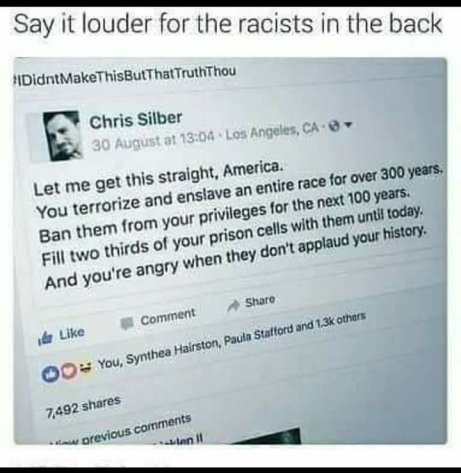
I showed the following meme and asked them, “Is this meme factual?”

IMG_0160.JPG

“Are its absolute statements 100 percent true in all cases?” No. Then we discussed notions of historical memory and representations that are not true but accurate, per se. 

Facts really are complicated. OpinionsArguments. They are all subjective, to at least some degree whether in terms of theory, praxis, or both. Like everything else, spectrums help us to see.

We then moved to a discussion of whether or not opinions can be wrong. In both classes, all of the students said, “No. An opinion cannot be wrong.” At first, that is. 

We continued to challenge that idea by discussing people who, for example, say, “It’s my opinion that the Civil War was about states’ rights!” This opinion is wrong. Factually wrong. 

After this we talked about how to read texts with an eye toward the deep arguments. And how arguments, facts, and opinions are often all meshed together and are everywhere! 

We looked at an advertisement for the Amazon Echo and talked about how it makes arguments for buying the product, yes, but also for a specific kind of economy and family, for example. In order to be the most productive citizens, thinkers, and learners, such seeing is powerful. 

I frequently use the last 5-10 minutes of class to have students write brief responses with eyes toward what is important. On the responses after this lesson, students said they had never realized how complicated facts, opinions, and arguments could be and said they were “amazed,” “confused” (in good ways), and “in awe.”

Teaching is so much fun! Seeing students dig deep and think creates powerful bonds. 

Dr. Andrew Joseph Pegoda 


More Gender and Race Perception Experiments

This serves as a kind of followup to this post where I described an experiment I did with a group of students. I recently did a similar version of this experiment but with some modifications based on suggestions I received here!

The results are most interesting and for sure show aspects of our hidden sexism and racism. At some point, I’m hoping to improve the experiment by finding images that are even more similar to one another. 

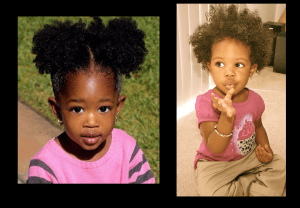
Group one saw the following image and were asked to write down the personalities of the people on the screen. 

Screen Shot 2017-09-18 at 12.13.44 AM

Group two saw the following: 

Screen Shot 2017-09-18 at 12.13.54 AM

Group three saw the following: 

Screen Shot 2017-09-18 at 12.14.07 AM

And the results! 

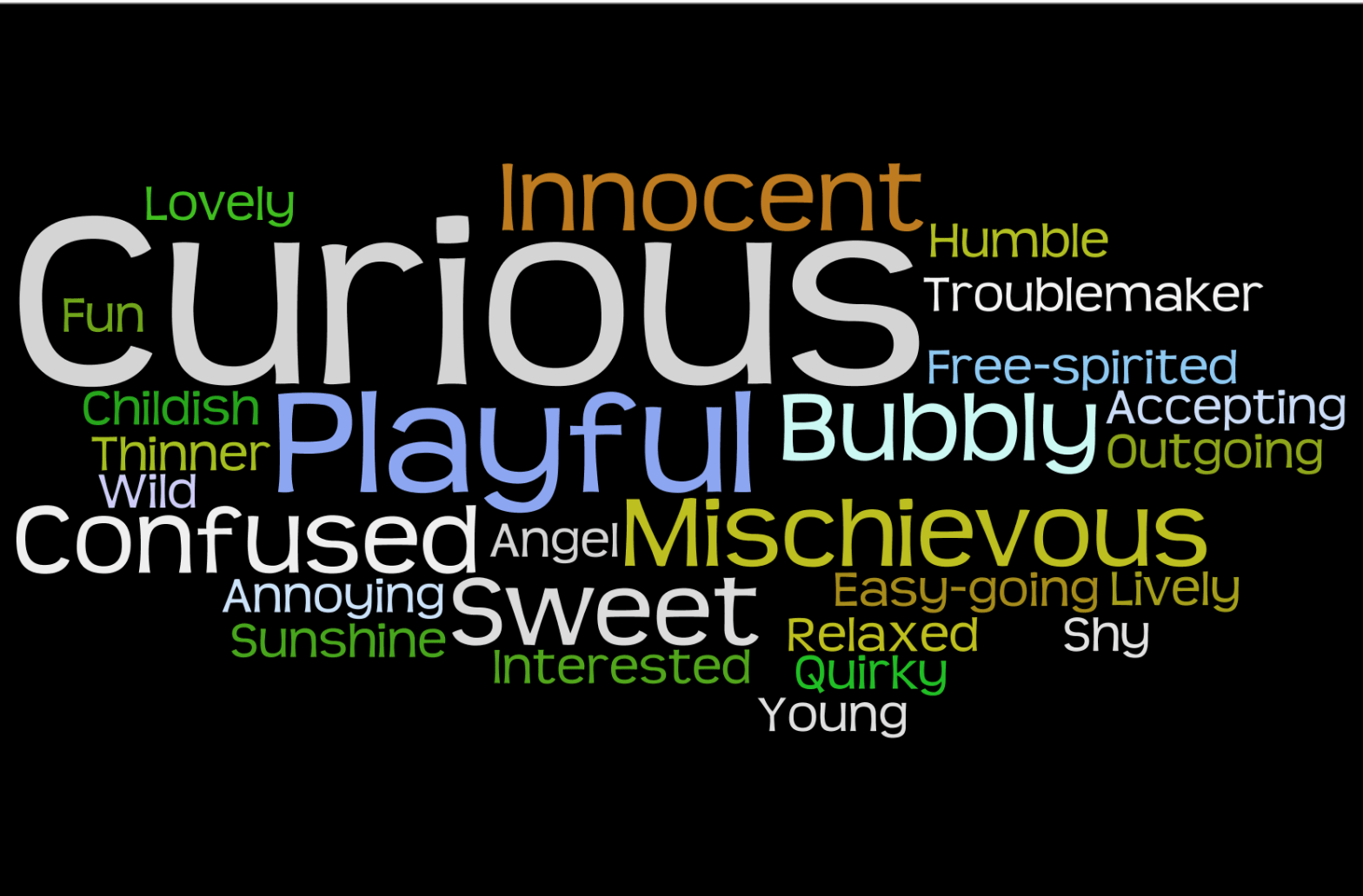
Group one listed:

group a.png

Group two listed:

group b.png

Group three listed:

group c.png

Will save additional analysis and thoughts for another day! Let me know what you think!

Thanks for reading. : )

Dr. Andrew Joseph Pegoda 

Polyamory, Constructionism, and the Queerness of Hollywood

Two thoughts have been stirring around my brain lately, and they require a bit of creative thinking, potentially: 1) Actors and actresses are, effectively, in on-going polyamorous relationships, 2) performers embody the rejection of (dangerous) ideologies of essentialism. 

Polyamory and Queer Hollywood 

The philosophy of polyamory says that it’s possible, even natural, for a person to be in love (or to be in some kind of sexual/family-like relationships) with more than one person at a time. In contemporary Western societies, such a notion is deemed immoral and unnatural by most people, even though it’s likely the historical norm. Present-day social constructions define the moral and natural, as well as the scope of possibilities. 

Of course, actors and actresses are not the characters they play, and when discussing fictional characters we focus on the fictional character in most cases, but for purposes here, we’re going to place a brief pause on that practice because I want to explore the notion that movie stars (and theatre stars) participate in very unique relationships, very “liberal” or “weird” relationships and these stem from an otherwise very conservative Hollywood institution.

Take the case of Ryan Gosling and Emma Stone. Gosling and Stone have co-stared in several movies where they fall in love (falling in love is a very modern idea in itself – two hundred years ago people who were afflicted with such an “illness” where deemed dangerous to society and deemed weak). In these movies, Gosling and Stone–rather their bodies–share numerous passionate kisses and much more. Throughout these films, Gosling has been married to a woman, and Stone has dated various men. In addition, throughout these on-screen relationships between Gosling and Stone and their own real-life relationships with other people, they have each been in other on-screen relationships with various people.

So, effectively, Gosling, Stone, and the other people they have been in relationships with both on- and off-screen are participating in a very queer, polyamorous relationship–at the very least something very different than the idealized monogamous, patriarchal relationship.  

In another example, think of a long-running television show such as Walker: Texas Ranger or Full House. These shows have people who are in long-term romantic, sexual relationships with their real-life spouses and on-screen spouses. 

Or, think of Meryl Streep. She has been married to Don Gummer since 1978 and in that time span has been in a (fictional) relationship with many, many different men and women through the various roles she has played.

Of course such on-screen relationships are not “real” in the typical sense, especially as they are on a stage of some kind and have dozens and dozens of lights and cameras all around them, but the biological, physical, psychological bond cannot be fully deleted. And, as I have learned in my studies of film and culture, many a real-life relationship between Hollywood stars started when they were brought together in an on-screen relationship.

The real and reel cannot be fully separated. 

Constructionism and Queer Hollywood 

While there are–absolutely–many important conversations about the importance of a gay actor playing a gay character, a Asian actor playing an Asia character, a crip actor playing a crip character and many concerns when Hollywood uses normative White people to play such roles, Hollywood’s approach is somewhat queer from the perspective that it rejects essentialism and embraces constructionism.

Essentialism says who we are is essential to our being and that we are born certain ways. Queer Theory embraces constructionism and how our identities emerge from society and constantly change. 

Hollywood performers can and do identify in any number of ways–as related to ableism, class, gender, sexuality, race–and play characters that identify in any number of ways–as related to ableism, class, gender, sexuality, race. These don’t have to align. A person doesn’t have to identify in real life as a trans man to play such a role and playing such a role does not make the person in real life a trans man. Acting can be, simply, acting. Although, for sure, an actual trans man could bring more legitimacy to the role and help others trans people because representation and visibility matter. 

Attraction, behavior, and identity are all separate, whether we are talking about a person’s real life, fictional life, or the middle grounds where these morph and overlap. That these can be changed and manipulated in fiction is indeed very queer. 

Dr. Andrew Joseph Pegoda

7 Things You Likely Have Wrong That Few Address

I am frequently brought to feelings of frustration and sadness when people believe, do, or say things that are everyday and simply not true. In this article, I address seven of these. 

1. Recycling clothing, paper, plastic, and so on is good for the environment and something we must all help with

In reality, like much, it depends. Recycling also pollutes the environment. Have you thought about the pollution caused by that diesel truck that picks up the items in your recycling bin? What about the energy consumed by that factory that processes the recycled goods? In at least some case, it can be more environmental to deposit such items in the regular trash. Especially in the case of paper, which biodegrades in a matter of mere weeks! In the case of clothes, as I learned by watching The True Cost, the majority of clothing we donate to charities or Good Will-like stores ends up in very poor countries (think Haiti) and causes people to lose much needed jobs, while forcing them to also buy unknown bulks of clothing.

So, to be clear, I am very concerned about the environment. I just want people to think more critically about “garbage” vs “recycle” and how to best allow for a healthy world.

2. Watering my yard helps it grow and look green.

Again, it depends. I do get frustrated when I see people watering on a hot summer day or even after sunset because when it is really hot–like we are really experiencing in Texas right now–none of that water will be absorbed. When it is that hot almost all of the water from the sprinkler evaporates before it even hits the ground! Not only is it ineffective, it is wasteful. The most effective time to water is at the coldest time of each day, which is the hour before sunrise (unless there is a cold front or something). So, reset the timer on those automatic sprinklers! 

3. Satanism promotes worship of the Devil. 

In reality, Satanism rejects all notions of higher powers (or “lower powers” in this case!), and simply, it promotes equality and free thinking. People involved with Satanism or the so-named Church of Satan have helped lead many important cases regarding free speech and separation of Church and State. This group’s Seven Tenets are not that different than texts such as the Declaration of Independence or the Universal Declaration of Human Rights. The Seven Tenets include: 

-One should strive to act with compassion and empathy towards all creatures in accordance with reason.

-Beliefs should conform to our best scientific understanding of the world. We should take care never to distort scientific facts to fit our beliefs.

-People are fallible. If we make a mistake, we should do our best to rectify it and resolve any harm that may have been caused.

4. Professors are paid high wages

Sadly, the vasty majority of professors in the United States, something like 80% (!!) make wages that are at or below the poverty level. I have even had the unfortunate experience of having what amounted to a 30% pay cut (i.e., a $1000 loss) because not enough students signed up for one of my classes – this was a required class for several students and I taught the only section of this class. Most professors are not paid for their planning, grading, or time meeting with students – they are only paid for the 40-45 hours the class actually meets face-to-face. As a result, most professors actually make less than minimum wage. But, many of us love learning and teaching and have devoted years to becoming experts and long to use our talents.

5. Botox is taken by those wanting to look younger

True, some people–especially celebrities it seems–take Botox to look younger. There is also an important segment of the population that relies on Botox and/or its sister substances to help control neurological conditions ranging from headaches to Parkinson’s Disease to blepharospasms. Insurance companies, of course, are frequently stubborn and don’t want to accept the expertise of doctors, and the insurance companies deny this much-needed care to some patients.

6. People under 30 are computer literate. 

This one receives some attention but still deserves mentioning. I don’t say this to be negative, but I am constantly surprised and re-reminded that the majority of my students are almost computer illiterate. Students know how to use some aspects of social media websites, but when it comes to creating and converting files, to changing settings, to “figuring it out,” or to downloading software, for example, most are at a near loss. Regardless, 90 percent have far less knowledge of computers than most people assume they have. 

7. The word “queer” is offensive.

Out of all the words currently used by academics, “queer” is one of the most powerful and versatile words. We can analyze the “queerness” of a text, we can “queer” a text, we can provide a “queered” reading of a text, we can discussing the importance of queering a text, we can talk about queer people and the many, many different identities they take. Therefore, 

Queer is by definition whatever is at odds with the normal, the legitimate, the dominant. There is nothing in particular to which it necessarily refers. It is an identity without an essence. “Queer,” then, demarcates not a positivity but a positionality vis-à-vis the normative.

“Queer” and all of its forms, simply, refers to that which is not part of the default and privileged.

Dr. Andrew Joseph Pegoda