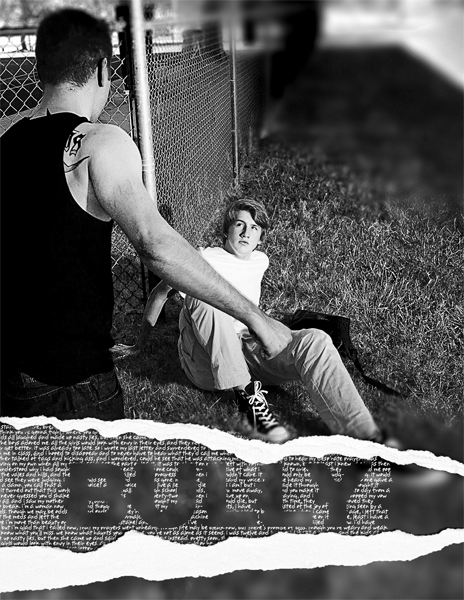
I spoke with my friend Aaron Alon about BULLY, his new musical film which follows a teen who commits suicide after being bullied. The independent film will be released in 2017.
AJP: Thank you, Aaron, for taking the time to discuss BULLY with me. I’m really excited to learn more about it and to see the film. I’m hoping I can get a few sneak peeks, too!
AA: Thanks so much for this interview and for your interest in BULLY. You can get a few sneak peaks at bullythemusical.com. The site includes four tracks from the concept cast highlights CD and a one-scene stage version of one of the songs (youtube video). The final CD will be re-recorded with the soon-to-be-announced film cast and the eventual film will be shot on location (rather than on a stage, like in our youtube video).
AJP: I’m really interested in the origins of BULLY. How and why did this musical come about?
AA: I’ve always been drawn in as a writer and composer by works with social messages. A few years ago, I was thinking about what issue most called out to me. Bullying was on my mind a lot at the time. I’ve dealt with bullying myself, as have friends and family of mine. I’ve also heard a lot about in-school and at-home bullying problems while volunteering for HATCH (an organization for LGBTQ teens) for nine years. Suicide has also touched the lives of friends and family members, and the issue is very important to me. Bullying and suicide aren’t new, but there’s an increased national awareness, and the time seems right to draw further attention to bullying, suicide, and related issues, beyond what we normally get in media coverage. As with most of my projects, this started with extensive research into bullying and suicide. Some of that research is summarized in “the issues” section of the musical’s website.
AJP: I know you’re in the final process of having people audition for the film. How are auditions going? Any heads-up on who we can expect to see in BULLY?
AA: Auditions are going great! Houston is a wonderful hub of talent and culture, and we’ve been overwhelmed with the incredible talent turning up to auditions and callbacks. We’ll begin casting this month. As casting decisions are made and contracts are signed, we’ll be updating the online cast and crew lists on the website. Suffice it to say that, based on those who we have coming to callbacks, it’s safe to assume this cast will be composed of many of the finest actors and singers in Houston!
AJP: And looking at the casting call, BULLY includes a variety of characters – over a dozen specifically named. Can you tell us about some of the different characters? Which one was hardest to create, and why?
AA: The four main youth are Sam Bradley (the 14 year old who commits suicide midway in the story) and the three bullies who beat him up after they see him looking at them in the locker room showers (Hunter, Chase, and Tommy).
We get an inside look at their home lives, too. Sam’s parents have grown distant and cold toward one another. Their marriage is hanging on by a thread; with Sam’s death, the thread breaks. The three bullies all have their own problems at home. Hunter’s parents are physically violent with one another; his own violence is a bid to escape. Chase has an absentee father and a mother who’s addicted to pain pills. She cares a great deal for Chase but can’t give him a stable home life. Tommy’s father is incredibly abusive, terrorizing his wife and son. Tommy’s mother does all she can to protect him, but to no avail. Other characters include the school principal and guidance counselor and four people (separate from the main story) who are filming their “It Gets Better” type videos as adults in the wake of Sam’s suicide.
There are also a large number of high school students, reporters, and mourners at the memorial site for the young man who commits suicide. Sam Bradley is at the center for the story, but like a circle (which does not contain its center), the story focuses on everyone else, creating a sense of all of the forces leading to his suicide and all of the fallout afterwards. As so often happens when someone commits suicide, we lose Sam’s voice; in the entire film, despite extensive screen time, he speaks only two words.
The hardest character to create may have been Tommy. Of all the bullies, he’s the brightest, the most conflicted, and the most sensitive. He is a multidimensional character, and I wanted to attempt to explore all those different facets. It’s been a challenge coming up with language that shows his brutish facade and his inner sensitivity.
AJP: Does Sam commit suicide because he is gay?
AA: Sam has a misstep in the locker room and ends up looking at the bullies in the shower. He is bullied on suspicion of being gay. Like so many young people who commit suicide, we’re left with questions about him. This is, incidentally, one of the reasons why it’s hard to statistically link suicides to being LGBT; we can show they have more attempts, but once someone dies, we usually can’t know their sexual orientation or gender identity with certainty.
To a degree, Sam’s sexual orientation doesn’t matter. His bullying and suicide are tragic either way. Whether he is actually gay or marginalized on suspicion of being gay, he would likely feel isolated; isolation kills.
AJP: This story for sure seems to be a microcosm of life for many. BULLY deals with suicide, high school, bullying, masculinity, bitterness between parents, regret – hopes and fears. How did you find a balance between everything?
AA: Because these issues are diverse and complex, the film has so many different viewpoints and, as a result, many different types of music, including music influenced by jazz, hard rock, rap, traditional musical theatre, pop, and more. In the aftermath of teen suicides, it’s too easy to point fingers and assign blame. Who’s to blame here? Should Sam’s father not have had a gun in their home? Could Sam’s parents have been more aware and gotten their son help in time? Could the school have done more about the bullying or to screen for those likely to commit suicide? (Most bullying prevention campaigns in school are well-intended but ultimately ineffective, with some even having the opposite effect of teaching bullies more refined forms of bullying through showing cautionary videos of bullying.) Are the bullies themselves to blame, or perhaps their parents?
What about the press, who become bullies themselves as they descend on the town for 24 hours to get their story and get out?
What about those who claim that bullying shouldn’t be discouraged, that children need to learn how to fight it out and live in the “real world?” Do they contribute to this cultural problem?
This film doesn’t seek to assign blame. Instead, it seeks to expose all of these different perspectives and open up a conversation about all of the various contributing factors. If people walk out of the film with new thoughts and questions that spark conversations about the causes and potential preventative measures for bullying and suicide, the film will have been successful.
AJP: Your comment about the media also being a bully is interesting. What does that mean?
AA: In the film, the press hounds the parents and bullies, trying to get interviews, get their story, and get out. I tend to think that hounding a grieving parent hours after his/her son’s suicide is a form of bullying. Also, there are published guidelines for reporting on suicides. If the media follow them, their stories will be less sensational, but may help avoid suicides that can follow in the wake of other well-publicized suicides. In short, the media need to make a difficult choice. Though this may be an oversimplification, broadly speaking, they can follow the “if it bleeds, it leads” adage and feed their market or they can report more conservatively and show some restraint when dealing with grief stricken people. I fear that too often they make the former choice; their industry (and their audience, as consumers) incentivizes these choices.
AJP: Very interesting. So in that regard, BULLY is much more complex than a story about high school bullying alone.
AA: We hope that it is. Bullying and suicide are not just high school problems. They are widespread cultural issues. Any successful attempt to address bullying or suicide in this country will need to take a holistic approach that considers all of the different sides of these issues.
AJP: Tell us about the music involved – the lyrics and accompaniment. Why did you create Bully as a musical?
AA: Musicals are an incredible vehicle of artistic expression. They combine so many different art forms to create something that can be greater than the sum of its parts. While some associate musicals with lightness and spectacle (and they certainly can do those well), many musicals have led the way for addressing very serious issues effectively. These include a whole range of musicals spanning nearly a hundred years, such as Show Boat (racism), Porgy and Bess (rape, drugs, and murder), Next to Normal (crippling mental illness and drugs), Cabaret (racism and homophobia), Scottsboro Boys (racism), Grey Gardens (codependency), Chicago (the broken criminal justice system), West Side Story (gang violence, prejudice, murder, and rape), and many others.
In many cases, to quote Hans Christian Anderson (others have said similar things), “Where words fail, music speaks.” Sometimes characters can believably express in songs when words fail them. Also, BULLY uses a number of different styles to mirror different perspectives and experience. The range of extant musical styles is so vast that it’s a natural vehicle for carrying these differences.
AJP: Of the numbers in BULLY, which one is your favorite?
AA: Tough call! I like different ones for different reasons. Cop-out answer, I know.
I like the honest simplicity of Sam’s parents’ responses to their son’s death sinking in (Mr. Bradley’s “Did He Think?” and Mrs. Bradley’s “Was”). I also like the starkness of the lyrics in “Hollow House”; it’s unlike any other number in the show. For pure message and for the most self-contained number, I like “It Gets Better.”
But for raw, visceral energy, nothing beats “Hunter’s Song,” where Hunter, one of the bullies lashes out against his suffocating home life. While I need to caution against explicit language (and add in the added disclaimer that some of the lyrics have been entirely rewritten since this concept cast recording), here’s a bonus track just for your blog readers: “Hunter’s Song.”
AJP: Thank you so much. I’m sure readers will really enjoy it. Films are really expensive. Can you tell us why it is so expensive, how this cost will be covered, and other such details about production behind-the-scenes?
AA: Films are ridiculously expensive. Take a look at the credits of any movie in your collection and count the people involved. Adding in music adds in a whole battery of additional people, including music directors, musicians, choreographers, singers, audio engineers, and more. There are also extensive expenses associated with equipment, venues, marketing, and distribution. Honestly, the costs are overwhelming.
We’re doing all we can to minimize costs while also maximizing the quality of the final product. Toward this end, we’ve applied for a few grants (results pending) and have started a fundraising campaign through our website. All donations are tax-deductible, and we hope that people who believe in the importance of these issues and in supporting new dramatic and musical works will rise to the challenge and help us with the mammoth funding requirements. The more money we raise, the fewer fetters are placed on our creativity to make this an incredible film.
AJP: Kevin Mora is the director. Thunderclap Productions is the producer. Who else is involved?
AA: In addition to directing, Kevin is also the DP (director of photography). I’m the writer, composer, and arranger. I’ll also likely create most or all of the non-diagetic music. Thunderclap Productions, a nonprofit Houston-based production company I helped found, is producing, as you said. Thunderclap is dedicated to producing new and lesser-known plays and musicals. We’ve been doing this on Houston stages since 2010, but this is our first feature-length film.
We also have a choreographer, a musical director, a makeup artist, a costumer, a light designer, and a sound recordist in mind who have expressed interest in the project, but we need to first determine if we have enough funds to bring them on. Finally, we have some grips who have joined the project as well, but we’ll be releasing a full list of cast and crew over the next few months as we finalize these. You’ll be able to see those complete credits on the site: bullythemusical.com.
AJP: What is the project timeline? When and where will people be able to see Bully when everything is done?
AA: Auditions and callbacks are this month (November 2015), and casting will likely be complete by the end of 2015 (except perhaps for dancers in one scene, which might come later). We’ll be filming in January through August 2016 and will then move into editing, final film scoring, foley, sound mixing and mastering, etc.
We hope to release the film in 2017. We plan to first submit to numerous film festivals. Soon thereafter, we plan to release a DVD/Blu-Ray recording available for purchase through our website.
Because we feel this is such an important project, we hope to also release the film in a series of short videos (each consisting of one of more scenes from the film) available through the website for free viewing. We hope to find sponsors for each of these short videos to help cover the related expenses.
AJP: And what do you hope audience will experience when watching the film?
AA: My biggest hope is that this fosters a productive national dialogue about bullying and suicide. Most of the time, we’re exposed to these stories in small, concentrated doses on the news, and then we are quickly carried into the next story. I want people to walk out talking about what they came to realize about bullying, suicide, and related issues. I’d like them to talk to their friends, families, schools, and governments about what changes they’d like to see in their communities and the world, and what we can do to support well-done research and implement positive changes to move forward on these critically important issues.
AJP: Is there anything you’re worried audiences or critics might not understand or might not be ready for?
AA: I’ve received suggestions many times to soften the violence and eliminate the cursing, making this a more school-friendly musical. I think there are other works out there that take this approach and can be used in these pre-collegiate instructional capacities. What makes this musical film unique — and potentially risky — is the harsh reality of how verbal and physical violence are depicted on screen. It’s hard, but critically important, to be confronted with these grim realities if any change is to be made. It’s hard to think of people so young facing such incredible hardship and violence, but these tough realities will hopefully spur viewers to real action.
AJP: That sounds like a really good move and an important “risk.” So, it sounds like you’re going to continue being very busy with BULLY, teaching, being a father to your cats, and all of your other projects. What else do you have going on? Any other exciting works of theatre coming soon?
AA: Yes, thanks for asking! I recently completed a stage play that received a successful staged reading directed by Justin Doran early this year. The play POSITIVE is about a woman who lost everything to her HIV diagnosis in the 1980s. It’s now 1997, and she makes a new discovery that threatens to again upend her world.
I’m also working on a dark (somewhat absurdist) comedy with an extremely talented fellow composer and writer Russell Sarre. I’m collaborating with a Houston-based team to rewrite our successful comic musical revue DEATH, THE MUSICAL to make it funnier than ever for a newly mounted performance (likely in 2016-2017). We’re also working on a new similar comic revue about sex. I’m also working on a new screenplay in the spy-action genre.
Through the nonprofit production company I helped found, Thunderclap Productions, we are working to produce a number of exciting new or lesser-known plays and musicals from writers around the country and world.
Check out my website (aaronalon.com) and Thunderclap’s (thunderclapproductions.com) for more details, and like us on Facebook to stay posted! (Facebook pages: BULLY | Thunderclap Productions | Aaron Alon | Death, the Musical)
AJP: Wow! Thanks so much for your time, Aaron. I know people will be really excited to see Bully when it is done and hope those who can make a donation toward the film’s success. Is there anything else you would like to share?
AA: Thanks, Andrew! I love your blog and I’m honored to have my latest project featured. We hope that your readers will be as excited about this upcoming film musical as we are! Thanks for your help spreading the word and helping us find potential donors to make the best possible version of this film!







 Dr. Andrew Joseph Pegoda